


A standard 3cm granite countertop weighs approximately 18 to 20 pounds per square foot. A typical kitchen island of 30 to 40 square feet adds 540 to 800 pounds to the cabinet structure beneath it — before accounting for any waterfall panels, thick-edge buildups, or additional stone features. That’s a significant load, and whether the cabinets beneath it can carry it safely depends on how they were built, how they’re secured, and whether they were designed with stone countertops in mind.
The good news is that most properly installed residential kitchen cabinets handle granite weight without issue. The situations that create problems are specific and predictable — and knowing them before installation is significantly less expensive than discovering them after the stone is set.
At Granite Depot of Columbia, we fabricate and install custom granite countertops in Cheraw, SC and throughout the Midlands region. Weight and cabinet compatibility questions come up regularly on island projects. Here’s the complete picture.
How much does granite actually weigh — by thickness and island size?
Granite weight varies by thickness and slab density. The two standard residential thicknesses are 2cm and 3cm — and the difference in weight between them is meaningful for cabinet planning.
2cm granite weighs approximately 11 to 13 pounds per square foot. It’s lighter and less commonly used for kitchen countertops in 2026 because its thinner profile requires additional substrate support and doesn’t carry the visual weight that most homeowners want for island applications. When used, it’s typically paired with a mitered edge buildup that creates the appearance of a thicker slab.
3cm granite weighs approximately 18 to 20 pounds per square foot and is the standard for residential kitchen countertops. It’s structurally self-supporting across standard cabinet spans, handles undermount sink installations without additional reinforcement, and provides the visual mass that makes granite islands feel substantial and permanent.
Here’s how those numbers translate to total island weight at 3cm:
| Island Size | Square Footage | Approximate Weight |
|---|---|---|
| Small island | 15–20 sq ft | 270–400 lbs |
| Standard island | 25–35 sq ft | 450–700 lbs |
| Large island | 40–55 sq ft | 720–1,100 lbs |
| Large + waterfall panels | 55–70 sq ft equivalent | 990–1,400 lbs |
For custom granite countertops in Cheraw, SC homeowners planning a large island with a waterfall edge, the total stone weight can approach or exceed 1,000 pounds — a load that requires specific cabinet construction to support safely over time.
Can standard kitchen cabinets support granite weight?
Most can — with important qualifications. Standard residential kitchen cabinets built to current construction standards are designed to carry countertop loads including stone, and the majority of granite island installations on properly built cabinets proceed without structural concern.
The qualifications matter. Cabinet construction varies significantly across age, manufacturer, and installation quality, and several specific conditions create weight support problems that granite installation can expose or worsen.
Cabinet box construction is the first variable. Cabinets built from 3/4-inch plywood are significantly stronger than cabinets built from 1/2-inch particleboard or MDF — both of which are commonly used in builder-grade and import cabinetry. Particleboard cabinets under sustained stone weight can compress, deflect, or fail at corner joints over time in ways that plywood construction doesn’t. For island applications specifically — where the stone load is concentrated on a freestanding cabinet structure — plywood construction is the more appropriate specification.
Cabinet leveling is the second critical variable. A granite countertop is rigid and distributes load across its support points. If the cabinet base isn’t perfectly level, the stone spans between support points rather than resting evenly across them — creating concentrated stress at the contact points that can cause cracking over time, particularly at seams and cutout edges. Level cabinets before the template appointment is a non-negotiable prerequisite for any granite installation.
Floor attachment determines whether the island cabinet moves under load. A freestanding island cabinet that isn’t secured to the floor can shift or rack under the weight of a large granite slab, particularly during installation when the stone is being positioned. Islands should be fully secured to the floor before templating.
At Granite Depot of Columbia, we assess cabinet readiness as part of our pre-installation process. Granite starts at $39 per square foot in 2026, and identifying cabinet issues before the template appointment is significantly less expensive than addressing them after fabrication is complete.
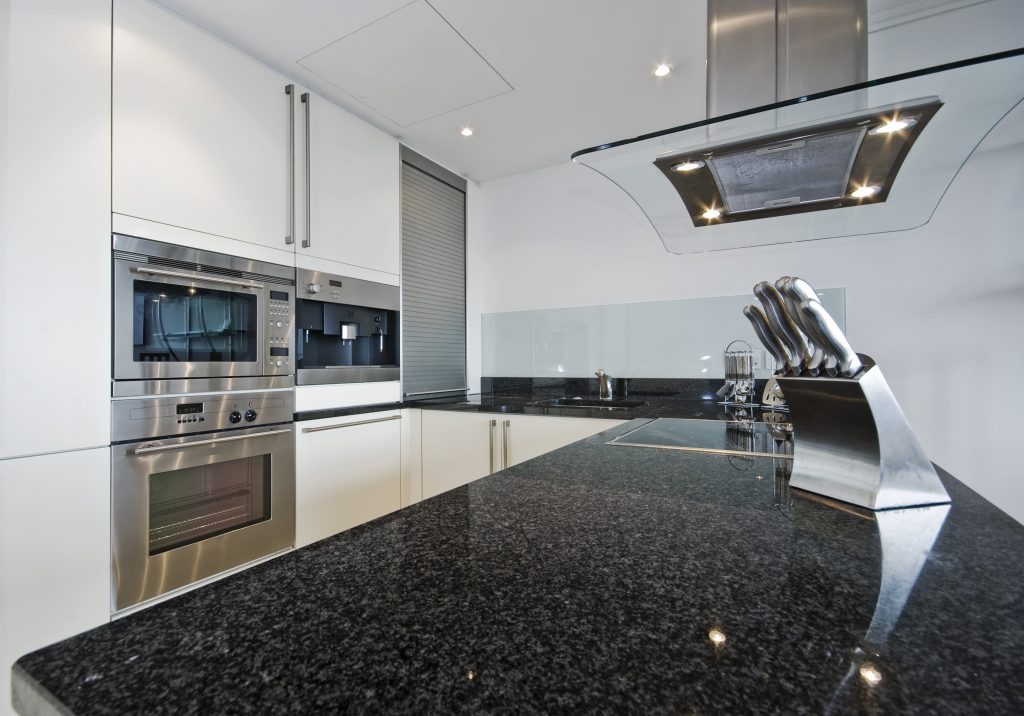
What cabinet types are not suitable for granite island countertops?
Several specific cabinet configurations create genuine compatibility concerns with granite weight that are worth identifying before committing to stone.
IKEA SEKTION and similar flat-pack cabinets are frequently used for kitchen islands and generate consistent questions about granite compatibility. These cabinets are built from particleboard with cam-lock joinery — a construction method that handles normal kitchen loads adequately but has less tolerance for heavy stone countertops than traditionally built wood cabinets. Granite on IKEA base cabinets is done regularly and can work, but it requires confirmed floor attachment, internal reinforcement at the top rail, and careful weight distribution. A fabricator with specific experience with flat-pack cabinet installations is worth seeking for these projects.
Cabinets with damaged or compressed top rails — the horizontal frame at the top of the cabinet box that the countertop rests on — create an uneven support surface that concentrates load at the intact points. Water damage, compression from a previous heavy countertop, or simply age can compromise the top rail in ways that aren’t visible until the new stone is in place.
Cabinets not secured to adjacent cabinets or the floor create a racking risk under stone weight. Individual cabinet boxes that aren’t screwed together and to the floor can separate or shift as the stone load settles — producing gaps, movement, and eventually seam opening in the granite above.
Older cabinets from the 1980s and early 1990s were frequently built for laminate or tile countertops rather than stone, and their construction standards reflect lighter expected loads. Many perform fine under granite, but they warrant closer inspection before committing to a heavy island installation.
Does granite weight affect which edge profiles or features are possible?
Yes — the weight of additional stone features adds meaningfully to the total load calculation and affects what the cabinet structure needs to support.
Waterfall edges require vertical stone panels that extend from the countertop to the floor on one or both sides of the island. Each panel adds 12 to 20 square feet of stone depending on island height — adding 216 to 400 pounds to the project weight before installation. The waterfall panels are supported partly by the countertop itself and partly by how they’re bonded and secured to the cabinet structure, which requires specific planning during installation.
Thick-edge buildups on 2cm stone — where an additional strip of stone is laminated to the front edge to create the appearance of 3cm or greater thickness — add weight at the perimeter specifically, which concentrates load at the front edge of the cabinet top rail.
Overhangs for seating — typically 12 to 15 inches on one or more sides of the island — extend the stone beyond the cabinet support, which adds cantilever load to the cabinet edge. Overhangs beyond 12 inches require concealed steel corbel brackets to transfer the load back to the cabinet frame. Granite’s tensile strength handles up to 12 inches unsupported at 3cm thickness — beyond that, brackets are the correct structural solution.

For anyone planning custom granite countertops in Cheraw, SC with waterfall edges, significant overhangs, or large island dimensions, Granite Depot of Columbia works through the structural requirements of every project before fabrication begins. Most projects are completed within two to three weeks from template to installed countertops. Reach us at (803) 956-4555 or visit us at 71 Berkshire Dr, Columbia, SC 29223.