


Granite has long been considered a timeless material for kitchens and bathrooms, admired for its durability, natural beauty, and the way it enhances a space without overpowering it. Today, homeowners across the country are rediscovering granite’s design potential—not just as a countertop surface but as an integral part of a home’s aesthetic identity. For those exploring granite countertops in North Augusta, SC, the material represents more than a functional upgrade; it offers a way to bring character, sophistication, and a sense of permanence into the home.
One of the reasons granite remains so popular among designers and homeowners is its versatility. Every slab is unique, carrying natural patterns, colors, and movements that allow it to complement a wide range of interior styles. Whether you prefer modern minimalism, classic traditional charm, rustic warmth, or bold contemporary visuals, granite can be shaped—both literally and stylistically—to align with your vision.
At Granite Depot of Columbia, we often remind homeowners that incorporating granite effectively is not about just choosing a color. Instead, it’s about understanding how the stone’s visual qualities interact with cabinetry, flooring, lighting, and architectural details. Granite can serve as a focal point in your home, a quiet supporting design element, or a centerpiece that ties together various elements of your interior. With the right approach, granite becomes both a design statement and a long-term investment that boosts the beauty, durability, and value of your home.
How Do You Select the Perfect Granite Slab for Your Home’s Overall Style?
Choosing granite is not just about picking a color you like; it’s about selecting a slab that complements your home’s personality. When exploring granite countertops, think of the granite as a component of your home’s design ecosystem. Its color, veining, movement, and finish will influence and be influenced by the other elements in your space.
For modern or contemporary homes, granite slabs with clean patterns and subtle veining work beautifully. Lighter shades—such as soft grays, whites, or creamy neutrals—blend seamlessly into minimalist interiors. Polished finishes create reflective surfaces that enhance the clean, sleek lines common in contemporary design. These slabs pair well with flat-panel cabinetry, brushed metal fixtures, glass elements, or black accents for contrast.
If your home leans toward a traditional or transitional aesthetic, you might opt for granite with warm undertones—browns, chestnuts, golds, or flecked patterns. Traditional designs thrive on depth and visual warmth, and granite slabs with intricate movement can beautifully complement raised-panel cabinetry, classic moldings, and warm-toned flooring. These kinds of granite patterns also work well in transitional spaces, where homeowners blend modern and traditional elements to create unique, personalized kitchens or bathrooms.
For rustic or farmhouse-style homes, granite offers earthiness and organic charm. Slabs with natural movement, earthy tones, and leathered or honed finishes add tactile appeal and visual warmth. Granite’s ability to mimic the natural tones of wood, stone, and earthy textures makes it a favorite for farmhouse or mountain-lodge aesthetics. By pairing it with wood beams, open shelving, matte black hardware, or vintage lighting, homeowners can create spaces that feel grounded yet refined.
Ultimately, the process of selecting granite is about identifying how the stone will enhance the unique story of your home. With countless color variations and finishes available, homeowners in search of granite countertops in North Augusta, SC have endless opportunities to match the perfect slab with their personal style.
How Can Granite Countertops Be Used to Create a Visual Focal Point or Unify a Space?
Granite has a rare design advantage: it can either stand out as a bold centerpiece or blend harmoniously to unify a room. Knowing which role you want it to play will help you incorporate it more effectively into your home’s design aesthetic.
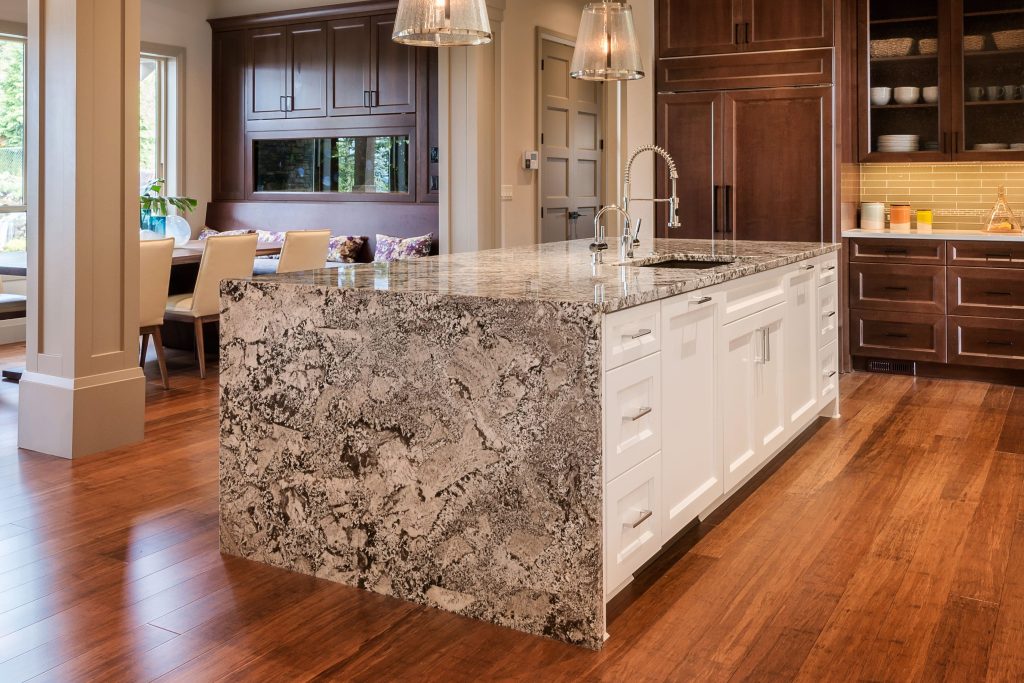
If your goal is to create a visual focal point, bold granite is your ally. Slabs with dramatic veining, rich colors, or high contrast can immediately draw the eye and anchor the entire room. This is especially effective in large kitchens or open-concept floor plans where the countertop becomes a statement piece. A striking kitchen island topped with granite can serve as a natural gathering spot, a design centerpiece, and a functional workspace all at once.
Conversely, if you prefer a more subtle, cohesive look, granite can be chosen in softer tones that echo the surrounding colors of the space. In this case, the goal is harmony rather than contrast. Subtle granite countertops help unify various elements—cabinet colors, flooring materials, wall tones, and backsplashes—while still offering the durability and natural beauty that homeowners expect.
For those selecting granite countertops, coordinating the countertop with other surfaces is a key part of achieving balance. Granite can be paired with complementary or contrasting backsplashes, depending on the desired effect. You can even extend the granite up the wall as a full-height backsplash for a seamless, contemporary look.
Lighting also plays a major role in how granite functions in a space. Under-cabinet lighting highlights the stone’s natural veining, while natural light brings out its organic texture. Homeowners should consider how their lighting will interact with polished, honed, or leathered finishes. A polished finish reflects light beautifully and brightens the room, while matte finishes absorb light and create a earthy, understated elegance.

How Can Granite Enhance Both Traditional and Modern Color Palettes?
Granite is one of the few natural materials that effortlessly adapts to a wide spectrum of color palettes. Whether your home features warm or cool tones, bold hues or neutrals, granite has options that can harmonize with your existing design.
For homeowners working with warm palettes—like deep browns, creams, golds, taupes, or terracotta accents—granite with warm undertones can enhance the inviting, cozy feel of the space. Many homeowners choose rich, multi-dimensional granite slabs that bring a mix of warm hues and intricate mineral patterns to the design.
If your style leans toward cooler color palettes—like whites, grays, blues, or charcoal—granite offers gorgeous slabs with cool veining and crystalline structures that complement these tones. These options are especially popular in modern and coastal-inspired homes where brightness and airiness are desired.
When selecting granite countertops in North Augusta, SC, it’s important to view your slab in the context of your home’s lighting conditions. Granite may look different under natural light versus LED lighting, and certain colors may appear warmer or cooler depending on the time of day. Taking a sample or viewing the slab during different times of the day can help ensure that the color aligns perfectly with your home’s palette.
Homeowners also have the option of mixing complementary granite slabs in different areas to enhance their color strategy. A darker, more dramatic granite on an island and a lighter granite on perimeter countertops can create visual variety while maintaining design cohesion.
How Do Details Like Edges, Thickness, and Finish Influence Your Home’s Aesthetic?
Often overlooked, details like edge profiles, slab thickness, and finish significantly impact how granite contributes to your home’s interior design. These customization options allow granite to adapt to different aesthetics in subtle yet impactful ways.
Edge profiles can transform the look of your countertops. A straight or beveled edge complements modern and minimalist spaces with its clean geometry. A bullnose or ogee edge fits seamlessly into more traditional designs. For rustic or transitional homes, a chiseled or eased edge adds organic character and craftsmanship.
Thickness is another design consideration. Thicker slabs (2 cm vs. 3 cm) make a bold visual statement and offer a more luxurious, substantial look. Thinner profiles create a sleek, modern appearance. Your slab thickness will influence the kitchen’s overall vibe and can even impact how the cabinetry appears in relation to the countertop.
Finish options also allow for design personalization. Polished granite is timeless and reflective, adding a glossy elegance. Honed granite, on the other hand, has a matte surface that contributes to a soft, sophisticated look. Leathered granite is tactile and textured, adding dimension and visual interest.
Homeowners selecting granite countertops should consider how these details align with their overall design goals. Each decision—edge, finish, and thickness—adds a layer of intention that helps unify the entire space.

How Can Granite Be Incorporated Beyond the Kitchen to Elevate Your Home’s Design?
While granite is most commonly associated with kitchen countertops, its design potential extends far beyond that. Granite can serve as a statement material throughout the home, helping create continuity and sophistication in multiple spaces.
Bathrooms benefit greatly from granite vanity tops, shower ledges, and tub surrounds, offering both durability and elegance. Laundry rooms, often overlooked in design planning, gain functionality and visual appeal with granite surfaces that withstand heavy daily use. Granite fireplace surrounds bring warmth and luxury to living areas, while outdoor kitchens thrive with granite’s heat and weather resistance.
For homeowners exploring granite countertops in North Augusta, SC, using granite across multiple rooms can unify the home’s design and tie together spaces that might otherwise feel disconnected. Granite’s natural patterns and durability make it an ideal material for blending function and aesthetic in nearly every part of the home.