


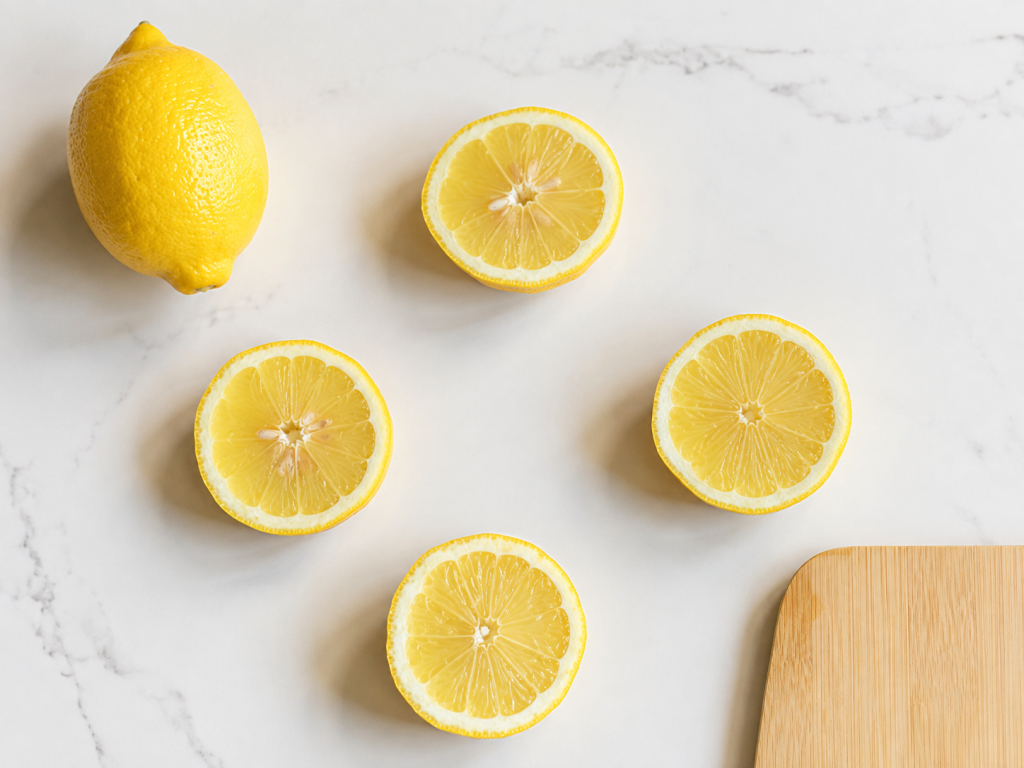
You should avoid leaving acidic foods, harsh cleaners, cooking oils, strongly colored liquids, abrasive products, and wet metal objects directly on marble countertops. Marble is primarily made of calcite, which reacts with acids. That means something as ordinary as lemon juice, vinegar, tomato sauce, wine, or certain bathroom and kitchen cleaners can dull the surface even when the stone is properly sealed.
The important distinction is between staining and etching. Sealer can help slow the absorption of liquids that cause stains, but it cannot stop an acidic substance from chemically reacting with marble and creating a dull etched mark.
At Granite Depot of Columbia, we install marble kitchen countertops in Kershaw, SC and regularly explain this difference before fabrication and installation. Marble can perform beautifully in a working kitchen, but it is a material that rewards a few consistent habits.
Which acidic foods should you keep off marble?
Acidic foods should be wiped from marble quickly because they can etch the surface within a relatively short period.
Common kitchen products that can affect marble include:
- lemon and lime juice;
- vinegar;
- tomatoes and tomato sauce;
- wine;
- citrus-based drinks;
- some sodas;
- pickling liquids;
- acidic salad dressings.
An etch is different from a stain. Acid reacts with calcium carbonate in the marble and physically changes the finish. On polished marble, the affected area may look dull or cloudy when viewed from an angle.
That is why putting a sealer on marble does not make it acid-proof.
A cutting board should be used when preparing lemons, tomatoes, or other acidic ingredients, and spills should be wiped rather than left until the end of cooking.
Which cleaning products can damage marble?
Avoid acidic, highly alkaline, or abrasive cleaners unless the product is specifically approved for natural marble.
Vinegar is one of the biggest mistakes we see because it is frequently recommended as a general household cleaner. It may work well on some materials, but its acidity makes it inappropriate for marble.
The same concern applies to many:
- citrus cleaners;
- lime removers;
- bathroom descalers;
- abrasive powders;
- scouring creams;
- rough cleaning pads.
For routine cleaning, a pH-neutral natural-stone cleaner is the safer choice. Mild dish soap diluted with warm water can also work for basic everyday cleaning, followed by drying the surface with a soft cloth.
Homeowners choosing marble kitchen countertops in Kershaw, SC should always check whether a new cleaning product is labeled as suitable for marble before using it across the entire countertop.
Can cooking oil stain marble?
Yes. Oil can penetrate marble and create a darker stain, especially when it remains on the surface for an extended period.
Olive oil, vegetable oil, butter, salad dressing, grease, and oily sauces are particularly relevant around cooking areas.
A properly applied penetrating sealer gives you more time to clean the spill before it enters the stone, but it does not create an impermeable film over the surface.
This makes the area beside a cooktop one of the places where good habits matter most.
If oil is spilled:
- blot it rather than spreading it;
- clean the area with a marble-safe cleaner;
- dry the surface;
- check whether a darker mark remains after drying.
Some absorbed oil stains can be treated with an appropriate stone poultice, but prevention is much easier than stain removal.
Should you put hot pans directly on marble?
Marble tolerates heat reasonably well, but we still recommend using a trivet rather than placing extremely hot cookware directly on the countertop.
Heat is not marble’s biggest weakness. Acids and staining are much more significant everyday concerns.
However, sudden temperature differences can place unnecessary thermal stress on natural stone, and trivets also protect the finish from dirty or rough cookware bottoms.
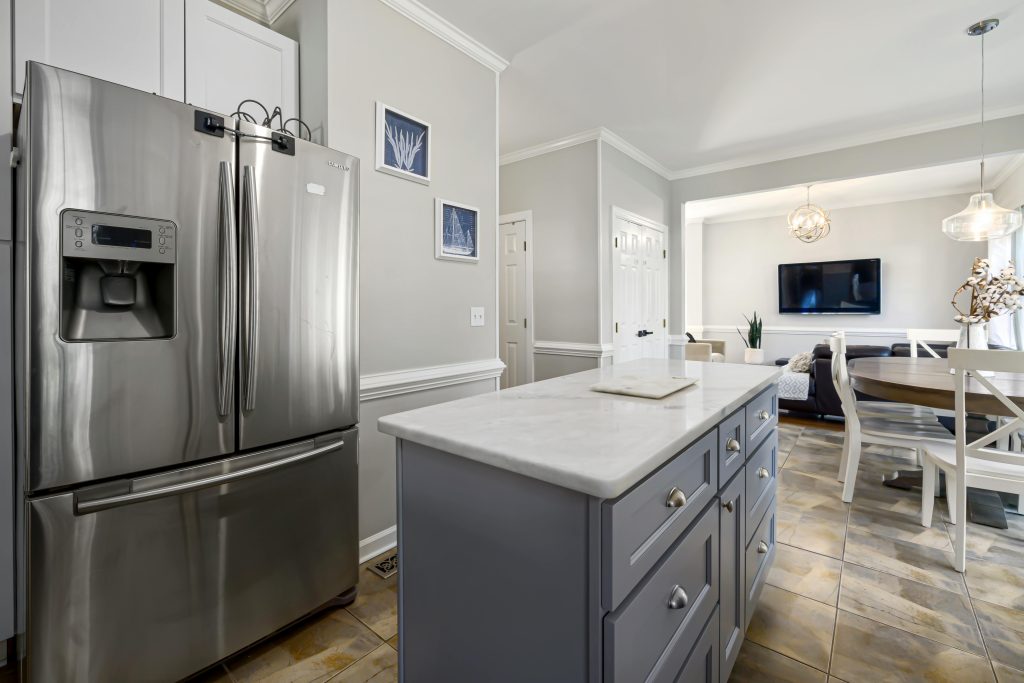
This is one area where marble behaves very differently from engineered quartz. Quartz contains polymer resins that make direct high heat a particular concern.
Granite and quartzite generally provide stronger combinations of heat resistance and everyday kitchen durability when homeowners want fewer restrictions around cooking.
Can cosmetics, soaps, or metal objects affect marble?
Yes. Products people do not normally think of as “food stains” can also leave marks on marble.
Soap, cosmetics, hair products, perfumes, colored liquids, and oily containers should not remain on the surface indefinitely. This is particularly important when marble is used in both kitchens and bathrooms.
Metal cans and containers can create another problem when water remains underneath them. Some metals can develop rust, and rust stains in porous natural stone can be difficult to remove.
The same principle applies around a kitchen sink.
Do not leave wet cast-iron cookware, metal containers, or continually damp items sitting in one place. Wiping the countertop dry also helps prevent mineral residue and water spotting.
Does marble color change how obvious the damage looks?
Yes. The marble color and pattern can significantly change how visible stains, scratches, and etching appear.
Bright, relatively uniform white marble makes dark stains easy to notice. Very dark marble can make light-colored etching particularly obvious because an etched section loses its original polished depth.
Moderately patterned marble is often more forgiving.
Popular marble varieties include Carrara, Calacatta, Statuario, Crema Marfil, Emperador, and Nero Marquina. Their backgrounds and vein patterns create very different maintenance experiences even though all natural marble shares sensitivity to acid.
Carrara’s gray-white background and distributed veining can disguise some everyday wear. Bright Calacatta and Statuario create a more dramatic appearance but often contain larger open white areas where a stain may be noticeable.
Ultimately, the best marble is not necessarily the one that hides everything—it is the one whose natural aging you are comfortable seeing.
Does a honed finish make marble easier to maintain?
A honed finish can make etching less visually obvious, although it does not make the marble resistant to acid.
Polished marble has a reflective surface. When acid removes some of that polish, the resulting dull area contrasts with the surrounding shine.
Honed marble already has a low-sheen surface, so minor etching may blend more naturally into the finish.
| Marble choice | Main advantage | Main concern |
|---|---|---|
| Polished marble | Rich color and strong shine | Etching can appear obvious |
| Honed marble | Minor dull marks blend better | Oils can be more noticeable |
| Light patterned marble | Hides some everyday variation | Dark stains can still show |
| Dark marble | Dramatic appearance | Etching and water marks may stand out |
Neither finish eliminates the need for prompt cleaning and appropriate sealing.
How does marble compare with other countertop materials?
Marble requires more attention than granite or quartz, but homeowners often choose it because natural marble has depth and veining that are difficult to duplicate exactly.
At Granite Depot of Columbia, our starting countertop prices are:
| Material | Starting price | Key maintenance issue |
|---|---|---|
| Granite | From $39/sq. ft. | Periodic sealing |
| Quartz | From $50/sq. ft. | Protect from direct high heat |
| Marble | From $65/sq. ft. | Etching and staining |
| Quartzite | Price available upon request | Periodic sealing |
Granite is often the easier natural-stone alternative for a busy cooking kitchen because it is harder and significantly less sensitive to acidic ingredients.
Quartz requires no routine sealing and is available from manufacturers such as Cambria, Silestone, Caesarstone, MSI Quartz, and Vicostone.
Marble makes the most sense when authentic natural veining is important enough that the homeowner accepts some maintenance and eventual patina.
How should marble be protected after installation?
Marble should be properly sealed when the individual stone requires it, cleaned promptly, and protected during food preparation.
At Granite Depot of Columbia, we help customers understand care requirements while selecting the slab and planning fabrication. Our countertop services include professional templating, custom fabrication, sink and cooktop cutouts, edge finishing, delivery, and installation.
After installation, simple habits make the biggest difference:
- keep cutting boards near food-prep areas;
- use coasters for citrus drinks and wine;
- wipe spills promptly;
- use trivets for hot cookware;
- clean with marble-safe products;
- test periodically for liquid absorption.
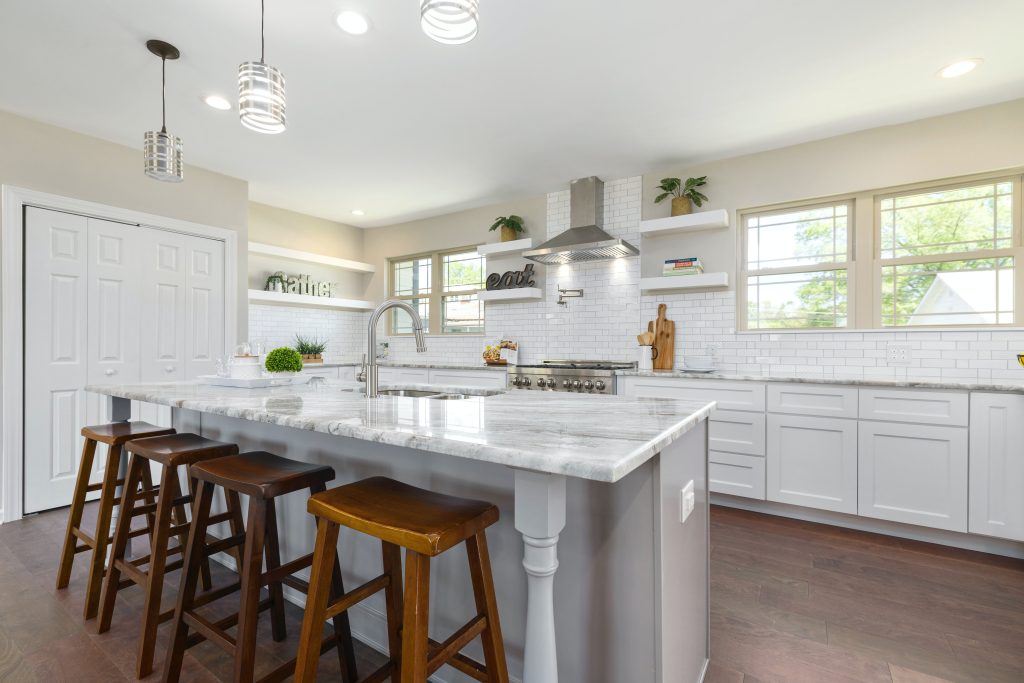
For marble kitchen countertops in Kershaw, SC, these habits are generally more useful than trying to keep the surface untouched.
Frequently Asked Questions
Can you use vinegar to clean marble countertops?
No. Vinegar is acidic and can etch marble, leaving a dull area on the finish. Use a pH-neutral cleaner specifically designed for natural stone instead.
Does sealing marble prevent lemon juice from damaging it?
No. Sealer primarily slows liquid absorption and helps reduce staining. It cannot prevent the chemical reaction between acidic substances such as lemon juice and the calcite in marble.
How much do marble countertops cost?
At Granite Depot of Columbia, marble starts at approximately $65 per square foot. Final cost depends on the selected marble, slab requirements, square footage, finish, edge profile, cutouts, custom fabrication, and installation.
How long does a marble countertop project take?
Most projects take approximately 2–3 weeks. Fabrication generally requires 7–10 business days after templating, followed by around 1–2 days for installation.
Does Granite Depot of Columbia serve Kershaw, SC?
Yes. Granite Depot of Columbia serves homeowners looking for marble kitchen countertops in Kershaw, SC, including marble selection, professional templating, custom fabrication, sink and cooktop cutouts, edge finishing, delivery, and installation.
Granite Depot of Columbia
71 Berkshire Dr, Columbia, SC 29223
Phone: (803) 956-4555