

Quartz is generally resistant to everyday kitchen acids such as lemon juice, vinegar, and tomato-based foods, but that does not mean every acidic substance should be left on the surface indefinitely. Unlike marble, quartz does not normally etch from ordinary exposure to acidic foods. However, prolonged contact, harsh chemical products, or cleaners that are not suitable for quartz can still affect the surface.
For most households, this means you do not need to worry every time lemon juice splashes onto the countertop. Simply wipe it up and continue with your normal cleaning routine.
At Granite Depot of Columbia, we help homeowners choose materials based on how they actually use their kitchens. For customers considering quartz kitchen countertops in Chester, SC, understanding how quartz reacts to common foods and cleaning products can make everyday maintenance much easier.
Can lemon juice damage quartz countertops?
Lemon juice is acidic, but quartz is generally much more resistant to acids than natural marble.
This is one of the reasons quartz is popular in busy kitchens. Lemon juice, lime juice, tomatoes, vinegar, wine, and other acidic foods are common during food preparation, and occasional contact typically does not create the same etching concerns associated with marble.
Still, we recommend wiping acidic spills reasonably quickly.
The best approach is simple:
- Wipe up lemon juice after a spill.
- Use a soft cloth or sponge.
- Clean the area with a suitable quartz cleaner if necessary.
- Avoid abrasive scrubbing.
Quartz is designed to handle everyday kitchen activity, but good habits help preserve the original appearance of the surface.

Why doesn’t lemon juice etch quartz like marble?
The difference comes down to the composition of the materials.
Marble is a natural stone that contains minerals susceptible to reactions with acids. Acidic substances can create dull, lighter-looking areas known as etching.
Quartz countertops are engineered using natural quartz combined with resins and other materials. Their surface is generally much less reactive to everyday kitchen acids.
That means a splash of lemon juice that might leave a visible mark on marble is much less likely to etch a quartz countertop.
This is an important distinction when comparing quartz kitchen countertops in Chester, SC with natural-stone alternatives.
However, acid resistance does not mean chemical resistance to every substance. Strong industrial chemicals and inappropriate cleaners can still cause problems.
Can vinegar be used on quartz?
Vinegar is another common kitchen acid.
Although brief contact with vinegar is generally less concerning than prolonged exposure to aggressive chemicals, we do not recommend making acidic household products your regular quartz cleaning solution.
A quartz-safe cleaner is a better choice for routine maintenance.
If vinegar spills while you are cooking, simply wipe it up. There is no reason to panic over a small splash.
The bigger concern is deliberately using strong or acidic products as everyday cleaners when the quartz manufacturer does not recommend them.
What about tomato sauce and other acidic foods?
Tomato sauce is another everyday example.
Tomatoes are acidic, but normal food preparation is not generally a problem for quartz.
If sauce spills onto the countertop, wipe it up with a soft cloth and an appropriate cleaner.
Other common acidic foods and drinks include:
- oranges;
- lemons;
- limes;
- grapefruit;
- vinegar-based dressings;
- wine;
- tomato sauce;
- some fruit juices.
Quartz is well suited to kitchens where these foods are regularly prepared.
Prompt cleanup is still a good habit because food residue can leave a film or discoloration even when the quartz itself is resistant to etching.

Can acidic foods stain quartz?
Quartz is non-porous, which makes it highly resistant to many everyday stains.
That said, “stain-resistant” does not mean “impossible to stain.”
Some substances can leave discoloration when they remain on the surface for an extended period, particularly if they contain strong pigments or other ingredients.
Examples can include:
- food coloring;
- turmeric;
- certain sauces;
- cosmetics;
- permanent markers.
When something spills, cleaning it sooner rather than later is the safest approach.
For quartz kitchen countertops in Chester, SC, this is one of the major practical advantages of quartz: everyday food spills are generally much easier to manage than they can be on more porous materials.
Are all quartz countertops equally resistant to acids?
Quartz products are generally designed to withstand normal household use, but individual manufacturers can have specific care instructions and warranty requirements.
The exact composition and surface finish can vary between products.
This is why we recommend checking the manufacturer’s guidelines for the particular quartz you choose.
The same advice applies to cleaning products. A product that is appropriate for one surface is not automatically appropriate for every quartz countertop.
When selecting a slab, it is useful to ask about both its appearance and recommended maintenance.
Can cleaning products damage quartz?
Yes. In many cases, the cleaning product is a greater concern than lemon juice.
Avoid using aggressive chemicals unless the manufacturer specifically approves them.
Products that deserve caution include:
- abrasive powders;
- oven cleaners;
- drain cleaners;
- concentrated solvents;
- highly alkaline chemicals;
- strong paint removers;
- harsh scouring products.
These products can potentially affect the finish, discolor the surface, or leave residue.
For everyday cleaning, there is rarely a reason to use something this aggressive.
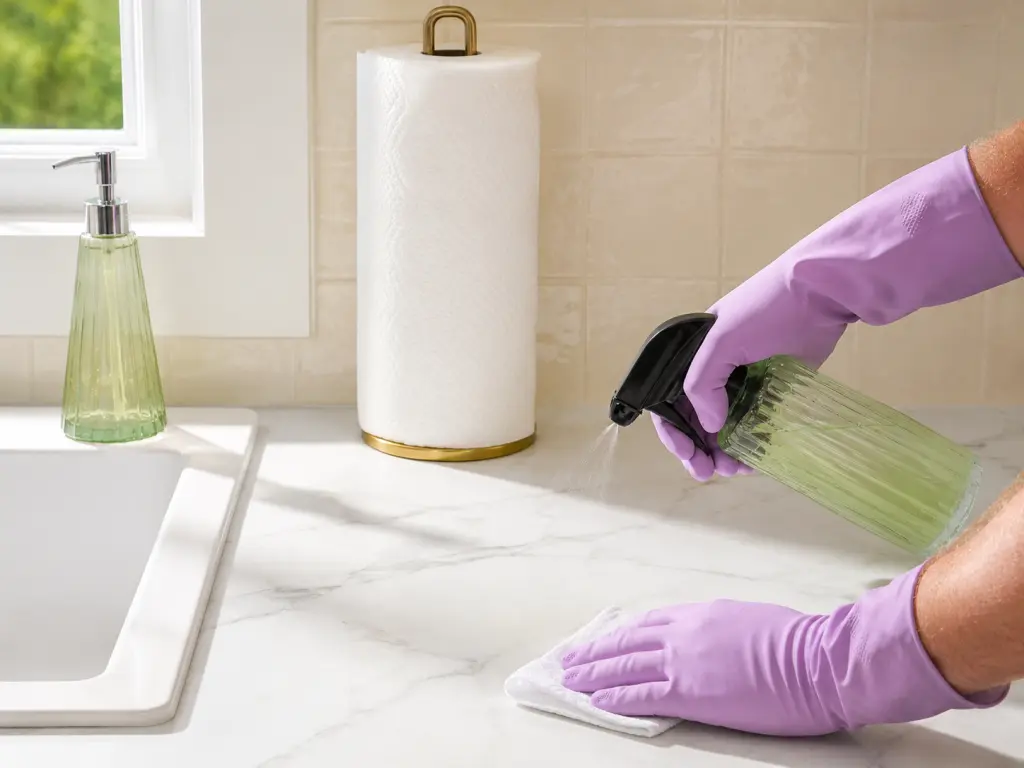
What is the best way to clean quartz after an acidic spill?
You do not need a complicated process.
For a fresh lemon juice, vinegar, or tomato spill:
- Wipe up the liquid with a soft cloth.
- Use warm water if residue remains.
- Apply a quartz-safe cleaner when needed.
- Wipe the surface clean.
- Dry it with a soft cloth.
Avoid aggressively scrubbing the area simply because the spill was acidic.
Quartz generally does not require special treatment after normal contact with kitchen acids.
Is quartz better than marble for a kitchen with lots of acidic foods?
If your kitchen regularly uses lemons, vinegar, tomatoes, wine, and other acidic ingredients, quartz can be easier to live with.
Marble can develop etching from acids, even when the homeowner cleans the spill relatively quickly.
Quartz is much less susceptible to this particular issue.
That does not make quartz universally better than marble. Marble offers natural variation and veining that many homeowners specifically want.
The choice comes down to priorities.
Quartz: low maintenance and strong resistance to everyday kitchen acids.
Marble: natural character and distinctive veining, with greater sensitivity to acids.
For homeowners comparing quartz kitchen countertops in Chester, SC, this difference can be an important part of the decision.
Can hot cookware and lemon juice damage quartz differently?
Yes. Heat is a separate consideration from acids.
Quartz is generally resistant to everyday kitchen spills, but prolonged exposure to very high temperatures can potentially affect the resin component of the material.
We recommend using trivets or heat-resistant pads under:
- hot pots;
- frying pans;
- baking dishes;
- slow-cooker inserts.
In other words, you should be more concerned about placing a very hot pan directly on quartz than about a few drops of lemon juice.
How much does a quartz countertop cost?
The final cost of quartz depends on the slab, countertop dimensions, fabrication, edge profile, cutouts, backsplash, delivery, and installation.
A larger island, multiple sink cutouts, waterfall sides, or a full-height backsplash can increase the fabrication requirements.
When comparing quotes, look at the complete project rather than only the price per square foot.
Ask whether the estimate includes:
- templating;
- fabrication;
- edge finishing;
- sink cutout;
- cooktop cutout;
- delivery;
- installation.
This makes it easier to compare different countertop companies fairly.
What should you remember about acids and quartz?
You do not need to treat lemon juice as an emergency every time it touches your quartz countertop.
Quartz is designed for everyday kitchen use and is generally highly resistant to common food acids. The more important rule is to avoid prolonged exposure and use appropriate cleaning products.
For everyday care:
- wipe spills reasonably quickly;
- use soft cleaning tools;
- choose quartz-safe products;
- avoid abrasive cleaners;
- avoid harsh chemicals;
- use trivets for very hot cookware;
- follow the manufacturer’s care recommendations.
For homeowners considering quartz kitchen countertops in Chester, SC, these simple habits can help keep the countertop looking good for years without making maintenance complicated.
Frequently Asked Questions
Can lemon juice damage quartz countertops?
Normal, brief contact with lemon juice generally does not etch quartz the way it can affect marble. However, spills should still be cleaned rather than left on the surface for extended periods.
Can vinegar be used on quartz?
Vinegar is acidic, so it is not the preferred everyday cleaning solution. A quartz-safe cleaner is a better choice for routine maintenance.
Can tomato sauce stain quartz?
Quartz is non-porous and highly stain-resistant, but spills should still be cleaned promptly. Strongly pigmented substances can potentially leave discoloration if allowed to remain on the surface.
Is quartz more acid-resistant than marble?
Yes. Quartz is generally much more resistant to everyday kitchen acids than marble. Marble can develop etching from acidic foods and drinks.
Does quartz need to be sealed?
No. Quartz is non-porous and does not require routine sealing.
Can harsh cleaners damage quartz?
Yes. Abrasive products, strong solvents, highly alkaline chemicals, and certain specialty cleaners can affect quartz. Always follow the manufacturer’s care instructions.
Does Granite Depot of Columbia offer quartz countertops?
Yes. Granite Depot of Columbia offers quartz countertops and serves homeowners looking for quartz kitchen countertops in Chester, SC, with professional templating, custom fabrication, cutouts, edge finishing, delivery, and installation.
The main takeaway is simple: a little lemon juice is not a reason to worry about your quartz countertop. Clean ordinary food spills, use the right products, and avoid aggressive chemicals. With those basic habits, quartz can be a practical choice for a busy kitchen.