

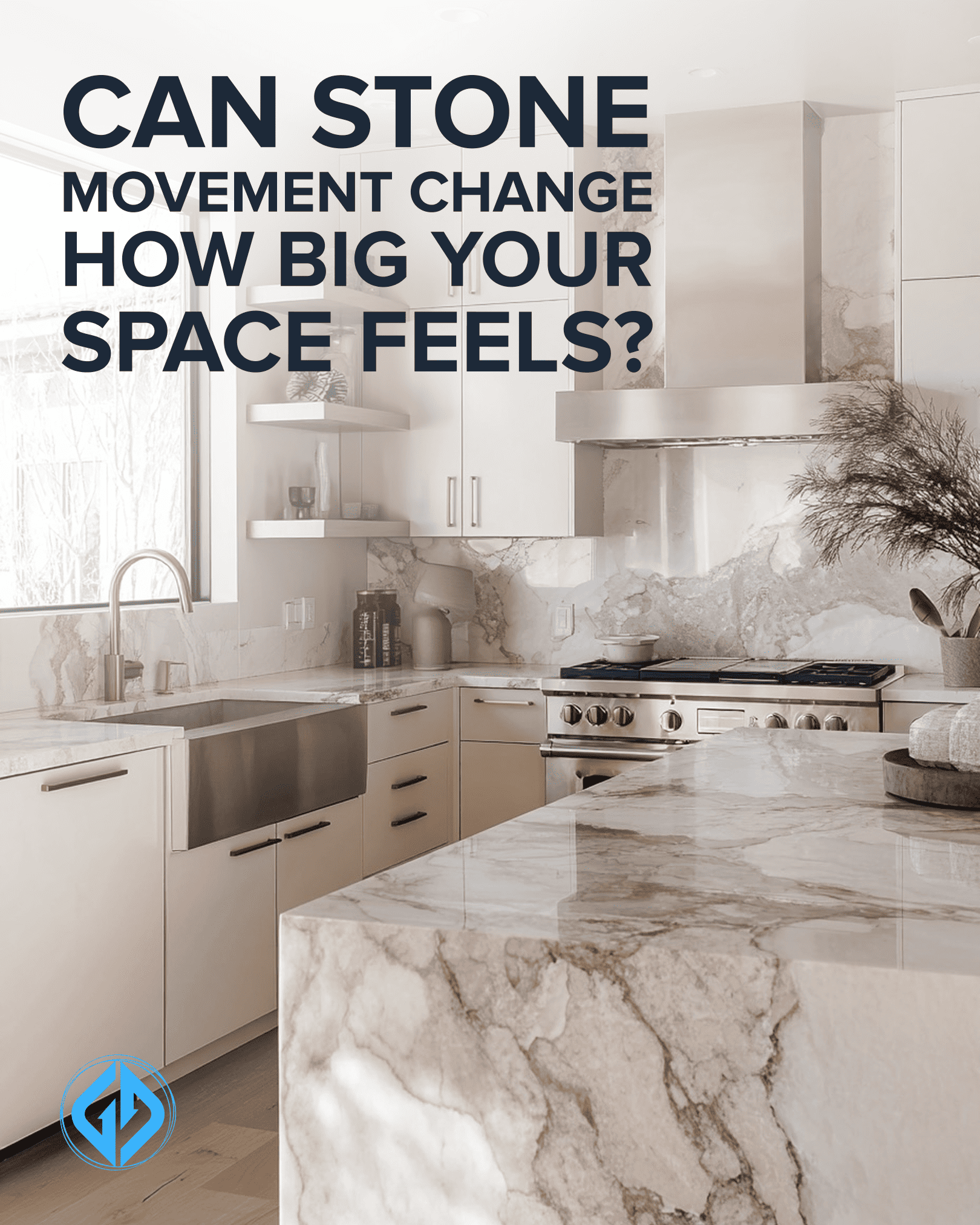
When homeowners begin shopping for natural stone countertops, they often focus on color first. White, gray, black, warm beige, cool tones. These choices feel intuitive. Yet experienced designers and fabricators frequently talk about something else entirely: movement.
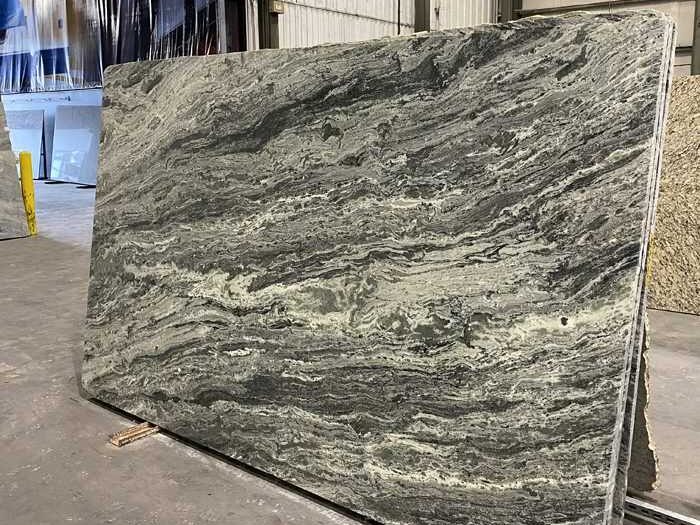
Stone movement refers to the natural flow of veins, mineral lines, color transitions, and pattern variation across the slab. Some stones appear calm and consistent, with subtle grain-like texture. Others display dramatic sweeping lines or bold contrast between minerals. Neither is inherently better than the other — but the type of movement in a stone can dramatically influence how a room feels.
Granite Depot of Columbia often explains that movement acts almost like visual architecture. It can guide the eye across the space, expand the perception of surfaces, or create a focal point that anchors the room. A kitchen island with strong directional veining, for example, can subtly elongate the entire kitchen when installed correctly. The same slab placed differently may create a completely different spatial effect.
This is one reason homeowners searching for countertop fabricators in Union, SC are encouraged to look at full slabs rather than small samples. A small sample might show color accurately but completely miss the larger movement pattern that defines how the stone interacts with the room.
Movement is not simply decoration. It shapes perception. And in interior design, perception often determines whether a room feels tight, open, calm, or visually dynamic.
Can Stone Movement Actually Make a Small Space Feel Bigger?
At first, it might sound surprising that a countertop surface could influence the perceived size of a room. Yet designers regularly use pattern direction to manipulate visual scale.
Imagine standing in a kitchen with a compact island. If the stone installed across the island has long horizontal veins that travel from one end to the other, the eye naturally follows those lines. The result is a subtle sense of width. The island appears longer than it physically is. Now imagine the same island with chaotic pattern movement that breaks in multiple directions. Instead of guiding the eye outward, the pattern concentrates attention within a small zone, making the island feel visually smaller.
Granite Depot of Columbia frequently helps homeowners understand how directional movement affects spatial perception. Quartzite with linear veining, for instance, can visually stretch countertops across the room. Granite with softer flowing mineral patterns can create gentle continuity between countertop surfaces and backsplashes.
When homeowners consult countertop fabricators in Union, SC, discussing movement early in the selection process becomes essential. The goal is not simply choosing a beautiful slab. It is choosing a slab that works with the architecture of the room.
Even subtle movement can influence how the kitchen breathes visually. In smaller kitchens, stones with controlled linear flow often help create openness. In larger spaces, more dramatic movement can add energy without overwhelming the room.
Stone is not just a surface. It becomes part of the spatial language of the home.
How Does Slab Orientation Influence the Feeling of a Room?
Movement in stone is only half of the equation. The other half is orientation. The direction in which the slab is cut and installed can completely transform how the pattern behaves in the space.
Granite Depot of Columbia pays careful attention to slab layout before fabrication begins. A slab with diagonal veining may look striking in the warehouse, but once cut into sections for counters and islands, the orientation of those veins becomes critical. Aligning them intentionally can create continuity that flows through the entire kitchen.
For example, when a vein travels from the perimeter countertops into the island, the room feels unified. The eye moves naturally from one surface to another. Without thoughtful planning, those same veins could appear disconnected, breaking visual flow.
Homeowners researching countertop fabricators often underestimate how much planning occurs before a single cut is made. Professional fabricators map the slab digitally or physically, ensuring that key sections of movement land in the most visually impactful locations.
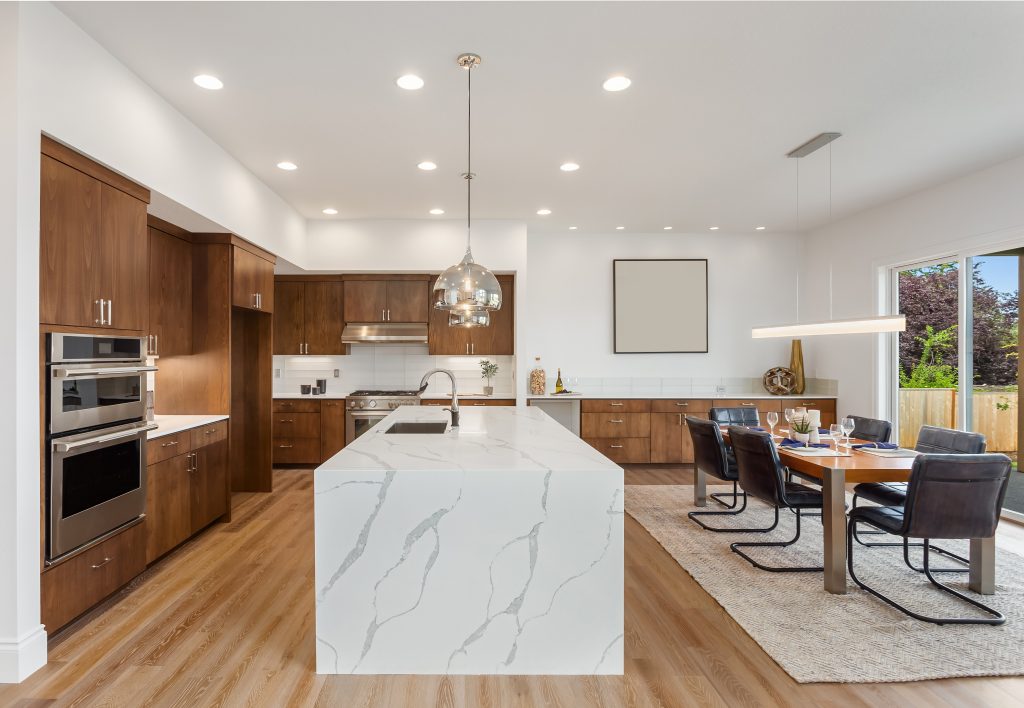
Waterfall islands provide a perfect example. When the vein pattern continues seamlessly down the side of the island, the effect is dramatic and architectural. The stone appears almost sculptural. Achieving that look requires precise planning and cutting — but the visual payoff is substantial.
Orientation transforms movement into design strategy. Without it, even the most beautiful slab may not reach its full potential.

Do Different Stone Types Create Different Visual Effects?
Not all natural stones behave the same visually. Granite, marble, and quartzite each produce different kinds of movement, and those differences influence how the room feels.
Granite often displays mineral patterns that resemble constellations — small flecks of quartz, mica, and feldspar scattered throughout the slab. This type of movement tends to create texture rather than directional flow. It works beautifully in kitchens where homeowners want depth without dramatic lines dominating the design.
Marble typically features flowing veins that travel across the surface like rivers. These veins can guide the eye elegantly across a countertop, which is why marble has long been associated with classical architecture and timeless interiors.
Quartzite often sits somewhere between the two. Many quartzites display long, sweeping veins combined with crystalline texture. This balance allows quartzite to add both movement and subtle sparkle under lighting.
Granite Depot of Columbia helps clients explore how these differences influence the overall design of the kitchen. Some homeowners prefer calm surfaces that allow cabinetry and lighting to stand out. Others want the countertop itself to act as the centerpiece.
For anyone searching for countertop fabricators in Union, SC, understanding how each stone type behaves visually is as important as evaluating durability. The right movement can transform a kitchen from ordinary to unforgettable.
Natural stone does not follow a template. Each slab tells its own story.
Why Do Designers Spend So Much Time Choosing the “Right” Slab?
Many homeowners are surprised when designers spend significant time walking through stone warehouses studying slabs from different angles. But that process reveals details that cannot be captured in small samples.
Lighting affects how movement appears. A slab that looks quiet under dim warehouse lighting may reveal dramatic veins under brighter showroom lights. Likewise, a pattern that feels intense up close may soften beautifully once installed across a large island.
Granite Depot of Columbia encourages homeowners to view slabs from multiple distances. Stand close to observe texture. Step back to see how the pattern behaves across the entire surface. This perspective shift helps determine whether the movement will complement the scale of the room.
Homeowners working with countertop fabricators often discover that the slab they initially overlooked becomes the perfect choice once viewed in context. Movement that seems subtle in the warehouse may create exactly the visual expansion a kitchen needs.
Choosing stone is not about finding the “most dramatic” slab or the “most neutral” one. It is about selecting a piece that interacts naturally with the space it will inhabit.
In design, harmony matters more than intensity.
How Can the Right Stone Movement Transform an Entire Kitchen?
When movement, orientation, and stone type align, something remarkable happens. The countertop stops being just a countertop. It becomes the visual backbone of the room.
A large island with graceful quartzite veins can feel like a landscape unfolding across the kitchen. Granite with gentle mineral texture can ground the design without drawing excessive attention. Marble with flowing lines can create an atmosphere of calm sophistication.
Granite Depot of Columbia has seen countless kitchens transformed not by dramatic renovations, but by thoughtful stone selection. The right slab changes how light travels across the room. It changes where the eye rests. It changes how the space feels when someone walks in.
For homeowners exploring countertop fabricators in Union, SC, the lesson is simple: stone movement matters more than many people realize. It shapes the mood, scale, and rhythm of the entire kitchen.
The best kitchens rarely rely on excessive decoration. Instead, they allow one or two materials to shine. Natural stone, with its organic movement and timeless character, often becomes that defining element.
In the end, movement in stone mirrors movement in nature. It is never perfectly symmetrical, never artificially uniform. Yet within that natural variation lies the ability to make a room feel larger, calmer, and more alive.
And sometimes, the difference between an ordinary kitchen and an extraordinary one is simply the direction a vein travels across a slab.