

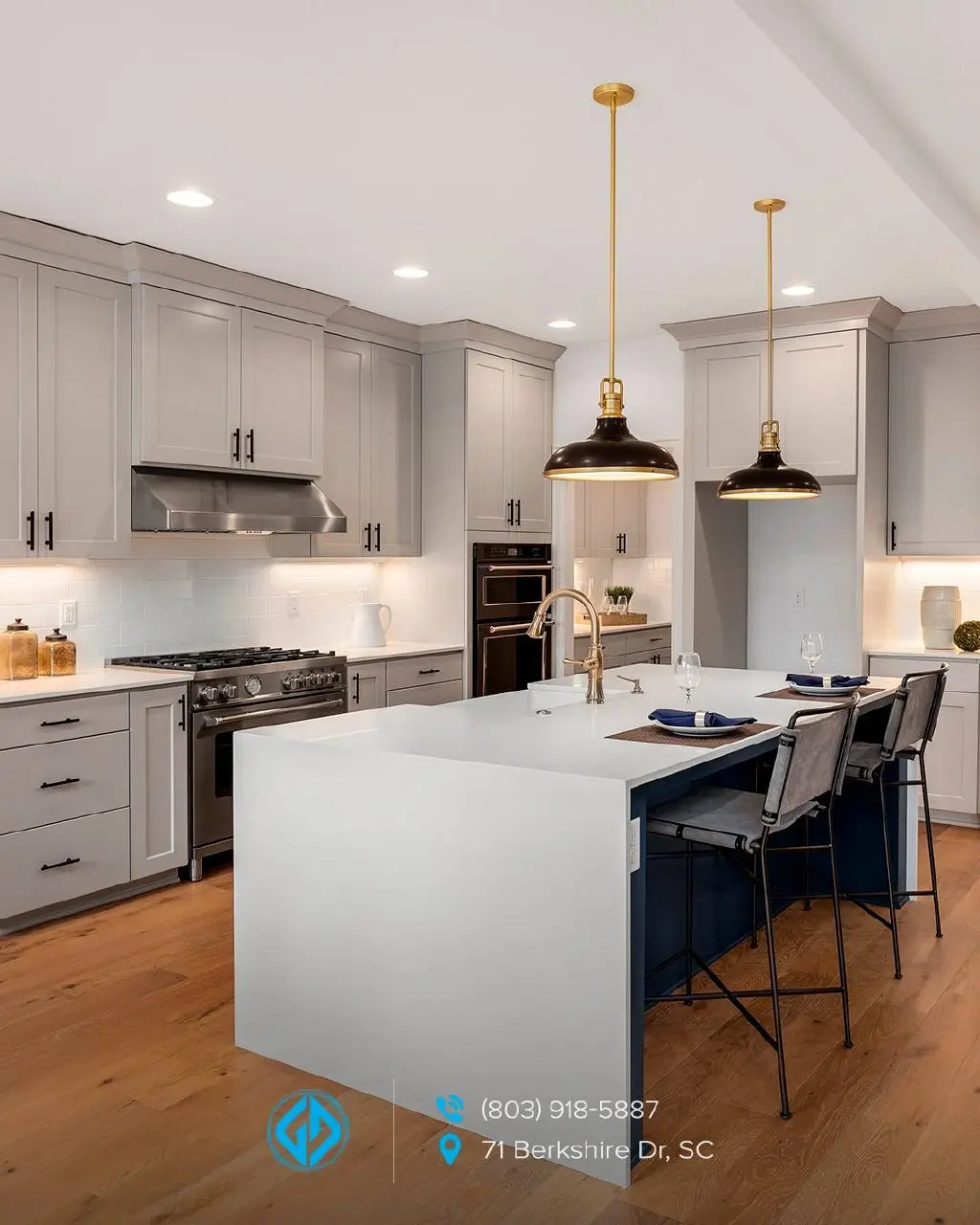
A waterfall edge typically adds around $800-$2,500 per side to a kitchen island with standard granite or quartz, although premium stone and intricate vein matching can cost considerably more. The increase comes from extra material, specialized cutting, precise corner joints, and additional installation work. Unlike a decorative edge profile, a waterfall uses full vertical panels that extend from the countertop toward the floor.
At Granite Depot of Columbia, we help homeowners decide whether a one-sided or two-sided waterfall makes sense for their kitchen and budget. When planning kitchen countertops in Columbia, SC, understanding these additional costs before selecting a slab can prevent unexpected expenses.
Why Does a Waterfall Edge Cost More Than a Standard Island?
A waterfall island requires additional material and more complex fabrication. Instead of ending at the horizontal countertop, the stone continues vertically down one or both ends of the cabinetry.
The extra work typically includes:
- Additional stone panels.
- Precise measurements and cutting.
- Mitered joints at the corners.
- Vein and pattern alignment.
- Extra handling and installation.
- Additional planning for cabinet and floor conditions.
The mitered joint is particularly important. Fabricators commonly cut adjoining pieces at 45-degree angles so the countertop appears to continue naturally down the side.
How Much Additional Material Does a Waterfall Island Need?
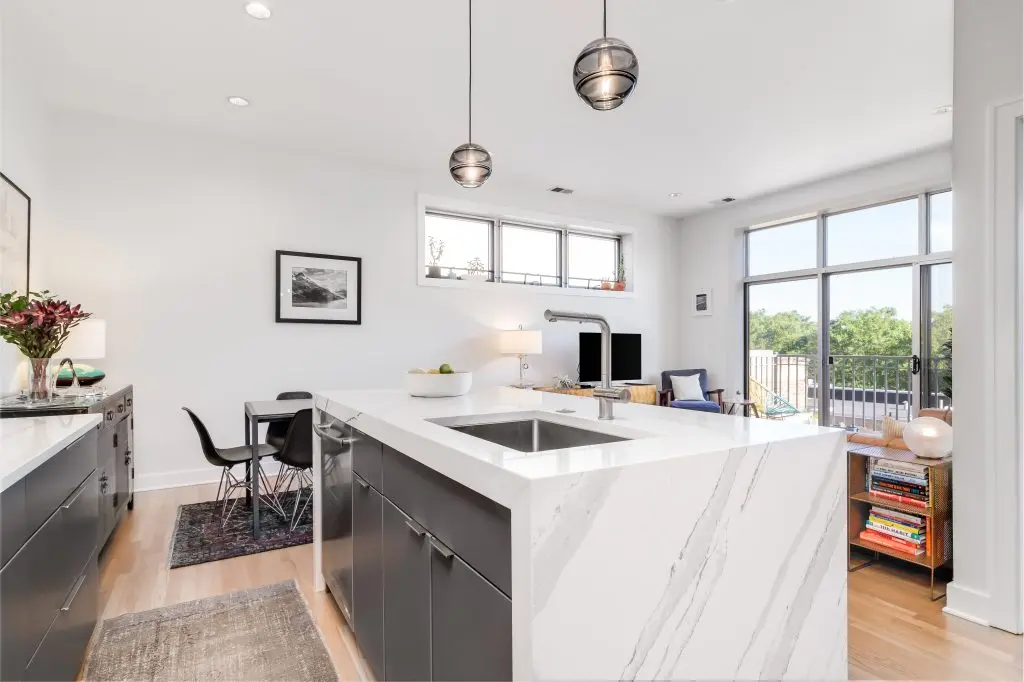
A typical waterfall panel requires approximately 9-12 square feet of additional material, depending on the island’s depth and height.
For homeowners choosing kitchen countertops in Columbia, SC, the number of waterfall sides makes a noticeable difference.
| Waterfall design | Approximate additional stone |
|---|---|
| One side, 36 inches deep | 9 sq. ft. |
| One side, 48 inches deep | 12 sq. ft. |
| Two sides, 36 inches deep | 18 sq. ft. |
| Two sides, 48 inches deep | 24 sq. ft. |
These examples assume approximately 36-inch-high panels. The final dimensions depend on the actual kitchen measurements.
A deeper island or one with seating overhangs can require larger panels. Pattern matching and trimming may also increase the amount of slab material needed beyond the finished panel area.
How Much Does a Waterfall Edge Cost in Columbia, SC?
For a standard granite or quartz waterfall, a useful 2026 planning range is approximately $800-$2,500 per additional side, including material and specialized work. This is a general project benchmark, not a fixed local installation rate. Premium marble, quartzite, or elaborate vein matching can increase the price substantially.
For comparison, standard countertop installation in Columbia is commonly budgeted around $83-$93 per square foot for granite, $70-$90 for quartz, and $114-$130 for marble. A regular 40-square-foot granite countertop would therefore cost approximately $3,320-$3,720 installed, before a waterfall upgrade.
At Granite Depot of Columbia, our starting material prices are:
| Material | Starting price | 18 additional sq. ft. |
|---|---|---|
| Granite | $39/sq. ft. | $702 |
| Quartz | $50/sq. ft. | $900 |
| Marble | $65/sq. ft. | $1,170 |
| Quartzite | Upon request | Project-specific |
The table shows additional material value only, not a finished waterfall installation price. Cutting, mitering, installation, waste, and the potential need for another slab affect the final quote.
When comparing kitchen countertops in Columbia, SC, ask for the waterfall panels to be included in the complete project estimate.
Which Material Is Best for a Waterfall Kitchen Island?
All four major countertop materials can create beautiful waterfall designs, but the best option depends on the appearance, maintenance, and budget you prefer.
Black Pearl granite can produce a dramatic dark island with subtle mineral movement. Its relatively consistent appearance may make pattern transitions less demanding than with heavily veined stone.
Cambria Brittanicca, an engineered quartz design, features broad flowing veins that can create a striking waterfall effect when the layout is carefully planned.
Carrara marble offers natural gray veining and a softer appearance. Its surface requires appropriate care because acidic substances can cause etching.
Taj Mahal quartzite has warm natural movement that can look particularly attractive when continued down the island sides. Vein alignment may require additional fabrication planning.
At Granite Depot of Columbia, we recommend considering how the pattern will continue across the corner rather than choosing only by color. Specific material availability should be confirmed before ordering.
Does a Waterfall Island Always Require an Extra Slab?
No. A waterfall can sometimes be fabricated from stone already allocated to the project, but the layout determines whether the available material is sufficient.
For example, if the horizontal island uses most of a slab, there may not be enough usable stone left for two vertical panels.
Even if the remaining square footage appears sufficient, the leftover pieces may have the wrong dimensions or vein direction.
This is particularly important with dramatic natural stones. Matching the movement across a corner can require pieces cut from specific positions within a slab.
If another full slab is needed, the cost may increase significantly.
Is a One-Sided Waterfall More Affordable Than Two Sides?
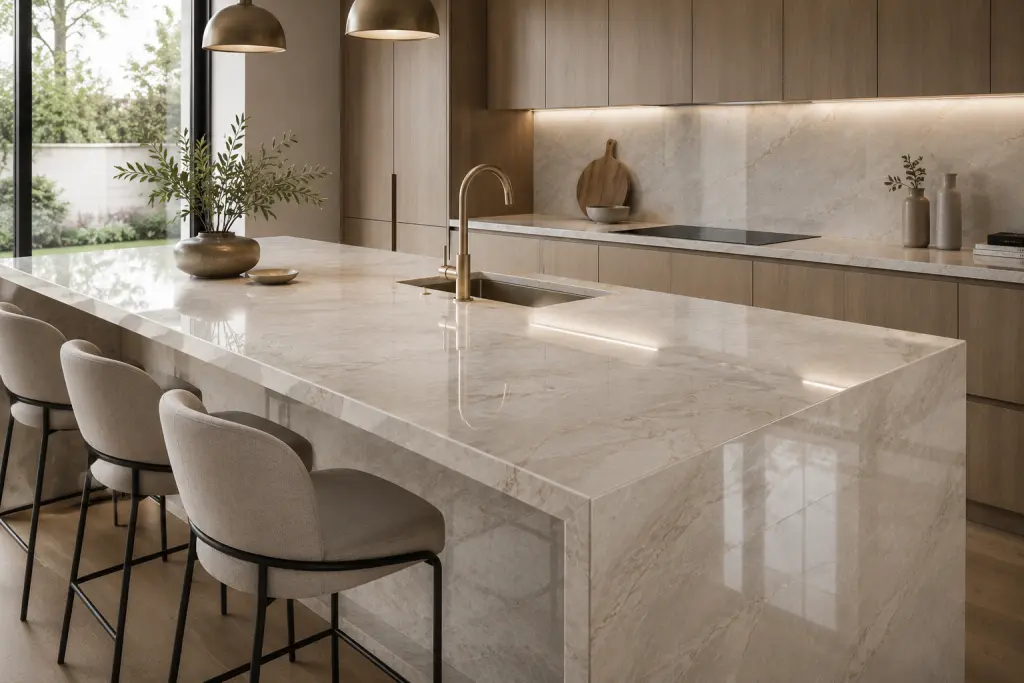
Yes. A one-sided waterfall requires less material and fabrication work while still creating a strong visual feature.
For example, a 36-inch-deep vertical panel uses approximately 9 square feet of stone. At our granite starting price of $39 per square foot, that represents $351 in additional starting material value, before fabrication and installation.
Two identical panels would require approximately 18 square feet, bringing the starting material value to $702.
A single waterfall often works well when one end of the island faces the living or dining area while the other end is less visible.
For a freestanding island visible from every direction, two matching panels may create a more balanced design.
Does Vein Matching Make Waterfall Countertops More Expensive?
It can. Highly veined materials require careful planning to make the pattern appear continuous as it turns from the horizontal countertop onto the vertical panel.
A simple, evenly patterned granite may not require extensive matching. Marble-look quartz and strongly veined marble or quartzite often demand more detailed slab positioning.
We plan the orientation before cutting so that important veins are not lost at the corner.
The more precisely the design needs to align, the more material and fabrication time the project may require.
What Should You Check Before Choosing a Waterfall Edge?
The waterfall design needs to work with the island’s structure and everyday function.
We recommend reviewing:
- Cabinet stability and leveling.
- Finished flooring height.
- Island dimensions and seating overhangs.
- Electrical outlets on the cabinet ends.
- The position of sink or cooktop cutouts.
- The proposed mitered joints.
- Stone thickness and panel support.
A waterfall panel is not automatically a structural leg. The island countertop still needs appropriate cabinet support unless the design specifically provides for a load-bearing stone element.
Plan these details before fabrication rather than trying to add waterfall panels after installation.
How Long Does Waterfall Countertop Fabrication Take?
Most countertop projects take approximately 2-3 weeks overall, depending on material availability and complexity.
After final templating, fabrication generally takes 7-10 business days, followed by approximately 1-2 days for installation. A waterfall design with complicated pattern matching or additional slab requirements may take longer.
Our services include material selection, professional templating, custom fabrication, mitered edge preparation, cutouts, delivery, and installation.
Frequently Asked Questions
How Much Extra Does a Two-Sided Waterfall Cost?
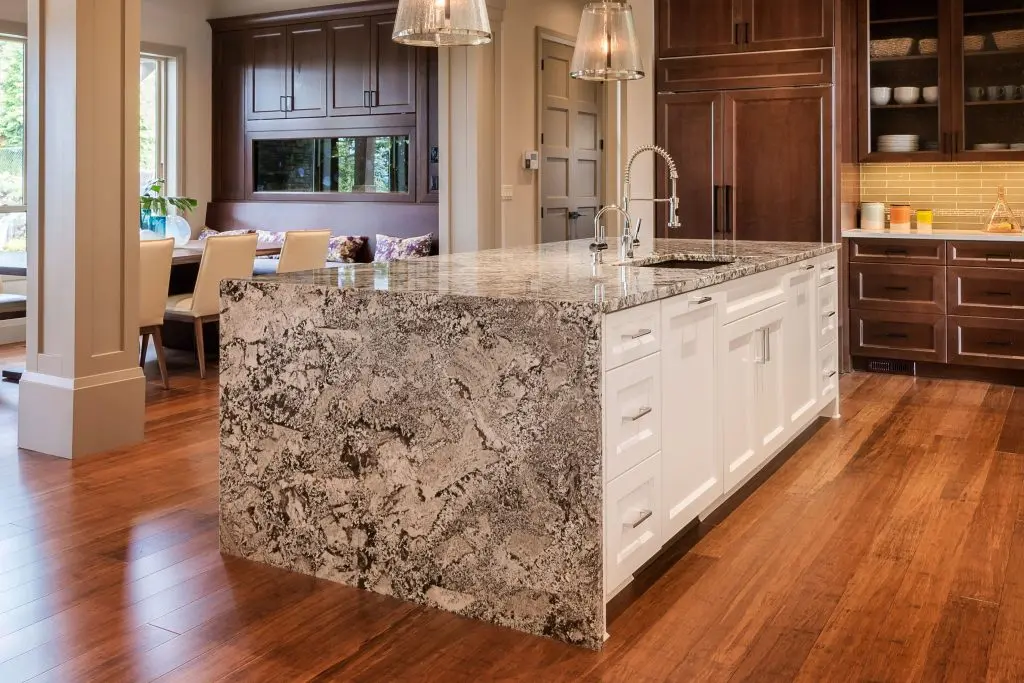
A two-sided granite or quartz waterfall can add several thousand dollars to an island. The exact increase depends on material, panel dimensions, fabrication, installation, and whether another slab is necessary.
Can You Add a Waterfall Edge to an Existing Countertop?
Sometimes, but it is often impractical. The existing countertop may need extensive cutting, and matching new stone to the original can be difficult. A professional evaluation is necessary.
Does a Waterfall Island Need Thicker Stone?
Not necessarily. Thickness and support requirements depend on the material and design. The top and vertical panels must be fabricated and joined using a suitable construction method.
Is a Waterfall Edge Worth the Extra Money?
It can be if the island is a major focal point, particularly in an open-concept kitchen. A single visible waterfall side can provide much of the effect at a lower cost.
Does Granite Depot of Columbia Have a Showroom in Columbia, SC?
Yes. Our showroom is located at 71 Berkshire Dr, Columbia, SC 29223. You can visit to explore stone options, view available slabs, and discuss waterfall island designs and pricing with our team.
A waterfall edge can transform a standard island into an architectural feature, but the best design is one that balances appearance with the actual fabrication budget. If you’re planning kitchen countertops in Columbia, SC, bring your island dimensions to our showroom so we can help you compare material options and get a project-specific estimate.
Granite Depot of Columbia
71 Berkshire Dr, Columbia, SC 29223
Phone: (803) 956-4555