

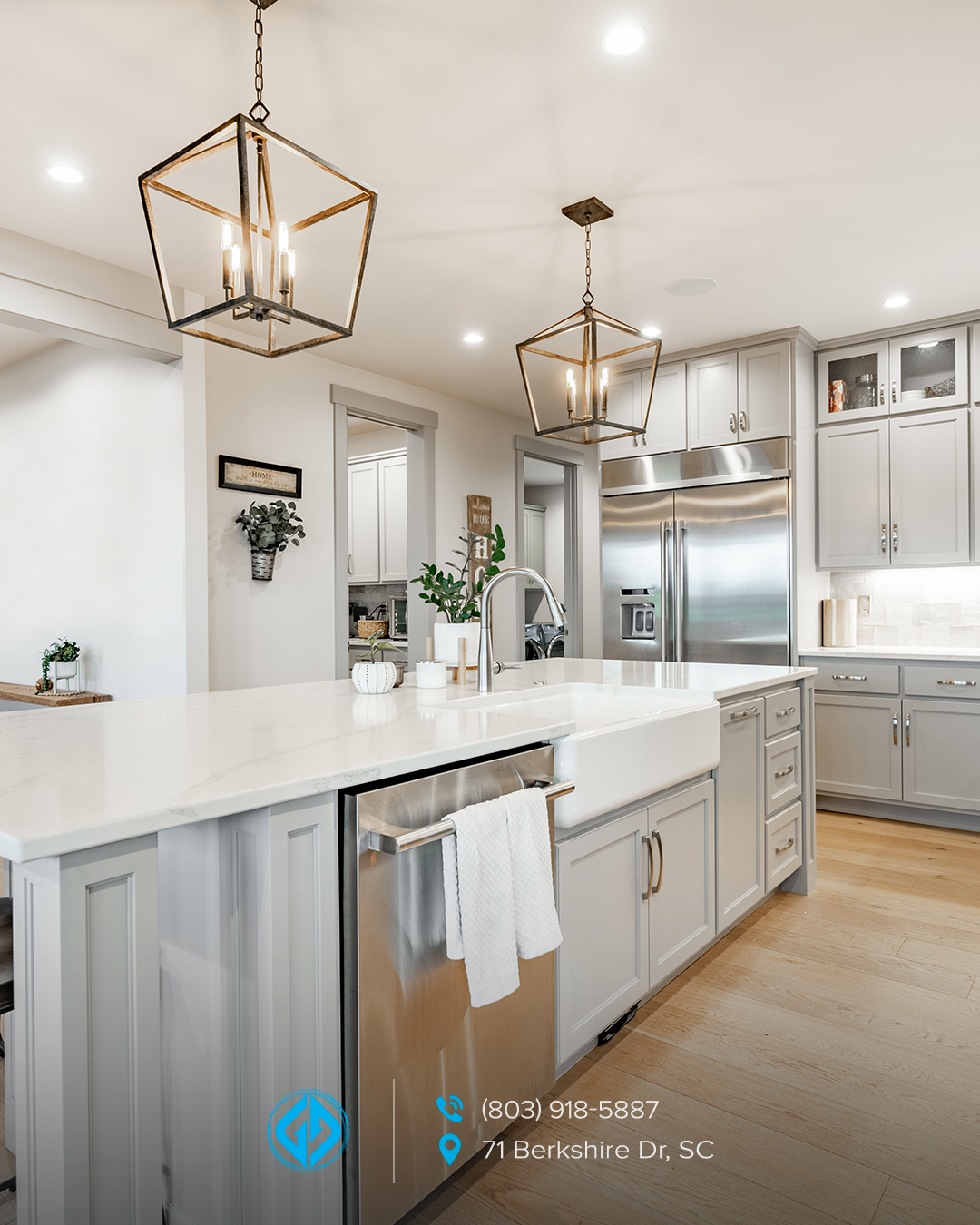
Quartz countertops may look sleek, polished, and effortless in your home, but the process behind creating them is anything but simple. Long before they reach your bathroom vanity or kitchen island, these engineered stone surfaces go through a sophisticated and highly controlled manufacturing process that blends science, engineering, and design. For homeowners who want to better understand what they’re investing in—and for those comparing natural stone to engineered surfaces—knowing how quartz is made provides valuable insight into durability, appearance, and long-term performance.
Many customers who explore quartz countertops in Augusta, GA are surprised to learn just how much technology, precision, and quality control goes into each slab. This process is what makes quartz such a reliable and increasingly popular choice among modern homeowners. When you work with Granite Depot of Columbia, you’re not just choosing a beautiful product; you’re choosing advanced performance built through decades of innovation.
Below is a deep, step-by-step explanation of how quartz countertops are manufactured and why this process matters for anyone planning a remodel.
Understanding What Quartz Countertops Are Made Of
Before diving into the production sequence itself, it helps to understand what engineered quartz countertops are. Unlike granite or marble—natural stones cut directly from slabs—quartz countertops combine natural mineral quartz with specialized resins, pigments, and strengthening agents.
Typically, the final composition looks like this:
• ✓ 90–95% crushed natural quartz
• ✓ 5–10% binding resins and pigments
• ✓ Optional: antimicrobial agents, color enhancers, reflective chips
This carefully balanced mixture gives engineered quartz its signature qualities: low porosity, stain resistance, uniformity, and exceptional hardness. When homeowners search for quartz countertops in Augusta, GA, many choose them specifically because the engineered formula eliminates the unpredictability that can come with natural stone.
What makes quartz so appealing isn’t just its beauty—it’s the reliability built directly into its production.

Where It All Begins: Sourcing and Selecting Raw Quartz
The journey of a quartz countertop starts at stone quarries where natural quartz crystals are mined. These mineral deposits come from various regions across the globe, and the quality of raw quartz plays a significant role in the durability and long-term performance of the final slab.
✓ The quartz is crushed into fine to medium-sized granules, depending on the desired pattern
✓ Color sorting ensures consistency for future designs
✓ Purity checks remove unwanted minerals, ensuring the finished product remains strong and visually appealing
Manufacturers collect and store quartz crystals by size, creating predictable blends for specific countertop patterns—solid colors, veined styles, or a terrazzo-inspired look.
Homeowners often choose engineered quartz over natural stone because it avoids the natural inconsistencies found in granite or marble. The controlled selection of raw materials is the first advantage in achieving a uniform, repeatable design that many households prefer.
The Mixing Phase: Advanced Engineering Creates Strength and Style
Once the raw quartz is prepared, the next stage involves mixing the quartz granules with binding resins, color pigments, and sometimes recycled materials such as glass or metallic flecks. This step is where engineering meets artistry.
• → Resins act as the “glue”, holding quartz particles together and creating a non-porous structure
• → Pigments create infinite design possibilities, from pure whites to dramatic blacks, marbled patterns, or soft neutrals
• → Quartz granule size alters the overall aesthetic—fine grains look smoother, while larger chunks give depth and dimension
This mixing phase ensures the material not only looks beautiful but also performs beautifully under stress.
When homeowners invest in quartz countertops, they often choose quartz because its engineered structure offers predictable and reliable performance across all use cases—from heavy kitchen prep to daily bathroom moisture exposure.
Once the mixture is perfectly blended, the material is ready to be shaped into a slab.
Compacting and Forming: Turning Raw Materials into a Solid Slab
One of the most fascinating steps of quartz production involves vacuum compression and vibration technology. This process is what gives quartz its extraordinary density and durability.
The blended quartz mixture is poured into large molds that define the slab’s dimensions. Then, advanced Bretonstone or similar technology performs a sequence of steps:
✓ Vibration distributes quartz evenly
✓ Vacuum pressure removes air pockets
✓ High compression binds particles tightly together
This combination replicates—on an accelerated scale—the geological forces that form natural stone, but with much greater consistency. The result is a slab with incredibly low porosity, exceptional strength, and resistance to staining, cracking, and scratching.
This highly engineered strength is why homeowners trust engineered quartz for busy kitchens and bathrooms. And it’s one of the many reasons consumers researching quartz countertops in Augusta, GA often choose them over materials with higher maintenance needs.

The Curing Process: Heat Transforms the Slab Into a Durable Surface
After forming, the slab undergoes curing—a stage where heat activates the binding agents and hardens the surface. This takes place in massive industrial ovens that maintain consistent temperature and pressure for optimal results.
During curing:
• ✓ Resins chemically bond to quartz granules
• ✓ Pigments become permanently integrated
• ✓ Structural stability increases dramatically
Notably, this curing stage ensures that the countertop becomes resistant to:
✓ Staining
✓ Microbial absorption
✓ Heat damage (to an extent)
✓ Everyday wear
This is also the stage where quartz transitions from a semi-flexible slab into a high-performance surface ready for polishing. The science behind curing is what ensures longevity and why quartz remains such a strong competitor among modern countertop materials.
Polishing and Finishing: Crafting the Final Appearance
After the slab cools and stabilizes, it moves into the polishing phase. Industrial-grade polishing heads, equipped with increasingly fine abrasives, smooth and refine the slab surface.
The level of polish depends on the desired finish:
• High-gloss
• Matte
• Textured/rough
• “Leathered” look
Each finish requires a different pressure and abrasive level. Manufacturers test reflectivity, smoothness, thickness, and color consistency before the slab is approved for distribution.
This precision is what ensures customers receive countertops with a flawless appearance—no weak points, no color variations, and no inconsistencies. And this is why working with a professional fabricator like Granite Depot of Columbia plays an important role in the final installation.
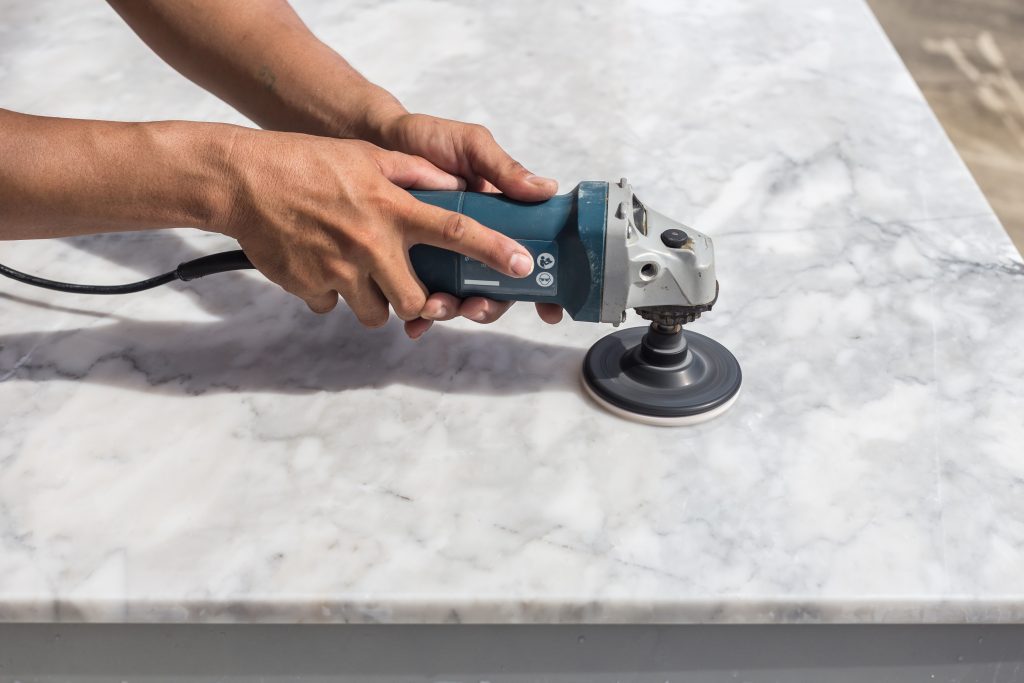
Fabrication: Slabs Become Custom Countertops
Before installation, slabs must be templated and cut to match the customer’s space. This phase includes:
✓ Digital laser measurements of the kitchen or bathroom
✓ Cutting the slab with diamond-tipped saws
✓ Routing edges (Beveled, Eased, Waterfall, Ogee, etc.)
✓ Sink and cooktop cutouts
✓ Edge polishing
✓ Final inspection
This step is where precision matters most. Even the most beautiful slab won’t fit correctly if the fabrication process is rushed or inaccurate. It’s why homeowners rely on trusted professionals—because quality fabrication protects the investment and ensures long-term performance.
Granite Depot of Columbia handles the fabrication process with expertise, guaranteeing that every slab is shaped and finished with exceptional care.
Why Understanding the Manufacturing Process Matters for Homeowners
Knowing how quartz is made gives homeowners a better understanding of how the material will behave once installed. The engineering behind the slab directly influences:
✓ Durability
✓ Appearance
✓ Maintenance requirements
✓ Cost
✓ Lifespan
Engineered quartz owes its popularity to the science behind it. Once homeowners understand that their countertops were created through controlled, high-precision processes, the material becomes even more appealing—especially for families who want beauty without high maintenance.
When shopping for countertops, customers interested in quartz countertops in Augusta, GA often choose quartz because it balances modern aesthetics with impressive practicality, making it a long-term investment worth considering.