

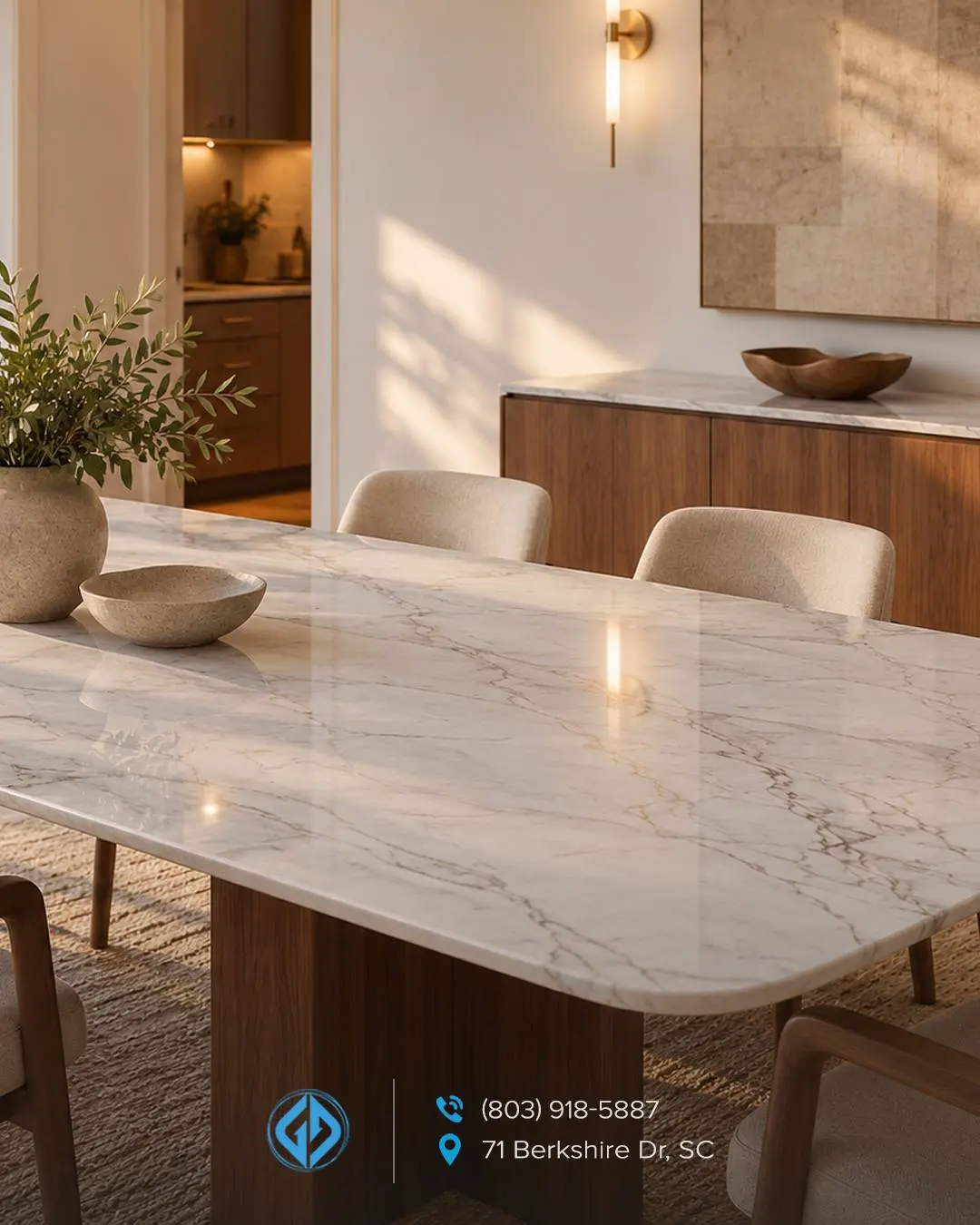
Natural stone is heavy, but it is not too heavy for a custom table when the tabletop, base, and floor are planned together. Granite, marble, and quartzite can all work for dining and coffee tables. The deciding factors are thickness, overall size, weight distribution, and the strength of the structure underneath. Engineered quartz is another option, although it is not natural stone.
At Granite Depot of Columbia, we consider slab appearance alongside practical support and handling. For homeowners researching granite stores in Columbia, SC, a custom stone tabletop should begin with more than a color choice.
How Much Does a Natural Stone Tabletop Actually Weigh?
A 3 cm (roughly 1 1/4-inch) natural-stone slab commonly weighs about 16-19 pounds per square foot. A thinner 2 cm slab is closer to 10-12 pounds per square foot, depending on the material.
For a 36-by-72-inch dining tabletop, that means approximately 290-340 pounds in 3 cm stone before the base is added. A 24-by-48-inch coffee tabletop has eight square feet of surface area and may weigh 130-150 pounds at 3 cm.
These are estimates; actual density, thickness, and edge details change the weight. Confirm the finished weight before ordering furniture legs.
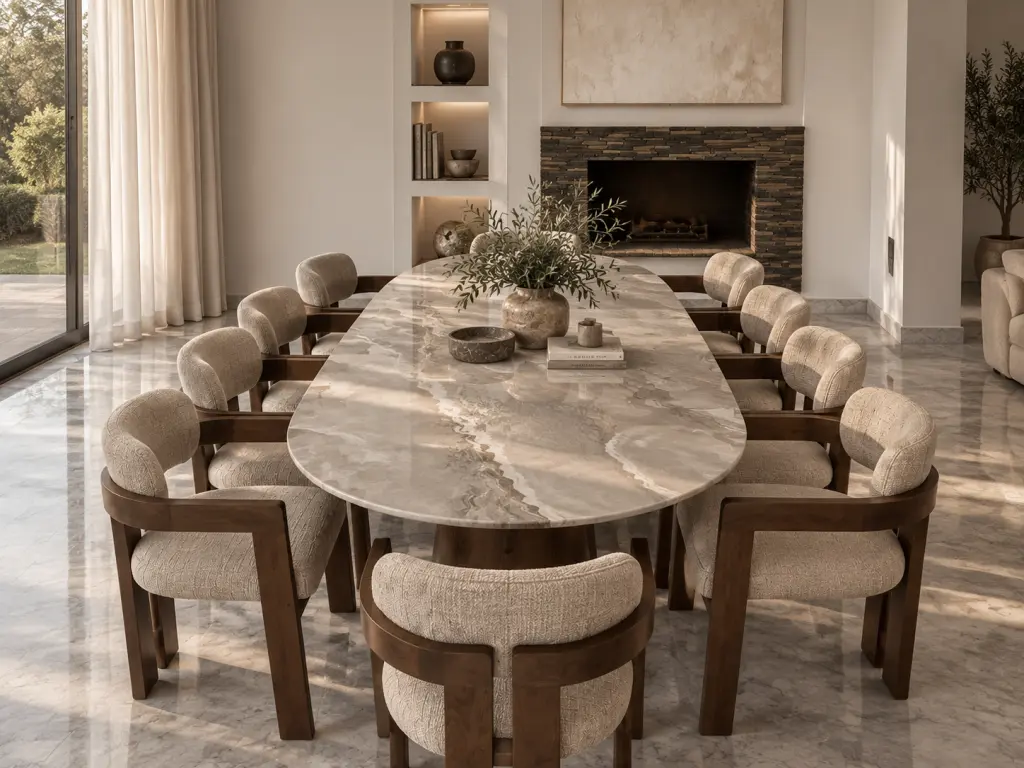
Does a Stone Dining Table Need a Special Base?
Yes. The base must support the tabletop’s weight without wobbling, twisting, or concentrating pressure in one small area. Metal frames, engineered wooden bases, and reinforced pedestal systems can all be appropriate, provided their design is rated for the load.
When visiting granite stores in Columbia, SC, bring a drawing or measurements of the base you want to use. Four decorative legs attached to a thin wooden panel may be inadequate for a large stone top, even if the legs themselves seem sturdy.
A furniture maker or structural professional should confirm the frame’s load capacity and attachment method.
Can a Large Stone Dining Table Have a Pedestal Base?
Yes, but the pedestal needs a sufficiently wide, stable footprint and a top-support system that prevents tipping and excessive overhang. A narrow central column beneath a long rectangular slab can leave both ends vulnerable to concentrated loads.
Think about how people use dining tables: they lean on the edge, move chairs into the base, and sometimes put substantial weight on one corner. The tabletop must remain stable during ordinary use.
For a long table, a wider central support, paired pedestals, or a rigid frame may make more sense than a single narrow stand.
Are Stone Coffee Tables Easier to Design Than Dining Tables?
Their smaller dimensions usually reduce the total weight, but coffee tables introduce different risks. A low table often has a wide overhang, is easier to bump, and may sit on a relatively light decorative frame.
A rounded or eased edge is generally more forgiving than a sharp corner in a living room. If children or pets regularly move around the table, consider the corner shape and whether the base can resist tipping when someone pushes against the edge.
Even a compact slab can be too heavy to move casually.
Which Material Makes Sense for a Custom Stone Table?
Choose according to everyday use and the appearance you want, not weight alone. Granite, marble, and quartzite have broadly similar weights at equal thicknesses.
At Granite Depot of Columbia, we can discuss materials in relation to your design. Black Pearl granite is a practical example for a darker dining tabletop, where its subtle mineral movement can pair with a black metal or walnut base. Bianco Carrara marble has softer gray veining and can suit a light coffee table, but acidic drinks can etch its surface. Taj Mahal quartzite provides warm, natural movement and may suit a statement dining piece, although its exact care requirements should be checked for the slab selected.
Engineered quartz is a separate manufactured material. It offers consistent patterns and does not require routine sealing, but heat exposure and the manufacturer’s fabrication limits still matter. The stone color names above describe material types, not guaranteed in-stock slabs.
Can a Thinner Slab Make a Stone Table Safer?
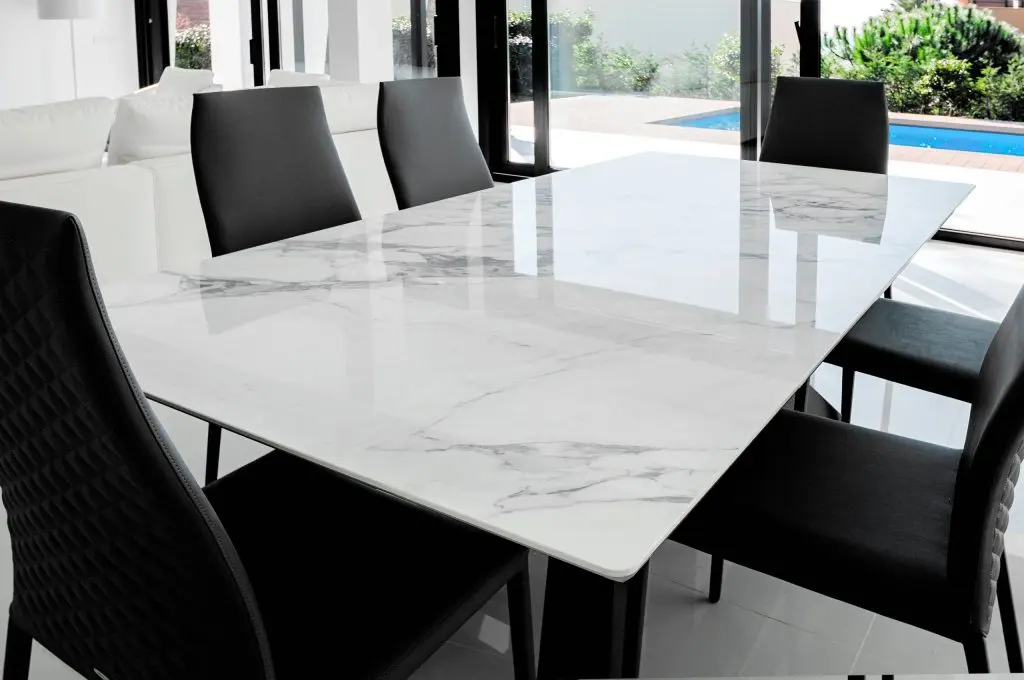
A thinner slab reduces weight, but it is not automatically safer. A 2 cm tabletop can need additional support or a properly designed substrate, especially across a wide span. Choosing a thinner top solely to save weight can create more problems if the frame is not adapted.
Another option is a carefully designed edge detail that creates a thicker appearance without using a uniformly thick piece of stone. That requires careful fabrication and suitable support.
We recommend deciding on thickness only after the tabletop dimensions and support system are known.
Will a Heavy Stone Table Damage the Floor?
Not necessarily. The main concern is how the total weight reaches the floor. A broad base distributes the load differently from four small metal feet. Stone tables also create problems if they are dragged rather than lifted using appropriate equipment.
Pads reduce scratches but do not solve concentrated loads. For large dining tables, upper-floor rooms, or unusual bases, ask a qualified professional to review the floor and table structure before installation.
How Much Does a Custom Stone Table Cost in Columbia?
A custom table needs an individual quote because the stone, cut shape, edge finishing, base, and delivery all influence the price. There is no dependable one-price-fits-all installed rate for freestanding stone furniture.
For regional context, standard installed kitchen countertops in Columbia run around $83-$93/sq. ft. for granite, $70-$90 for engineered quartz, and $114-$130 for marble. Those figures are countertop benchmarks, not prices for completed tables.
At Granite Depot of Columbia, starting material prices are $39/sq. ft. for granite, $50 for quartz, and $65 for marble; quartzite is quoted upon request. An 18-square-foot tabletop would therefore start at $702 in granite material, $900 in quartz, or $1,170 in marble, before fabrication, a suitable base, transport, and assembly. When comparing quotes from granite stores in Columbia, SC, make sure all those elements are accounted for.
How Should You Plan the Fabrication and Delivery?
Start with the intended location, tabletop dimensions, and base design. Then choose the stone, confirm its thickness, review the support requirements, and plan how the finished top will enter the home. Narrow doorways, stairs, and tight turns can be just as important as the table’s final dimensions.
Our standard countertop services include slab selection, templating, fabrication, edge finishing, delivery, and installation. For ordinary countertop projects, fabrication typically takes 7-10 business days after templating, with installation taking around 1-2 days and a total project timeline of roughly 2-3 weeks. A freestanding table is a different scope, so availability, support design, and delivery timing should be confirmed individually.
If you are exploring granite stores in Columbia, SC, bring table dimensions and room photos rather than relying only on a small stone sample.
Frequently Asked Questions
Is a Six-Foot Stone Dining Table Too Heavy for a Home?
Not automatically. A six-foot top can weigh more than 300 pounds, depending on its width and thickness. The base, floor, and moving plan must be suitable for that weight.
Can a Wooden Table Base Support Granite?
Yes, if it is engineered for the specific load and offers stable, well-distributed support. Decorative wooden legs alone are not proof of adequate strength.
Is Marble Too Delicate for a Coffee Table?
No, but it requires appropriate care. Drinks containing acids can etch marble, and sharp impacts may chip edges. A honed finish can make some wear less obvious.
Can a Stone Table Be Moved After Installation?
Yes, with proper handling. Avoid sliding or lifting a heavy slab by unsupported corners, and use experienced movers for large pieces.
Does Granite Depot of Columbia Have a Showroom in Columbia, SC?
Yes. Our showroom is at 71 Berkshire Dr, Columbia, SC 29223. You can visit to explore granite, marble, quartz, and quartzite options and discuss whether your tabletop idea is suitable for our fabrication capabilities. Please confirm the scope of any custom furniture project with our team before ordering a base.
Granite Depot of Columbia
71 Berkshire Dr, Columbia, SC 29223
Phone: (803) 956-4555