

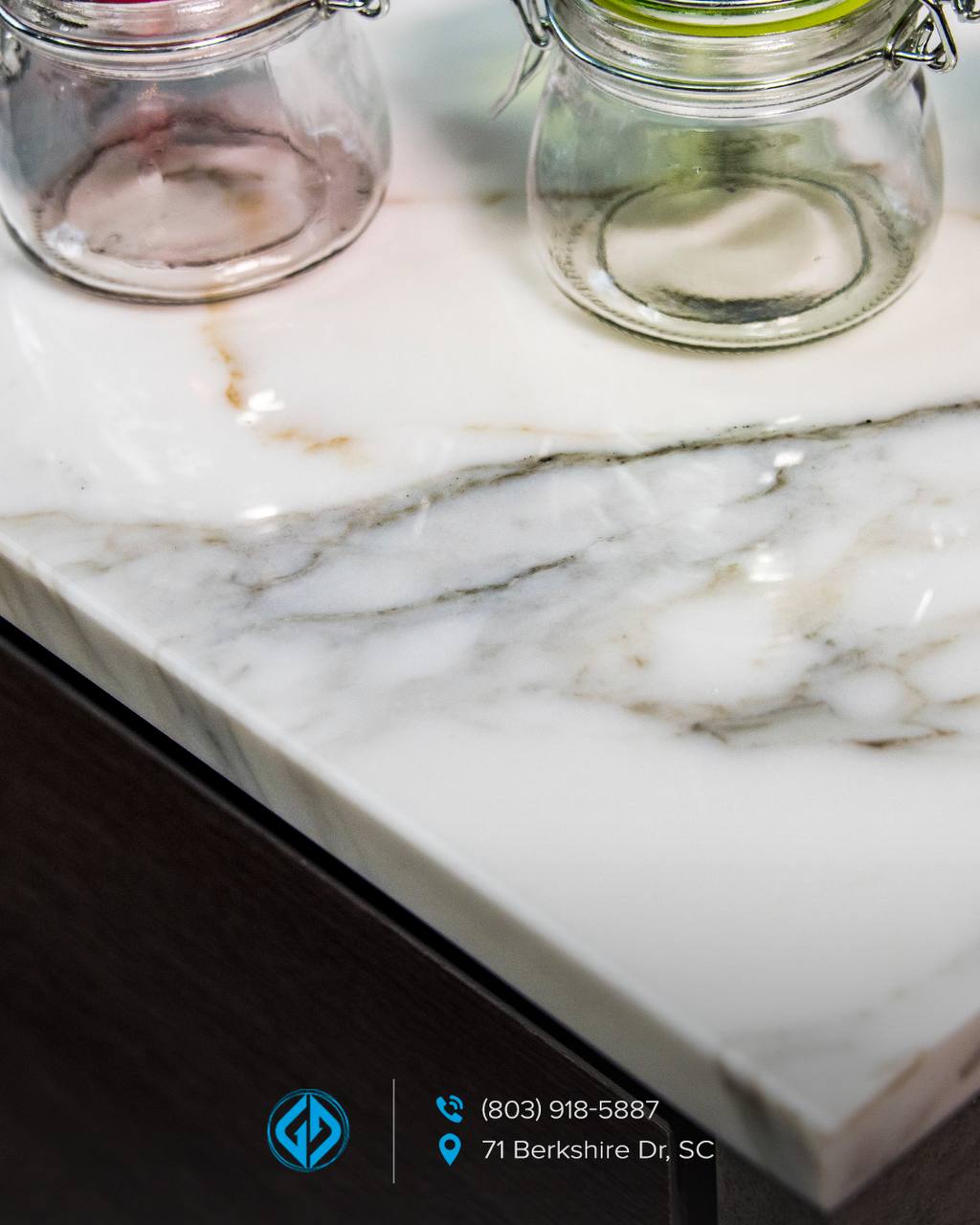
Marble is admired for its soft veining, luminous depth, and timeless elegance. But unlike some other natural stones, marble is more porous and more reactive to certain substances. That does not make it fragile. It simply means it responds differently to everyday exposure. Understanding this distinction is the foundation of proper care.
Marble is primarily composed of calcium carbonate, which reacts to acids. Lemon juice, vinegar, wine, and even certain cleaning products can cause etching — subtle dull marks on the surface. Etching is not staining. It is a surface reaction that alters the finish. Many homeowners confuse the two and assume permanent damage has occurred when, in fact, the surface may simply require polishing.
Granite Depot of Columbia often reminds clients that marble is not meant to look sterile or untouched. It develops character over time. The goal of professional-level care is not to prevent every mark, but to protect the structural integrity and visual elegance of the stone. When you approach cleaning with awareness rather than fear, marble becomes far less intimidating.
For homeowners exploring marble countertops in Union, SC, knowing that marble responds best to gentle, consistent care makes a noticeable difference. Harsh scrubbing or aggressive chemical cleaners are rarely necessary. In fact, they often cause more harm than good.
Caring for marble properly is about balance. Too little attention allows buildup. Too much intervention can wear down the finish. A steady, informed routine protects both appearance and longevity.

What Should You Use for Daily Cleaning Without Damaging the Surface?
Daily maintenance of marble should be simple. Warm water, a soft microfiber cloth, and a pH-neutral stone cleaner are typically all you need. The key word here is neutral. Many household cleaners contain acidic or alkaline agents that may react with marble’s composition.
A soft cloth prevents micro-scratches that can dull the polished surface over time. Even paper towels can be abrasive when used frequently. Professional-level care focuses on minimizing friction while removing residue effectively.
Granite Depot of Columbia advises wiping spills promptly, particularly acidic substances. Quick response reduces the likelihood of etching or staining. However, there is no need to panic. Marble does not instantly deteriorate upon contact with common kitchen ingredients. The issue arises from prolonged exposure.
Homeowners who choose marble countertops in Union, SC often appreciate the stone’s natural beauty but worry about maintenance complexity. In reality, a short daily wipe-down routine keeps the surface clean and bright. Avoid excessive water pooling around seams or edges, as moisture over time can affect seal integrity.
Consistency matters more than intensity. A gentle routine repeated daily protects marble better than occasional aggressive cleaning sessions.
How Often Should Marble Be Sealed and Why Does It Matter?
Sealing is one of the most important aspects of marble maintenance. A quality penetrating sealer fills microscopic pores within the stone, helping to resist stains from oils and liquids. It does not make marble completely impervious, but it significantly improves resistance.
The frequency of sealing depends on usage and exposure. Kitchens with heavy cooking activity may require sealing once or twice a year. Lighter-use areas may need it less often. A simple water test can indicate when resealing is needed. If water beads on the surface, protection remains strong. If it absorbs quickly, resealing may be beneficial.
Granite Depot of Columbia explains that sealing is preventative rather than corrective. It is far easier to maintain protection than to remove deep stains later. However, over-sealing is unnecessary. Applying sealer too frequently does not enhance protection and may create buildup.
For homeowners considering marble countertops, understanding the role of sealing eliminates much of the uncertainty around maintenance. It is not a complex process when performed with proper products and timing. Professional installers often provide guidance on recommended sealers that are compatible with the specific marble selected.
Sealing supports the longevity of marble but does not replace careful cleaning habits. Together, they form a comprehensive protection strategy.
What Causes Etching and How Can It Be Minimized?
Etching occurs when acidic substances react with marble’s calcium carbonate. The result is a dull spot where the polished surface has been lightly dissolved. Unlike stains, which penetrate into the stone, etching affects the surface finish itself.
Common culprits include citrus juices, tomato sauces, wine, and vinegar-based cleaners. The reaction does not always occur immediately but can develop after repeated exposure. Minimizing etching involves reducing contact time and avoiding acidic cleaning solutions entirely.
Granite Depot of Columbia often reassures homeowners that minor etching is common and can often be corrected through professional polishing. In some cases, homeowners even embrace subtle etching as part of marble’s natural aging process. The stone develops character rather than appearing damaged.
For families using marble countertops in Union, SC, practical habits such as using cutting boards and wiping spills promptly significantly reduce etching risk. Marble is not incompatible with cooking; it simply benefits from mindful use.
Understanding the science behind etching transforms maintenance from guesswork into informed action. When you know what causes surface changes, prevention becomes straightforward.

How Do You Remove Stains Without Overcorrecting?
Stains on marble typically come from oils or pigments that penetrate the pores. Unlike etching, stains sit below the surface and can often be lifted with poultices designed specifically for natural stone.
A poultice is a paste made from an absorbent material mixed with a cleaning solution. When applied to the stain and covered, it draws the discoloration out of the stone over time. This method is gentle and targeted, avoiding unnecessary abrasion of the surrounding surface.
Granite Depot of Columbia emphasizes patience during stain removal. Rushing the process or scrubbing aggressively can worsen the issue. Identifying the type of stain is crucial, as oil-based stains require different treatment than organic stains.
Homeowners who invest in marble countertops sometimes assume that any stain is permanent. In reality, many can be reduced or eliminated with proper techniques. The key is using products specifically formulated for marble rather than general household cleaners.
Professional-level care does not mean complicated procedures. It means applying the right solution for the right issue without overcorrecting.
How Can You Maintain Shine and Long-Term Beauty?
Marble’s elegance comes from its finish. Polished marble reflects light beautifully, while honed marble offers a softer, matte appearance. Maintaining that finish requires avoiding abrasive pads and harsh chemicals.
Periodic professional polishing can restore luster if the surface becomes dull over time. However, many homeowners find that consistent gentle care keeps the finish vibrant for years. Marble naturally interacts with light, creating depth and warmth that synthetic materials often struggle to replicate.
Granite Depot of Columbia works closely with clients to ensure that installation and education go hand in hand. Proper support, sealing, and guidance set the stage for long-term satisfaction. Marble does not demand constant attention. It responds best to steady, respectful care.
For those exploring marble countertops in Union, SC, understanding that maintenance is manageable encourages confident decision-making. Marble is not a high-stress material when cared for correctly. It rewards thoughtful use with enduring beauty.
Professional care habits become second nature over time. Once integrated into daily routine, marble cleaning feels effortless rather than burdensome.
Marble has remained a symbol of refinement for centuries not because it is indestructible, but because it ages gracefully when respected. With the right approach to cleaning and care, your marble countertops can retain their elegance and strength for decades, becoming more character-rich with every passing year.