

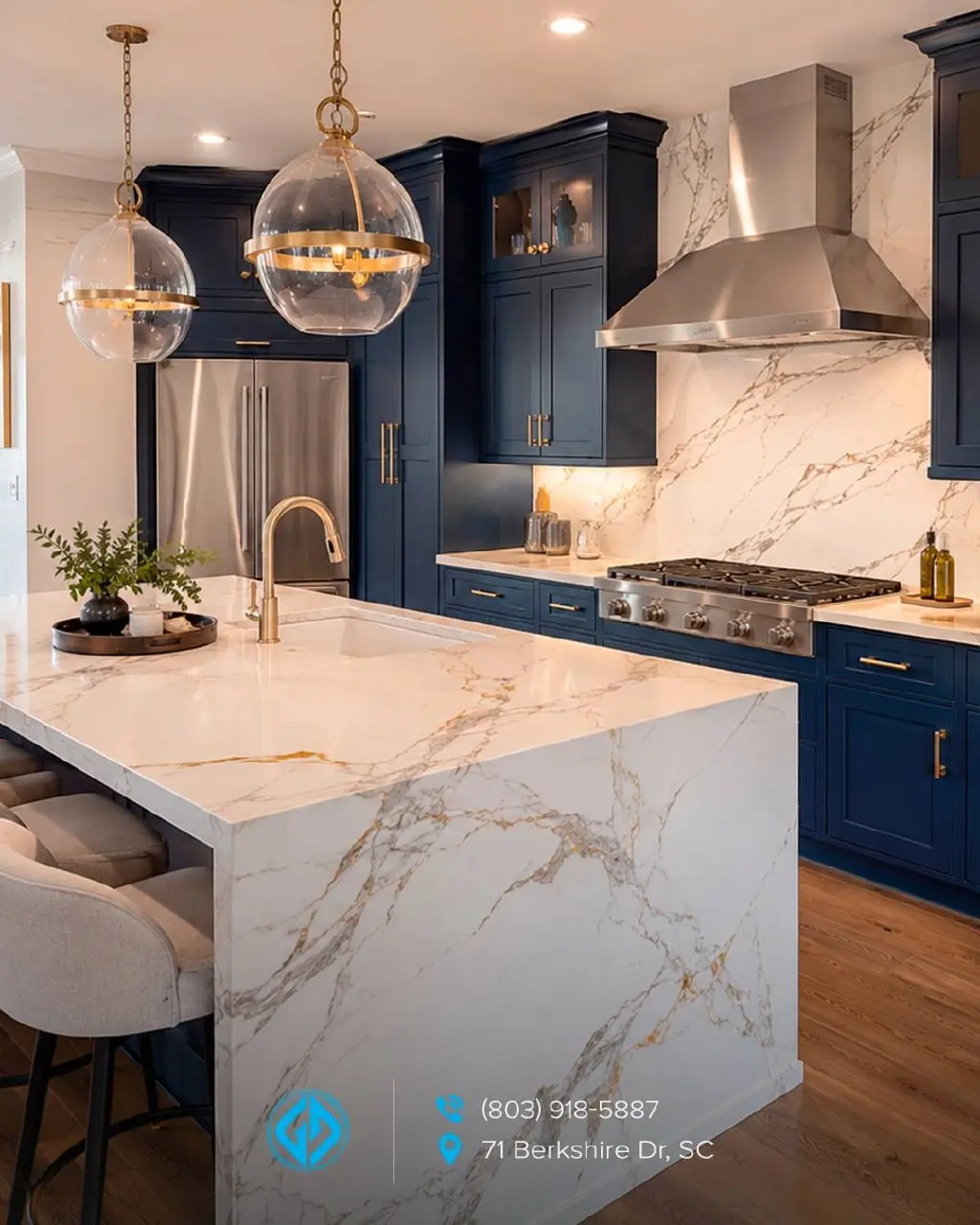
Quartz is usually the more practical choice for a waterfall island, while marble is the better choice when authentic natural movement and one-of-a-kind character matter most. Quartz is non-porous, requires no routine sealing, and offers controlled patterns that can make waterfall fabrication easier to plan. Marble delivers genuine natural veining that cannot be perfectly duplicated, but it can etch, stain, and develop patina over time.
For a waterfall design, the decision is also about more than the horizontal countertop. The material continues vertically down one or both sides of the island, so pattern scale, slab dimensions, vein direction, corner joints, and additional material requirements become much more important.
At Granite Depot of Columbia, we help homeowners choosing countertops in Barnwell, SC compare quartz and marble based on the entire island layout before templating and fabrication.
Why does material choice matter more on a waterfall island?
Material choice matters more because a waterfall island exposes significantly more countertop surface and makes pattern alignment much more visible.
A conventional island has one horizontal top. A waterfall island adds one or two vertical panels that continue from the countertop toward the floor.
That creates several challenges:
- the horizontal and vertical patterns need to coordinate;
- mitered or finished corner joints must be precise;
- extra square footage is required;
- slab size becomes more important;
- strong veins need careful positioning;
- another slab may be necessary.
A subtle pattern can disguise small transitions. A bold marble or Calacatta-style quartz makes every layout decision much easier to notice.
Is quartz easier to use for waterfall islands?
Usually, yes. Quartz offers more predictable colors and patterning than natural marble.
Engineered quartz manufacturers such as Cambria, Silestone, Caesarstone, MSI Quartz, and Vicostone offer designs ranging from quiet white surfaces to bold marble-inspired patterns.
That consistency can make it easier to plan how a vein moves across the countertop and down the waterfall panel.
Quartz is also non-porous, so routine sealing is unnecessary.
For a busy island used for:
- breakfast;
- meal prep;
- entertaining;
- homework;
- coffee;
- wine;
- everyday serving;
that lower maintenance can be a major advantage.
At Granite Depot of Columbia, quartz starts at approximately $50 per square foot.
Why would someone still choose marble?
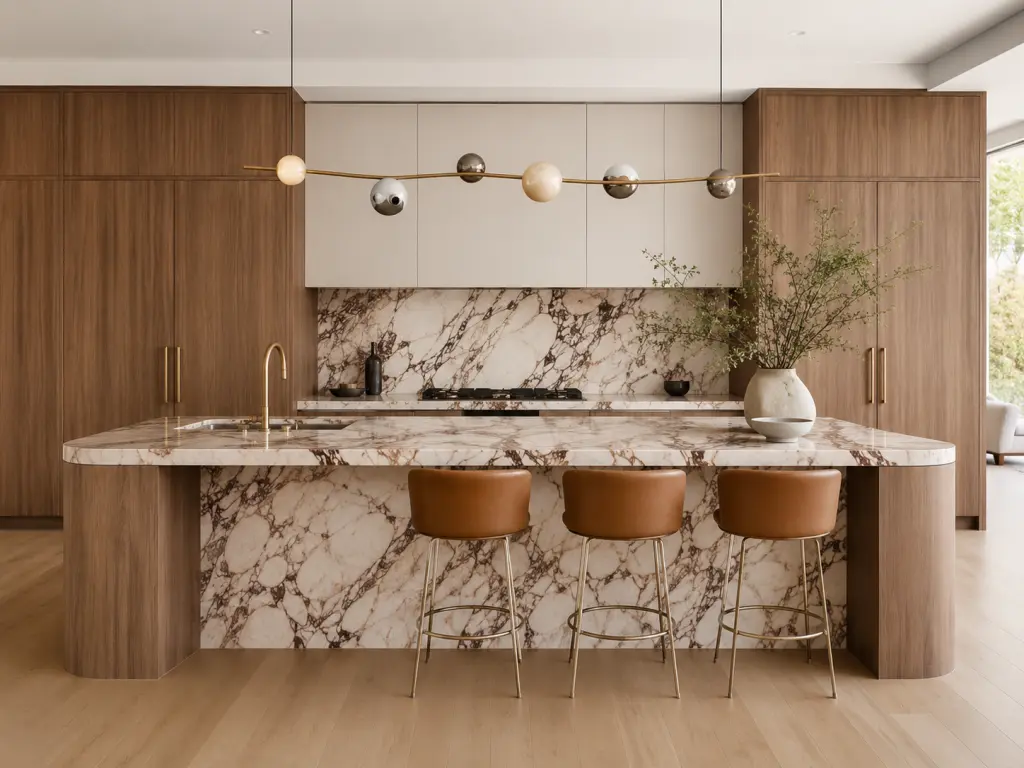
Marble offers natural variation that engineered materials cannot truly reproduce.
Every slab is different.
Carrara, Calacatta, and Statuario can all create striking waterfall islands, but they have very different personalities.
Carrara usually has softer gray movement.
Calacatta often features broader, more dramatic veins and brighter backgrounds.
Statuario can create particularly graphic contrast with bold gray movement.
When the vein is positioned correctly, natural marble can appear to flow across the horizontal surface and down the side of the island like a continuous piece of artwork.
For homeowners wanting a unique centerpiece rather than maximum practicality, that authenticity can justify the additional maintenance.
At Granite Depot of Columbia, marble starts at approximately $65 per square foot.
Which material is easier to vein-match?
Quartz is generally more predictable, while marble can produce a more dramatic result when the slab layout works well.
With strongly patterned quartz, the fabricator can study where the printed or engineered movement falls on the slab and plan the waterfall transition.
Marble is less predictable because every section of the slab is natural.
The fabricator may need to position templates so adjacent areas of the slab become the top and vertical panel. That helps the movement appear to “fold” over the edge.
However, perfect continuation is not always possible.
A beautiful marble layout may also require sacrificing usable stone to preserve the visual flow.
For homeowners selecting countertops in Barnwell, SC, slab layout should be discussed before cutting, especially when the waterfall is intended to be a focal point.
Does a waterfall island require much more material?
Yes. One waterfall panel can add around 9–12 square feet, while two panels may add roughly 18–24 square feet, depending on island depth and finished dimensions.
For example, a panel approximately 36 inches high and 36 inches deep contains about 9 square feet of surface area.
That means the added material value can be substantial.
| Additional waterfall area | Quartz from $50/sq. ft. | Marble from $65/sq. ft. |
|---|---|---|
| 9 sq. ft. | From $450 | From $585 |
| 18 sq. ft. | From $900 | From $1,170 |
| 24 sq. ft. | From $1,200 | From $1,560 |
These are material-only examples, not complete installed waterfall prices.
Custom fabrication, mitered corners, seams, slab requirements, delivery, and installation also affect the final project.
Can a waterfall edge require another slab?
Yes, and this can have a major effect on the total cost.
Even if the remaining countertop pieces only require another 18 square feet, those pieces may not fit efficiently into the leftover areas of the slab.
This becomes especially likely when:
- the island is large;
- both ends waterfall;
- the stone has strong directional veining;
- there are large sink or cooktop cutouts;
- perimeter countertops use the same material;
- specific vein sections must be reserved.
With marble, the need to preserve attractive natural movement can reduce layout efficiency further.
Quartz may be somewhat easier to organize, but dramatic quartz designs can create similar issues.
This is why Granite Depot of Columbia evaluates slab dimensions and template placement rather than relying on raw square-foot totals alone.
Is quartz more durable for everyday waterfall-island use?
Quartz is easier to maintain, but each material has different strengths.
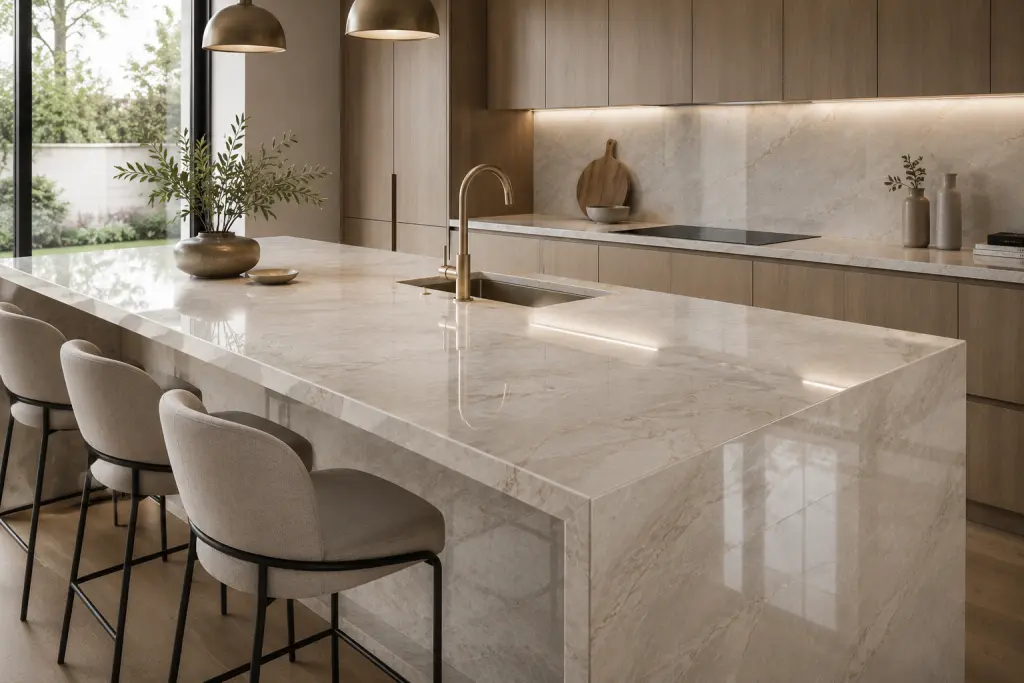
Quartz is highly stain-resistant and non-porous. That makes it practical around drinks, breakfast, sauces, and everyday spills.
Its main limitation is heat.
Because quartz contains polymer binders, very hot cookware should not be placed directly on the surface.
Marble handles heat differently but is more vulnerable to acids.
Lemon juice, wine, tomatoes, vinegar, and citrus can chemically etch marble. Even sealed marble can etch because sealing helps reduce absorption—it does not stop acid from reacting with calcite.
If your waterfall island doubles as a major food-prep and entertaining zone, quartz usually requires less daily attention.
Does marble show damage more on a waterfall island?
The horizontal surface usually receives most of the wear, while the vertical panels tend to remain relatively protected.
That can actually work in marble’s favor.
The vertical waterfall sides are unlikely to encounter lemon juice, wine, or cooking oil as frequently as the island top.
However, the horizontal marble still develops the same potential patina as any other marble countertop.
A polished finish can make etching more visible because dull areas contrast with the shine.
A honed finish may disguise minor etching more naturally but can show oils differently.
If you want marble but worry about maintenance, a honed finish is worth considering.
Which material gives better value?
Quartz generally offers better value for homeowners prioritizing easy maintenance, while marble offers better value for those prioritizing natural character.
At Granite Depot of Columbia, current starting prices are:
| Material | Starting price |
|---|---|
| Granite | From $39/sq. ft. |
| Quartz | From $50/sq. ft. |
| Marble | From $65/sq. ft. |
| Quartzite | Price available upon request |
A waterfall project magnifies material-price differences because it uses more square footage than a conventional island.
Still, choosing only by price can be misleading.
A lower-priced product that requires another slab may end up costing more than a more expensive material that fits efficiently within the required slabs.
For Barnwell, SC projects, the real comparison should be the complete fabricated layout.
When is marble the better choice?
Marble is the better choice when the island is primarily a design centerpiece and you genuinely appreciate natural stone aging.
It makes sense when:
- unique veining is a priority;
- the island is highly visible;
- natural material matters;
- you are comfortable with etching;
- you accept patina as part of marble’s character.
If you expect a perfectly unchanged surface for years, quartz is generally the safer choice.
When is quartz the better choice?
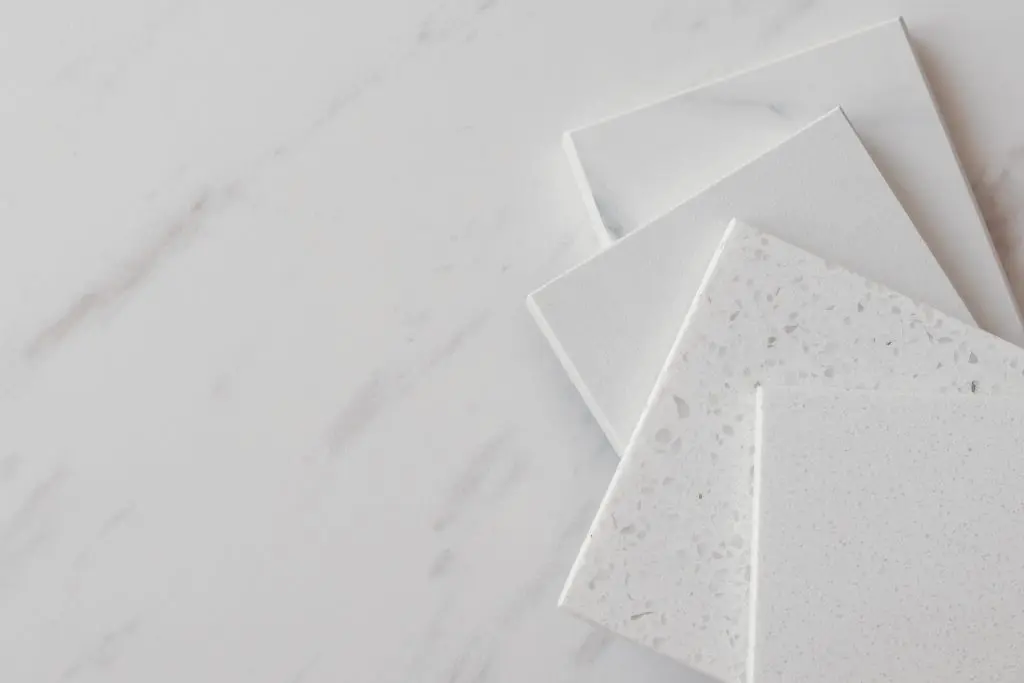
Quartz is usually better when you want a dramatic waterfall look with simpler maintenance.
It is especially practical for busy households where the island sees constant food prep, drinks, children, entertaining, and daily cleaning.
Quartz also gives you more control over color and pattern.
For homeowners comparing countertops in Barnwell, SC, this often makes quartz the easier all-around choice, while marble remains the stronger choice for authenticity.
How long does a waterfall countertop project take?
Most Granite Depot of Columbia projects take approximately 2–3 weeks overall.
After final templating, fabrication generally takes 7–10 business days. For waterfall islands, this includes slab layout, pattern planning, custom cutting, mitered or finished joints, sink or cooktop cutouts, and edge preparation.
Installation typically takes around 1–2 days, depending on project complexity.
Granite Depot of Columbia provides material selection, professional templating, slab-layout planning, waterfall fabrication, cutouts, edge finishing, delivery, and professional installation.
Granite Depot of Columbia
71 Berkshire Dr, Columbia, SC 29223
Phone: (803) 956-4555