

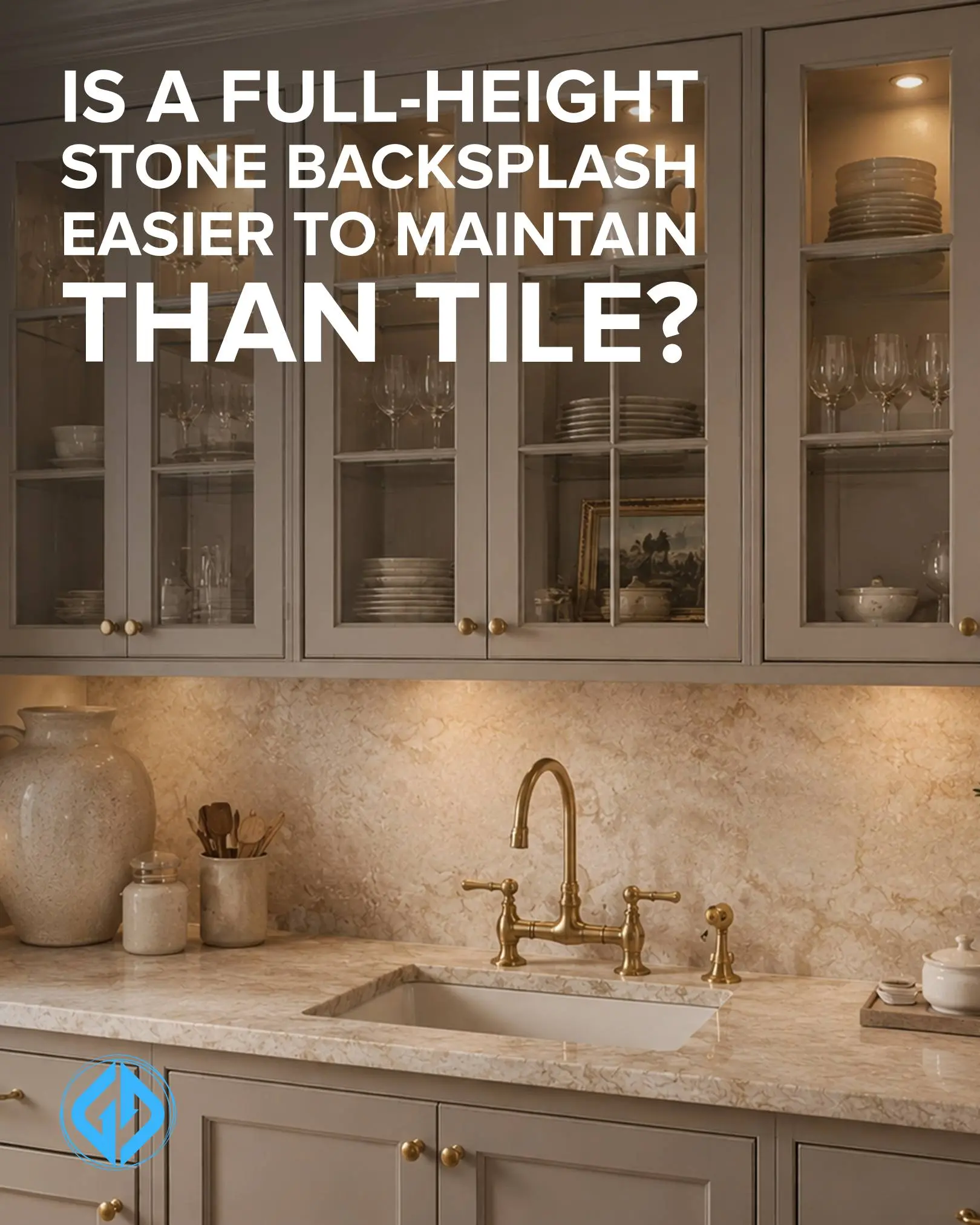
A full-height stone backsplash can be easier to maintain than tile because it creates fewer grout joints where grease, dust, and food residue can accumulate. But the material itself matters. Granite, quartz, marble, and quartzite each have different care requirements, while tile can range from very low-maintenance porcelain to more demanding natural stone.
For homeowners planning a kitchen renovation, the backsplash should be considered together with the countertop. At Granite Depot of Columbia, we help customers compare the material, layout, edge details, fabrication, and installation rather than treating the backsplash as an afterthought.
Is a full-height stone backsplash easier to maintain than tile?
In many kitchens, yes. A full-height slab creates a largely continuous surface, while a tile backsplash contains multiple grout lines.
Those joints can collect:
- cooking grease;
- dust;
- food particles;
- splashes;
- soap residue around a sink.
With a slab backsplash, there are fewer joints to clean, so routine wiping can be faster.
This is one reason homeowners searching for countertop fabricators in Columbia, SC may want to ask about full-height stone backsplashes when comparing kitchen finishes.
However, “stone” is a broad category. Granite, quartz, marble, and quartzite do not all have identical maintenance requirements.
How does stone compare with tile for everyday cleaning?
The biggest difference is the number of joints.
A tile backsplash may have dozens of grout lines depending on the tile size and layout. A large stone slab can cover a significant section with one continuous surface.
For daily cleaning, that can mean simply:
- Wipe the surface with a soft cloth.
- Use a suitable cleaner.
- Remove residue.
- Dry the surface if needed.
Tile itself can also be very easy to clean, particularly porcelain or glazed ceramic tile. The grout is usually the part that requires more attention.
If you cook frequently, fewer grout lines can make a noticeable difference over time.
Is granite a good choice for a full-height backsplash?
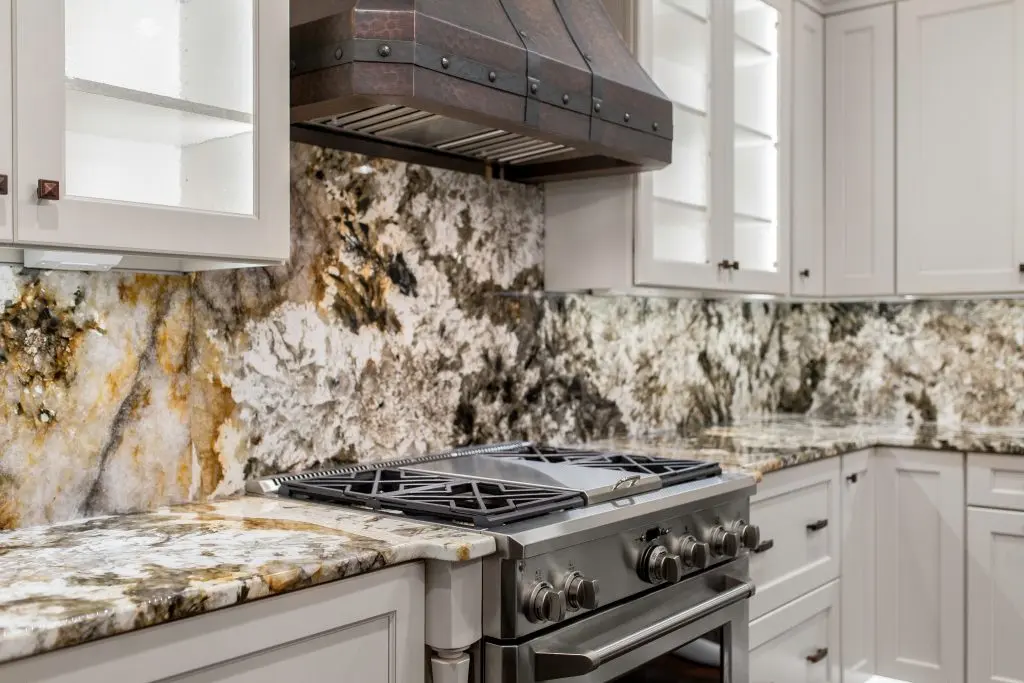
Yes. Granite can be used for both the countertop and backsplash, creating a coordinated natural-stone design.
This approach works particularly well when you want the backsplash to continue the pattern of the countertop.
Granite offers:
- natural variation;
- strong durability;
- good heat resistance;
- many color options;
- the ability to coordinate the countertop and backsplash.
For countertop fabricators in Columbia, SC, granite backsplash projects also allow the fabrication team to plan the slab layout and countertop together.
This is important when the granite has significant movement or veining.
Can quartz be used as a full-height backsplash?
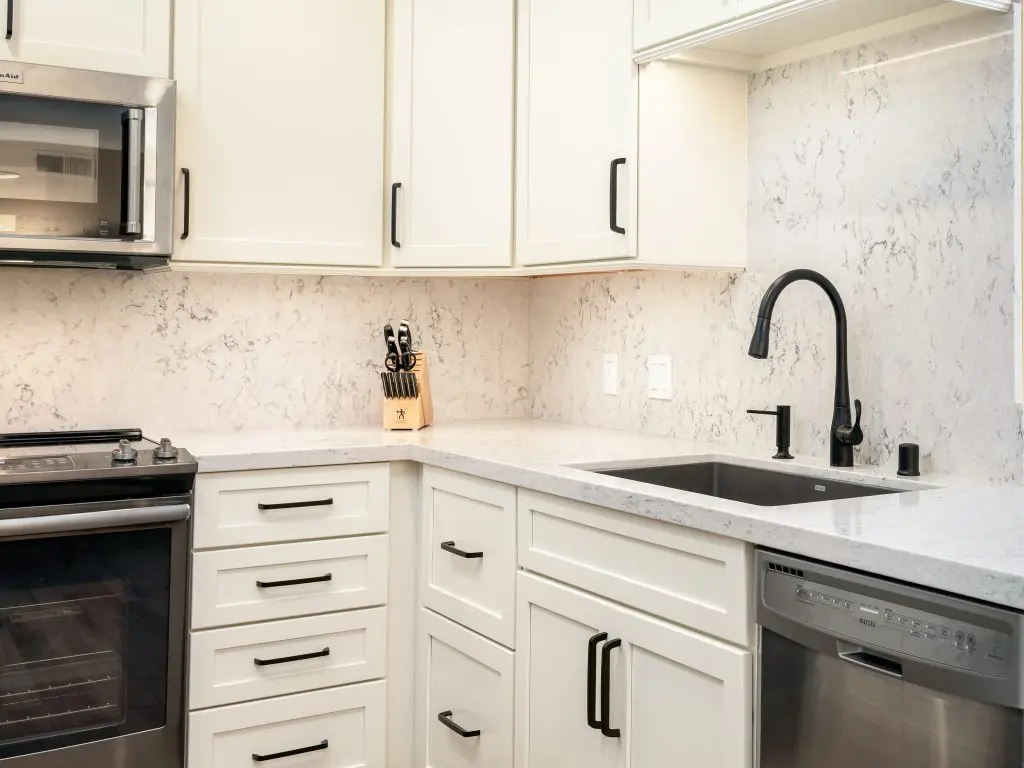
Yes. Quartz is another popular option, particularly for homeowners who want a more consistent appearance.
A quartz backsplash can be fabricated from the same slab as the countertop, creating a continuous look from the horizontal surface up the wall.
This can work especially well with:
- white quartz;
- marble-look quartz;
- subtle gray-veined quartz;
- warm neutral quartz.
Quartz is non-porous and does not require routine sealing, which can make it convenient for a backsplash.
However, quartz still needs to be protected from excessive heat, particularly around cooking areas.
What about marble?
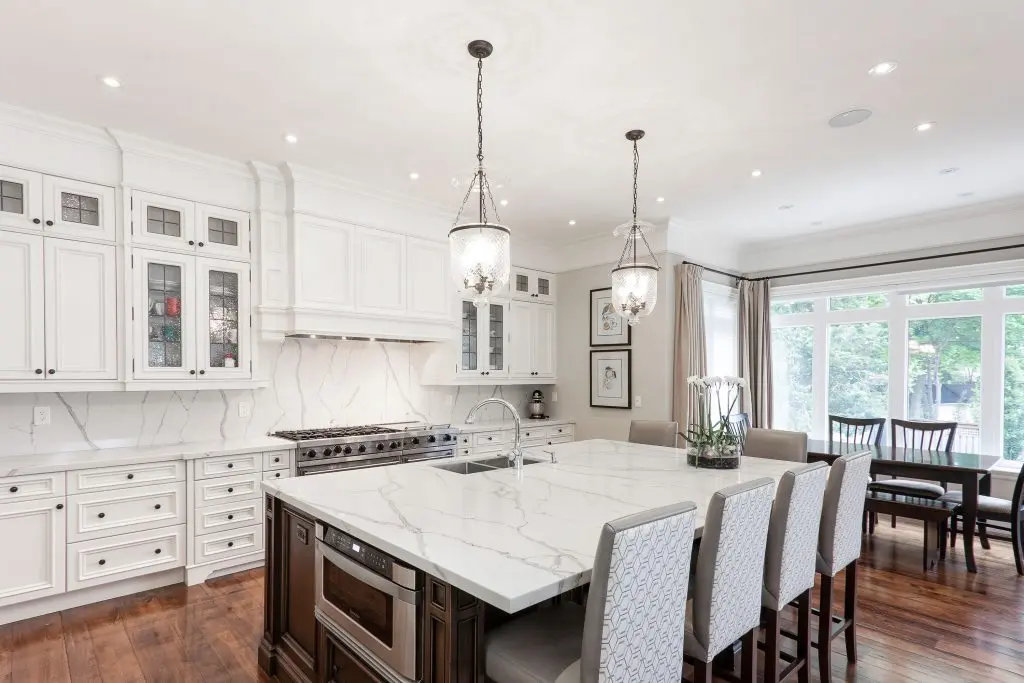
Marble can create a beautiful full-height backsplash, especially when its natural veining is intended to be the main design feature.
A marble backsplash can be used with:
- marble countertops;
- quartz countertops;
- granite countertops;
- contrasting cabinetry.
The main consideration is maintenance.
Marble can react with acidic substances and may develop etching. This is less of a concern on a wall than on a food-preparation surface, but the material still needs appropriate care.
If you love the appearance of natural marble, using it as a backsplash can be a way to showcase its character while limiting the amount of marble exposed to heavy daily use.
Is quartzite a good backsplash material?
Yes. Quartzite can provide dramatic natural movement and is particularly effective when the homeowner wants the backsplash to become a focal point.
A full slab can showcase the pattern much better than small tile pieces.
Quartzite can be especially attractive behind a kitchen island or range wall where the natural veining can be seen across a larger uninterrupted surface.
As with other natural stones, the specific slab matters. Quartzite is not the same material as engineered quartz, and maintenance recommendations can vary.
Is tile actually easier to maintain than stone?
Sometimes.
A properly installed porcelain tile backsplash can be extremely practical. Porcelain is durable, moisture-resistant, and available in many colors and patterns.
The question is usually not whether the tile itself is easy to clean. It is whether you want to maintain the grout.
Grout can require:
- regular wiping;
- deeper cleaning;
- occasional resealing depending on the grout;
- extra attention around the cooktop.
Large-format tile can reduce the number of joints compared with small mosaic tile, making it easier to maintain.
So the comparison is not simply “stone is easy, tile is difficult.” The size, material, grout type, and installation all matter.
Does a full-height backsplash cost more than tile?
Usually, a full-height stone backsplash requires more material and custom fabrication than a basic tile installation.
The final cost depends on:
- material;
- backsplash dimensions;
- slab availability;
- cutouts;
- outlets;
- corners;
- edge finishing;
- fabrication;
- delivery;
- installation.
For reference, granite at Granite Depot of Columbia starts at approximately $39 per square foot. A 20-square-foot granite backsplash would therefore start at approximately $780 in material before fabrication and installation.
Quartz, marble, and quartzite pricing varies by the specific material and slab, so the complete project should be quoted based on the selected stone.
Does a full-height stone backsplash make a kitchen look bigger?
It can.
A continuous backsplash reduces visual interruptions and can create a cleaner vertical plane.
This effect can be particularly noticeable when the backsplash matches the countertop.
For example, a white quartz countertop that continues up the wall can make a kitchen feel more cohesive.
A dramatic granite or quartzite slab can create a different effect, turning the backsplash into a statement feature.
The right choice depends on whether you want the backsplash to blend into the kitchen or become one of its main design elements.
Can a stone backsplash match the countertop?
Yes, and matching the two surfaces is one of the most popular reasons to choose a slab backsplash.
Using the same material can create:
- visual continuity;
- fewer competing patterns;
- a more custom appearance;
- easier coordination between the countertop and backsplash.
However, the backsplash does not have to match exactly.
A quiet quartz countertop can be paired with a marble backsplash, while a granite countertop can work with neutral tile.
For countertop fabricators in Columbia, SC, the advantage of planning both surfaces together is that the slab layout can be considered from the beginning.
How do you clean a full-height stone backsplash?
The cleaning routine depends on the material.
For granite and other natural stones, use a soft cloth and a cleaner appropriate for natural stone.
For quartz, use a manufacturer-approved mild cleaner and avoid harsh chemicals.
For marble, avoid acidic cleaners because they can etch the surface.
For tile, clean the tile itself with an appropriate product and pay additional attention to the grout.
Regardless of material, grease around a cooktop should be cleaned regularly rather than allowed to build up.
Which backsplash is best for a busy kitchen?
If minimizing grout maintenance is your main priority, a full-height slab is worth considering.
Granite is a strong option if you want natural stone, durability, and heat resistance.
Quartz is attractive if you want low routine maintenance and a consistent pattern.
Marble works well when natural veining and a more luxurious appearance are the priority.
Quartzite is a good option when dramatic natural movement is important.
Porcelain or ceramic tile can be practical when you want a wide range of colors, shapes, and price points.
There is no universal winner. The best backsplash is the one that fits your cooking habits, maintenance preferences, design, and budget.
Frequently Asked Questions
Is a full-height stone backsplash easier to clean than tile?
Often, yes. A slab has fewer grout joints, so there are fewer areas where grease and residue can accumulate.
Is quartz good for a full-height backsplash?
Yes. Quartz provides a low-maintenance, non-porous surface and can create a seamless look when paired with a matching countertop.
Is granite good for a backsplash?
Yes. Granite can be fabricated as a full-height backsplash and coordinated with the countertop for a continuous natural-stone design.
Is marble harder to maintain?
Generally, yes. Marble requires more care because it can etch when exposed to acidic substances.
How much does a granite backsplash cost?
Granite starts at approximately $39 per square foot at Granite Depot of Columbia. A 20-square-foot backsplash would start at about $780 in material, before fabrication and installation.
How long does fabrication take?
After final templating, fabrication generally takes 7-10 business days, with most projects taking approximately 2-3 weeks overall.
Does Granite Depot of Columbia install full-height backsplashes?
Yes. Granite Depot of Columbia provides material selection, templating, custom fabrication, backsplash installation, delivery, and countertop installation.
Does Granite Depot of Columbia serve Columbia, SC?
Absolutely. Our showroom is located in Columbia, SC, so we proudly serve local homeowners. You can visit us in person to explore our materials, view slabs, and discuss your countertop project with our team.
If your priority is easy everyday maintenance, a full-height slab has a clear advantage over many tile layouts: fewer grout lines. But the best choice still depends on the material. Granite, quartz, marble, quartzite, and porcelain tile can all work well when the material is matched to the way you use your kitchen.