

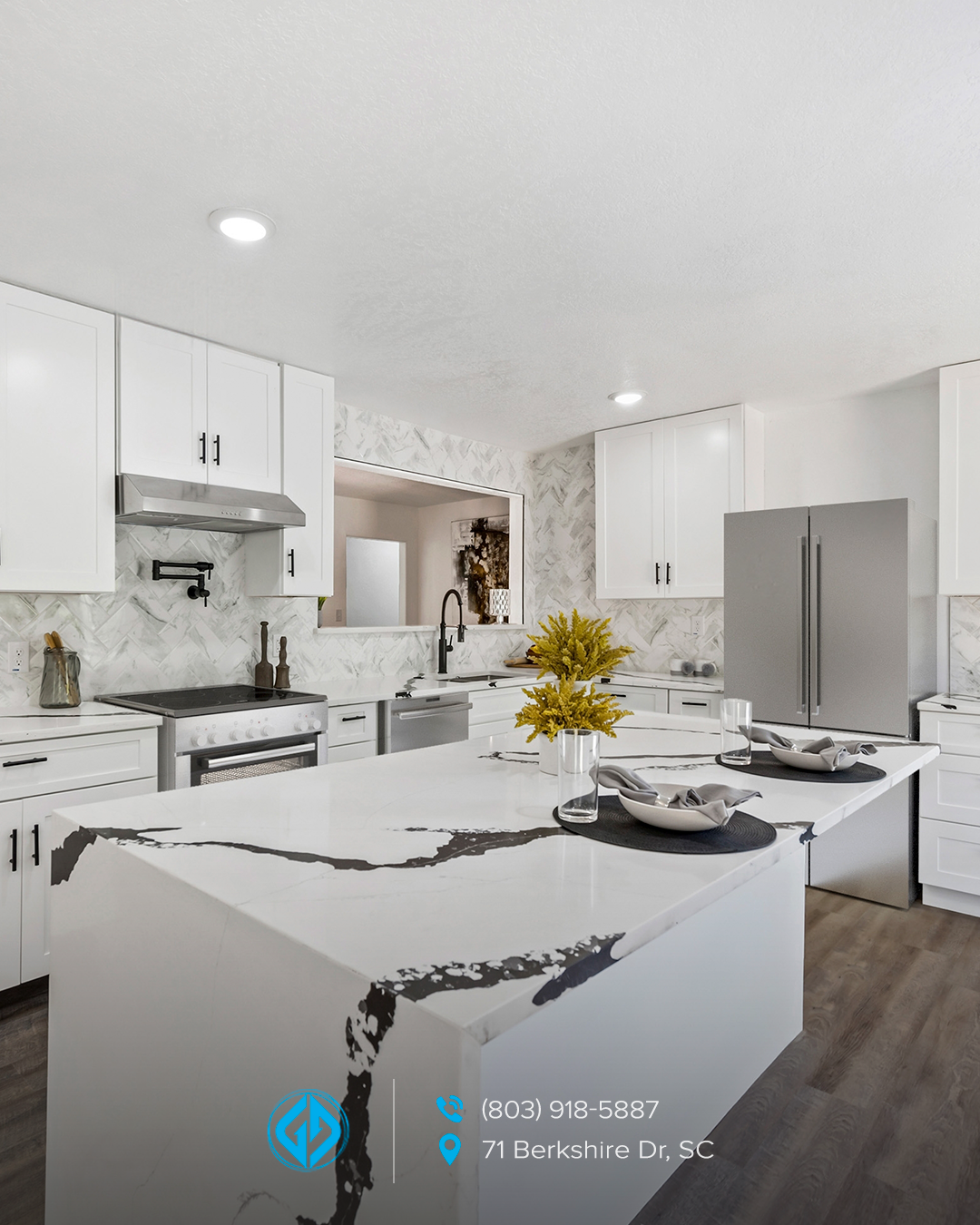
A kitchen island is no longer just a functional surface for meal prep. In many modern homes, it has become the visual and emotional center of the space. Among the many island design options available today, the waterfall edge island stands out as one of the most impactful and enduring choices. While some people view it as a design trend, a closer look reveals that a waterfall edge island offers practical, aesthetic, and long-term value that goes far beyond appearance.
A waterfall edge refers to a countertop design where the stone surface continues vertically down the sides of the island, reaching the floor. This creates a seamless flow from the top to the base, visually framing the island as a sculptural element rather than just a horizontal workspace. Homeowners exploring kitchen countertops in Augusta, GA often find that this design instantly elevates the entire kitchen, regardless of its size or style.
How Does a Waterfall Edge Island Transform the Look of Your Kitchen?
One of the most compelling reasons homeowners choose a waterfall edge island is its dramatic visual impact. Traditional islands tend to stop abruptly at the countertop edge, leaving cabinetry or panels exposed below. A waterfall edge eliminates that visual break, creating a continuous, uninterrupted surface that feels intentional and refined.
This seamless look helps unify the kitchen, especially in open-concept layouts where the island is visible from living or dining areas. Instead of appearing as a separate piece of furniture, the island becomes an architectural feature that anchors the space. The vertical stone surfaces draw the eye downward, emphasizing height and structure while giving the island a sense of permanence.
Waterfall edges also highlight the natural beauty of stone. Veining patterns flow from the horizontal surface down the sides, creating movement and depth that simply cannot be achieved with standard countertop designs. This is particularly striking with granite, marble, or quartzite slabs that feature bold or linear veining.
For homeowners considering kitchen countertops in Augusta, GA, a waterfall edge island often becomes the focal point that defines the entire design direction of the kitchen.
Is a Waterfall Edge Island a Practical Choice for Everyday Living?
While the visual appeal of a waterfall edge island is undeniable, practicality is just as important. Contrary to the belief that waterfall edges are purely decorative, they offer several functional advantages that benefit everyday use.
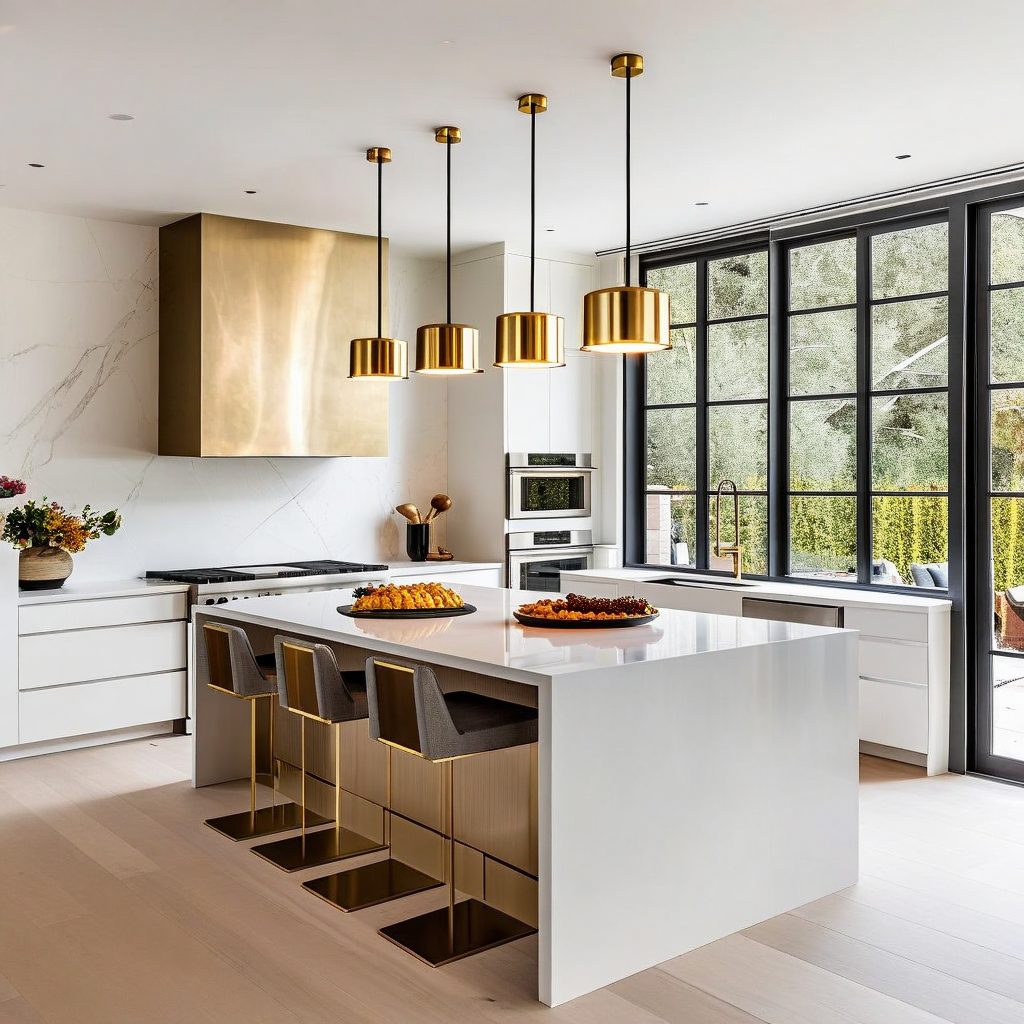
The vertical stone panels protect the sides of the island from scuffs, dents, and wear that can occur from foot traffic, bar stools, or accidental impacts. In busy households, especially those with children or frequent entertaining, this added durability helps maintain a clean, polished appearance over time.
A waterfall edge also simplifies cleaning. Without exposed cabinet sides or decorative panels, there are fewer seams and crevices where dirt and grime can accumulate. Spills that run over the edge are easier to wipe away from a stone surface than from wood or painted materials.
Additionally, waterfall edges can provide subtle structural benefits. The vertical slabs help support overhangs on seating sides, allowing for more generous legroom without sacrificing stability. This makes the island more comfortable for casual dining or socializing.
Homeowners working with Granite Depot of Columbia often discover that a waterfall edge island balances style and function in a way few other designs can.
How Does a Waterfall Edge Island Enhance Open-Concept Spaces?
Open-concept kitchens have become increasingly popular, blending cooking, dining, and living areas into one cohesive environment. In these layouts, the kitchen island plays a critical role in defining zones without creating visual barriers.
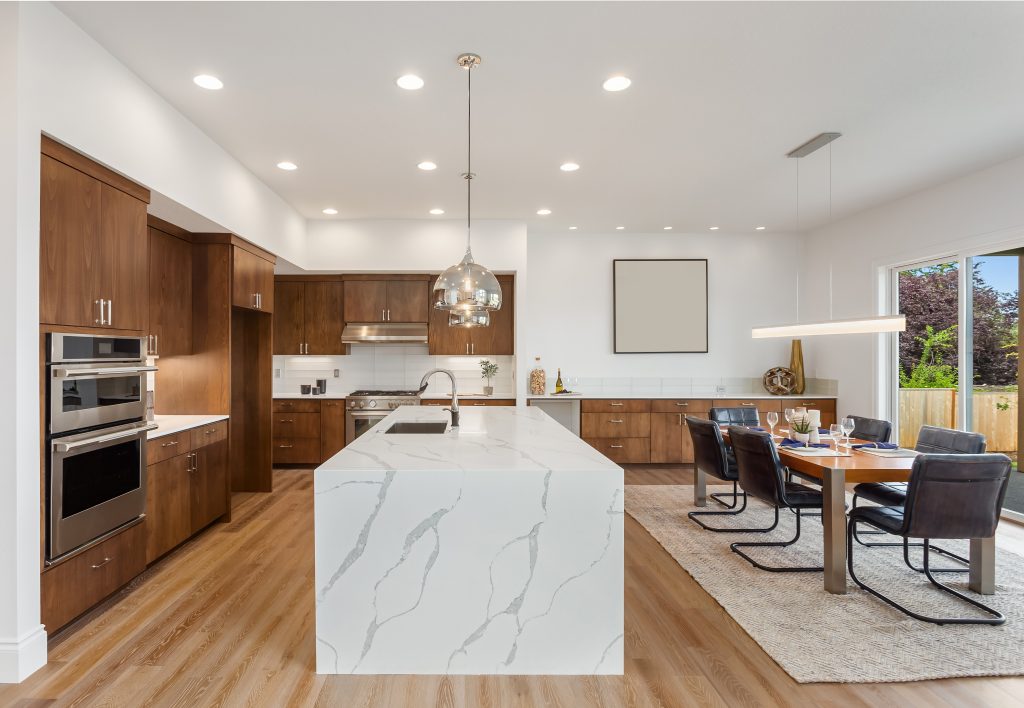
A waterfall edge island excels in this role. Its solid, continuous form creates a natural boundary between spaces while maintaining openness. From the living room side, the island looks like a refined stone feature rather than a utilitarian work surface. This makes it easier to integrate the kitchen into the overall design of the home.
The island’s vertical stone faces can also echo other architectural elements in the space, such as fireplaces, accent walls, or staircases. When chosen thoughtfully, the stone used for the waterfall edge can tie multiple areas of the home together, creating visual harmony.
For homeowners searching for kitchen countertops in Augusta, GA, especially those with open floor plans, a waterfall edge island often becomes the design solution that brings balance and cohesion to the entire home.
Does a Waterfall Edge Island Add Long-Term Value to Your Home?
Beyond immediate aesthetics and daily usability, many homeowners consider resale value when making design decisions. A waterfall edge island can positively influence how a kitchen is perceived by future buyers.
Natural stone remains a highly desirable feature in real estate, and a waterfall edge signals quality craftsmanship and thoughtful design. It suggests that the kitchen was planned with attention to detail rather than assembled from standard components. This perception can elevate the overall impression of the home.
Unlike short-lived trends, waterfall edge islands have demonstrated staying power because they are rooted in architectural principles rather than decorative fads. The clean lines, solid materials, and seamless construction align with both modern and transitional design preferences.
Additionally, because stone ages gracefully, a waterfall edge island often looks just as appealing years later as it did when first installed. This durability helps protect the homeowner’s investment over time.
Granite Depot of Columbia frequently works with clients who want kitchens that feel current today but won’t feel dated tomorrow. A waterfall edge island fits that goal exceptionally well.
What Should Homeowners Consider When Choosing a Waterfall Edge Design?
While waterfall edge islands offer many benefits, thoughtful planning is essential to achieve the best results. The choice of stone plays a major role in the final look and feel. Slabs with consistent veining or dramatic movement can create very different visual effects when wrapped vertically.
Thickness is another important consideration. Some homeowners prefer a thicker edge for a bold, substantial look, while others opt for a slimmer profile for a more minimalist aesthetic. The size of the island and the proportions of the kitchen should guide this decision.
Lighting also interacts differently with waterfall edges. Natural and artificial light can accentuate the stone’s texture and veining, so it’s important to consider how light will hit the vertical surfaces throughout the day.
Finally, professional fabrication and installation are critical. Precise cuts, careful veining alignment, and secure installation ensure that the waterfall edge looks seamless and performs well for years. This is not a design element that benefits from shortcuts.
Homeowners exploring kitchen countertops in Augusta, GA often find that working with experienced professionals makes the difference between a good waterfall edge island and a truly exceptional one.
Why a Waterfall Edge Island Is Worth the Investment
Choosing a waterfall edge island is about more than following a design trend. It’s about creating a kitchen that feels intentional, durable, and visually striking. From protecting the island structure to enhancing open spaces and adding long-term value, the benefits extend well beyond aesthetics.
A waterfall edge island transforms the kitchen into a space that invites connection, conversation, and creativity. It elevates daily routines and makes the kitchen feel like a true centerpiece of the home.
Granite Depot of Columbia helps homeowners bring these ideas to life by pairing the right stone with thoughtful design and expert installation. When done right, a waterfall edge island becomes a defining feature that homeowners appreciate every single day.