

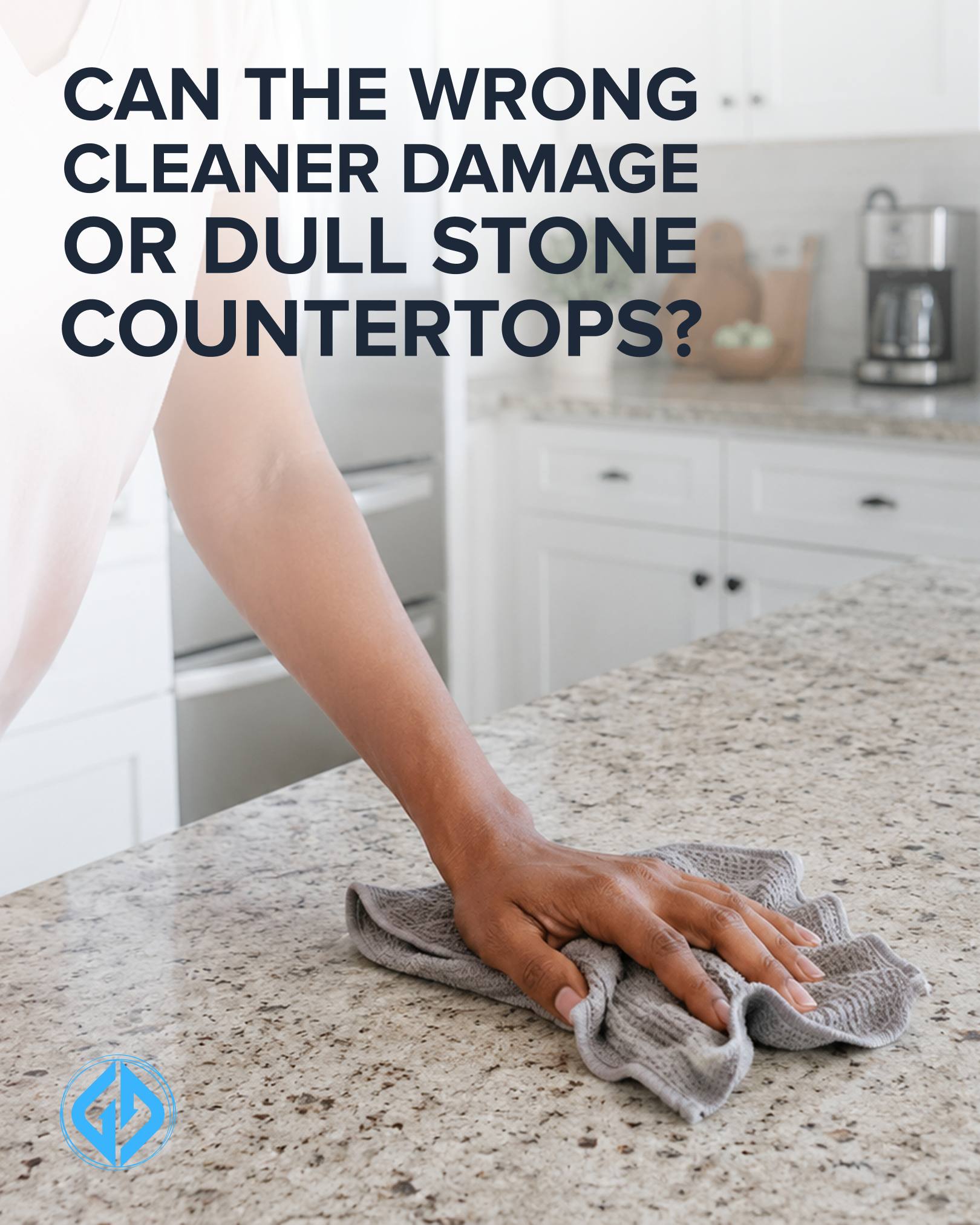
Yes—the wrong cleaner can dull, discolor, etch, or otherwise damage a countertop, but the exact risk depends on the material. Marble is particularly sensitive to acids, natural granite and quartzite can be affected by aggressive chemicals and inappropriate cleaning methods, while engineered quartz can be damaged by abrasive cleaners, strong chemicals, or prolonged exposure to unsuitable products.
The confusing part is that a cleaner labeled “all-purpose” is not necessarily appropriate for every countertop. Vinegar may be useful elsewhere in the home but can etch marble. Abrasive powders may remove stubborn residue but can change a polished finish. Even repeated use of an unsuitable product can gradually leave a surface looking cloudy rather than causing obvious damage immediately.
At Granite Depot of Columbia, we install granite countertop stores in Kershaw, SC customers’ selected granite, quartz, marble, and quartzite surfaces and explain the appropriate everyday care before they begin using their new countertops.
Can vinegar damage natural stone countertops?
Yes. Vinegar should be kept away from marble and other acid-sensitive calcite-based stones because it can chemically etch the surface.
Etching is not the same as staining. A stain occurs when a substance penetrates the material and leaves discoloration. An etch occurs when acid reacts with minerals in the stone and changes the actual surface finish.
On polished marble, an etched area usually appears:
- dull;
- cloudy;
- lighter from certain angles;
- less reflective than the surrounding countertop.
Lemon-based cleaners and other acidic cleaning solutions can create the same problem.
Granite is considerably more acid-resistant than marble, but routinely cleaning natural stone with aggressive acidic products is still unnecessary. A pH-neutral stone cleaner or mild dish soap is the safer everyday approach.
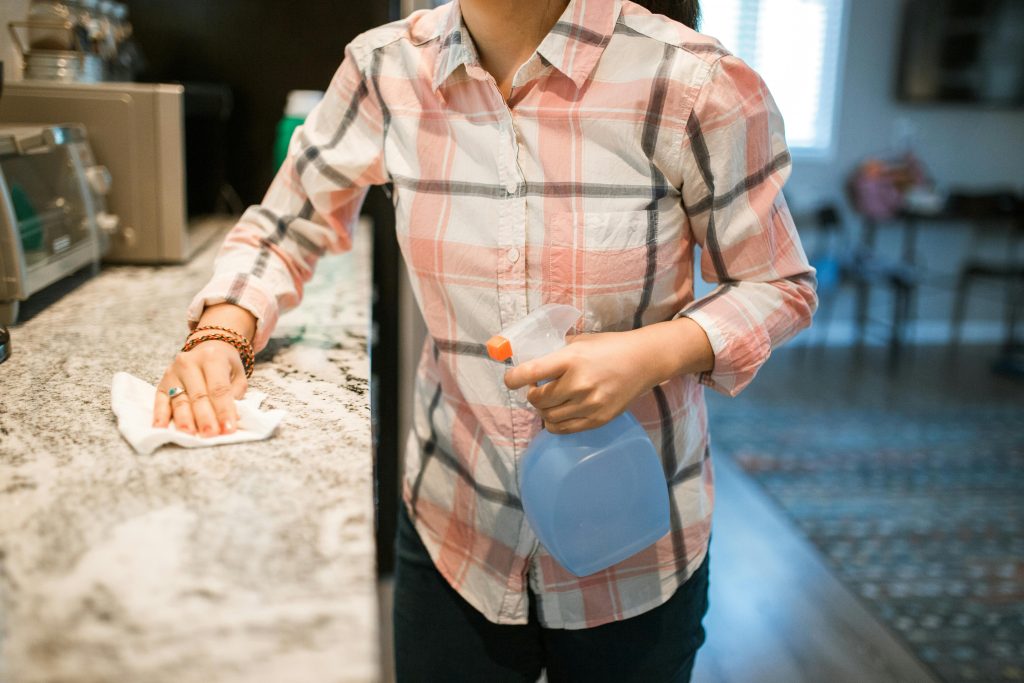
Why can marble become dull so quickly?
Marble becomes dull because it is primarily composed of calcite, a mineral that reacts with acids.
This makes products containing vinegar, citrus acids, and certain bathroom or limescale-removing chemicals particularly risky.
The same reaction can happen with food. Lemon juice, wine, tomatoes, and vinegar-based sauces can leave an etched area even on properly sealed marble.
Sealing does not prevent this reaction. A penetrating sealer helps slow liquid absorption and staining, but it does not create an acid-proof coating.
Popular marbles such as Carrara, Calacatta, Statuario, Crema Marfil, and Emperador therefore require more careful product selection than many other countertop materials.
At Granite Depot of Columbia, marble starts at approximately $65 per square foot, so using appropriate cleaners is a simple way to protect a significant investment.
Can the wrong cleaner damage granite?
Yes, although granite is generally more forgiving than marble.
Granite is a hard natural stone, typically around 6–7 on the Mohs scale, and withstands everyday kitchen use extremely well. But its protective sealer and polished finish still deserve appropriate care.
Repeated use of strong chemicals, abrasive powders, or rough scouring pads can affect the finish or reduce the effectiveness of some sealers over time.
For routine cleaning, we generally recommend:
- warm water;
- mild dish soap;
- a soft microfiber cloth;
- a pH-neutral cleaner formulated for natural stone.
Granites such as Dallas White, Luna Pearl, New Caledonia, River White, Santa Cecilia, and Black Pearl vary in color and density, but none benefits from unnecessarily harsh everyday chemicals.
For homeowners comparing granite countertop stores in Kershaw, SC, maintenance should be part of the material-selection conversation—not something learned only after installation.
Can household cleaners damage quartz?
Yes. Quartz is low-maintenance, but “low-maintenance” does not mean every cleaner is safe.
Engineered quartz is non-porous and does not require routine sealing. Brands including Cambria, Silestone, Caesarstone, MSI Quartz, and Vicostone offer surfaces specifically designed for convenient everyday use.
For normal messes, mild soap and water are usually enough.
Problems can arise from aggressive abrasive cleaners or repeated use of chemicals not approved by the manufacturer. Abrasive pads can also change the surface sheen and create a dull-looking patch that becomes particularly visible under overhead lighting.
Another common mistake is assuming that a difficult stain requires increasingly strong chemicals. Before using a solvent or specialty cleaner, homeowners should check the care recommendations for their specific quartz brand and collection.
Is quartzite cleaned the same way as quartz?
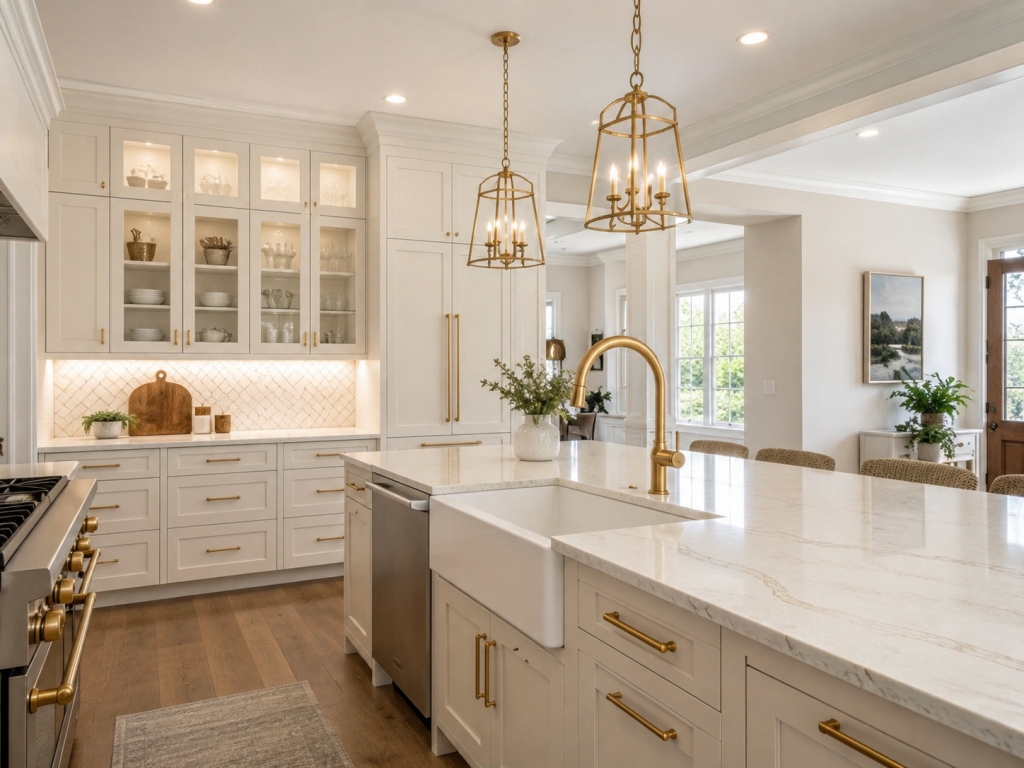
No. Quartzite and quartz have similar names but are completely different materials.
Quartzite is natural stone. Quartz is engineered using mineral content, pigments, and binders.
Natural quartzite generally needs care more similar to granite:
- use pH-neutral cleaning products;
- avoid aggressive chemicals;
- wipe spills promptly;
- evaluate sealing periodically;
- avoid abrasive cleaning methods.
Quartz does not require routine sealing because it is non-porous.
This distinction is important because homeowners sometimes purchase a cleaner believing the two surfaces require identical maintenance.
At Granite Depot of Columbia, quartzite pricing is available upon request because the final price varies substantially with the specific slab and project.
What cleaners are safest for each countertop material?
Simple cleaning products are usually safer than complicated homemade mixtures.
| Material | Best everyday option | Products to be cautious with |
|---|---|---|
| Granite | Mild soap or pH-neutral stone cleaner | Acids, abrasives, harsh chemicals |
| Quartz | Mild soap and manufacturer-approved cleaner | Abrasives and aggressive chemicals |
| Marble | pH-neutral natural-stone cleaner | Vinegar, citrus, acids, abrasives |
| Quartzite | Mild soap or pH-neutral stone cleaner | Acids, abrasives, harsh chemicals |
The safest cleaner is also affected by the specific finish. A polished surface, honed surface, and leathered surface may respond differently to residue and cleaning tools.
When in doubt, test a new product on a small inconspicuous area rather than applying it immediately across an entire island.
Can abrasive cleaners remove the shine from countertops?
Yes. Abrasive products and pads can physically alter some finishes, creating an uneven or cloudy appearance.
This can happen gradually.
A homeowner may use the same abrasive cleaner for months without noticing a problem. Then sunlight or under-cabinet lighting reveals that one heavily cleaned area no longer reflects light the same way as the rest of the countertop.
Common abrasive items include:
- scouring powders;
- rough scrub pads;
- certain cleaning pastes;
- steel wool;
- gritty homemade mixtures.
The temptation to scrub is strongest around dried food or cooking residue, but softening the residue first is usually safer than aggressively grinding it away.

What if the countertop already looks dull?
First determine whether the problem is residue, etching, physical abrasion, or another type of surface damage.
A cloudy appearance does not automatically mean the countertop needs replacement or refinishing.
Soap residue, hard-water deposits, and cleaning-product buildup can sometimes create a film that changes how the surface reflects light. Marble etching, by comparison, is an actual alteration of the stone and cannot simply be cleaned away.
If only one spot has become dull immediately after exposure to lemon, vinegar, or another acid, marble etching is a strong possibility.
If a large quartz area became hazy after repeated abrasive cleaning, the finish itself may have been affected.
Knowing the material is therefore the first step in diagnosing the problem correctly.
How much do different stone countertops cost?
At Granite Depot of Columbia, our starting prices help homeowners compare materials before considering maintenance and design preferences.
| Material | Starting price |
|---|---|
| Granite | From $39/sq. ft. |
| Quartz | From $50/sq. ft. |
| Marble | From $65/sq. ft. |
| Quartzite | Price available upon request |
The final cost depends on the selected color or slab, total square footage, edge profile, sink and cooktop cutouts, backsplash, fabrication complexity, and installation details.
For Kershaw, SC homeowners, choosing the right cleaning routine after installation helps protect both the appearance and value of that investment.
How long does countertop fabrication and installation take?
Most Granite Depot of Columbia projects take approximately 2–3 weeks overall.
After the final template, custom fabrication typically takes 7–10 business days. During this stage, we cut the selected material, create sink and appliance openings, fabricate the edge profile, plan seams, and prepare the countertop for installation.
Installation usually requires approximately 1–2 days in a standard kitchen.
Granite Depot of Columbia provides material selection, professional templating, custom fabrication, sink and cooktop cutouts, edge finishing, delivery, and professional installation for customers in Kershaw, SC and the surrounding service area.
Frequently Asked Questions
Can vinegar permanently damage a countertop?
It can permanently etch marble and other acid-sensitive calcite-based stones. The resulting dull area is a change to the surface rather than removable dirt. Vinegar is therefore not recommended as an everyday cleaner for natural stone.
What is the safest everyday cleaner for granite?
Mild dish soap with warm water or a pH-neutral cleaner formulated for natural stone is usually appropriate. Avoid abrasive pads and unnecessary harsh chemicals that may affect the finish or sealer.
How much do stone countertops cost at Granite Depot of Columbia?
Granite starts at approximately $39 per square foot, quartz at $50 per square foot, and marble at $65 per square foot. Quartzite pricing is available upon request. Final project pricing depends on the exact material, dimensions, fabrication, and installation requirements.
How long does a countertop project take?
Most projects take approximately 2–3 weeks. Custom fabrication generally requires 7–10 business days after templating, followed by approximately 1–2 days for installation in a standard kitchen.
Does Granite Depot of Columbia serve Kershaw, SC?
Yes. Granite Depot of Columbia serves homeowners searching for granite countertop stores in Kershaw, SC, providing granite, quartz, marble, and quartzite selection, professional templating, custom fabrication, cutouts, edge finishing, delivery, and installation.
Granite Depot of Columbia
71 Berkshire Dr, Columbia, SC 29223
Phone: (803) 956-4555