

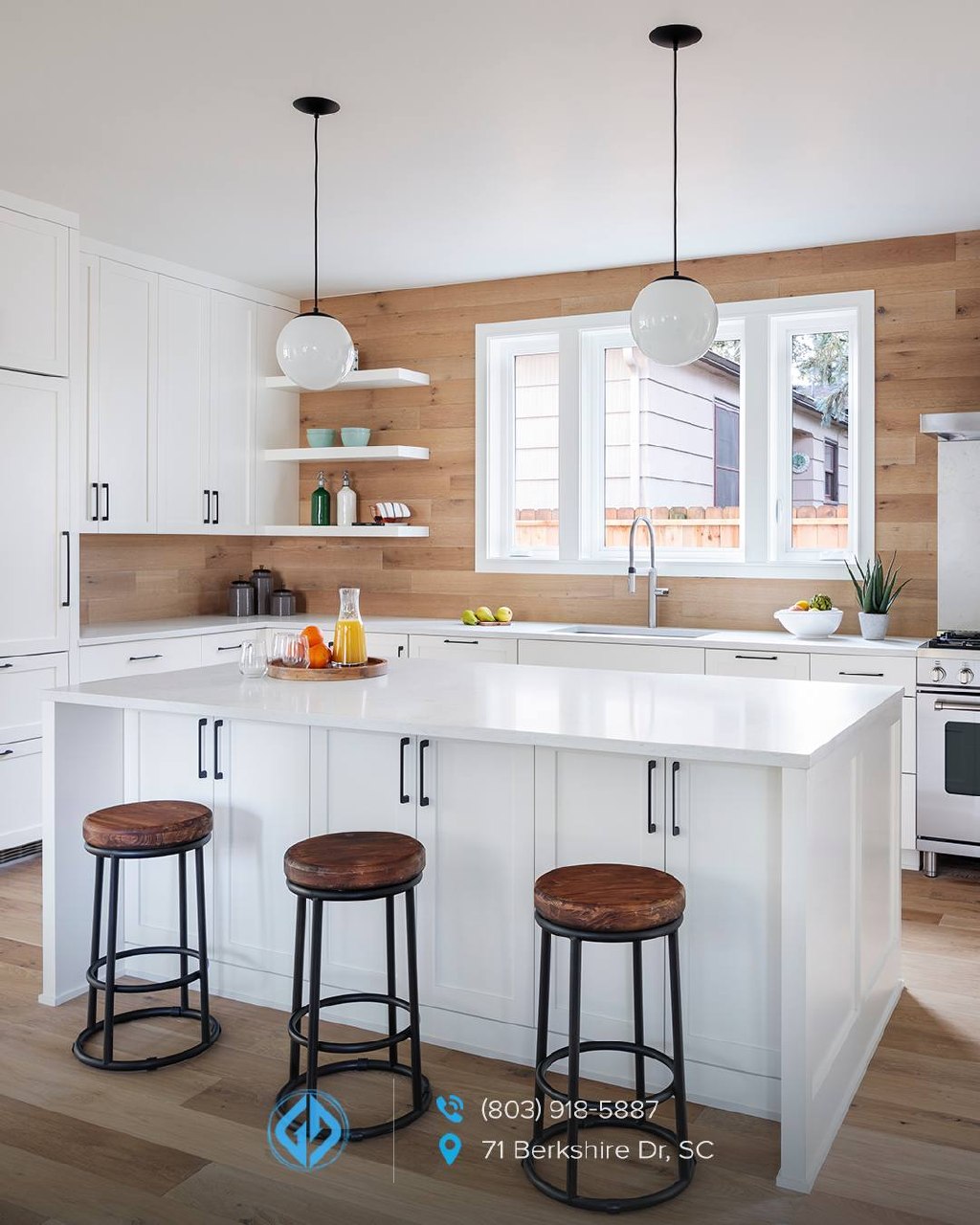
No — you should not put hot pots directly on quartz countertops. Quartz contains polymer resins that are sensitive to sustained high heat, and direct contact from a hot pan, pot, or baking dish can cause permanent discoloration, surface cracking, or resin damage that cannot be reversed. This is the single most important limitation of quartz in a kitchen setting, and it’s worth understanding clearly before installation.
The good news is that this limitation is entirely manageable with one simple habit — using a trivet or heat-resistant mat between the cookware and the surface. Homeowners who do this consistently never experience heat damage on quartz. Those who don’t occasionally do. The distinction is that straightforward.
At Granite Depot of Columbia, we install quartz kitchen countertops in Cheraw, SC and throughout the Midlands region regularly, and the heat question is one of the most consistent conversations we have before installation. Here’s everything you need to know.
What exactly happens when a hot pot touches quartz?
Quartz is an engineered material — approximately 90 to 93 percent crushed natural quartz bound together with polymer resins and pigments. The quartz crystals themselves are heat-tolerant. The resins are not.
When a surface temperature exceeds roughly 150°F (65°C), the polymer resins begin to soften. At higher temperatures — above 300°F (150°C), which a pan fresh from a stove or oven easily reaches — the resins can discolor, crack, or separate from the quartz crystals. The damage typically appears as a whitish or yellowish discoloration, a dull spot, or in more severe cases a surface crack radiating from the contact point.
The critical factor is contact time. A hot pan set down briefly and moved immediately creates far less risk than the same pan left sitting on the surface for several minutes. Sustained contact — a slow cooker, an electric griddle, or a baking dish left on the counter after coming out of a 400°F oven — is where the real damage occurs.
Unlike scratches, which are surface-level and sometimes reducible with polishing, heat damage on quartz affects the resin structure of the material itself. There is no field repair. The affected area cannot be restored. This is why prevention is the only strategy.
For homeowners considering quartz kitchen countertops in Cheraw, SC, this is the limitation worth understanding before installation day — not after. Prevention costs nothing. Repair isn’t possible.
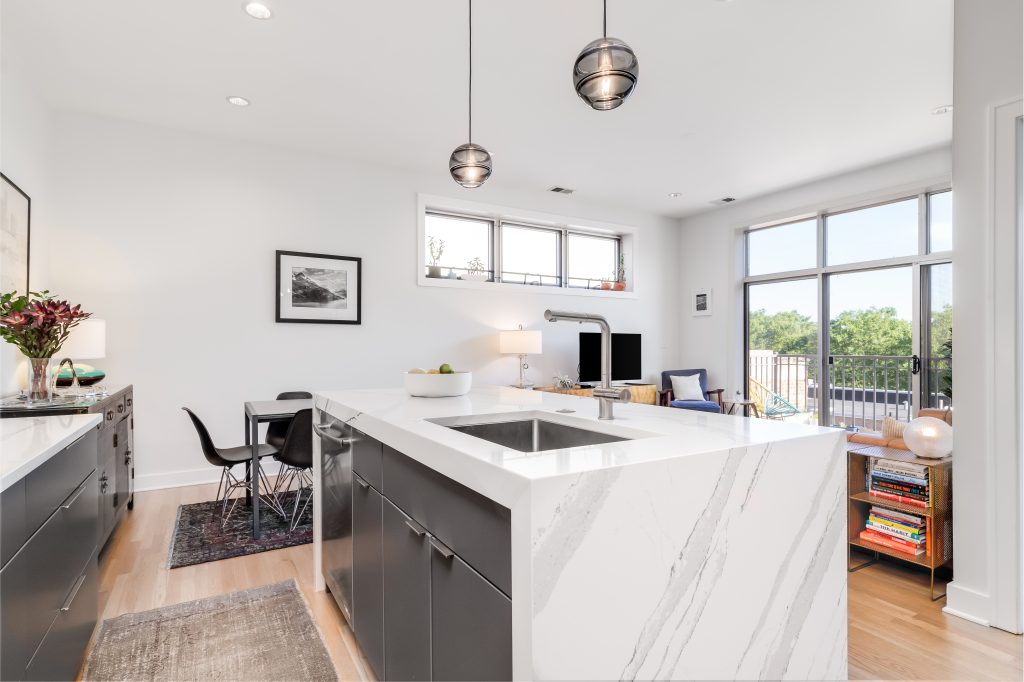
How does quartz compare to granite and quartzite on heat resistance?
This comparison matters because it frames the quartz heat limitation in proper context — quartz is not unusual for being heat-sensitive in absolute terms, but it is meaningfully different from the natural stone alternatives.
Granite handles heat exceptionally well. At Mohs 6 to 7, its mineral composition — without polymer resins — tolerates sustained high heat without damage. A cast iron skillet straight from a 500°F oven set directly on sealed granite is not a concern. This is one of the genuine practical advantages granite holds over quartz in an active cooking kitchen. Granite starts at $39 per square foot at Granite Depot of Columbia in 2026.
Quartzite at Mohs 7 and above is similarly heat-tolerant as a natural stone. No resin content means no heat sensitivity threshold. In the Columbia, SC area, quartzite typically starts around $75 per square foot installed in 2026.
Marble handles heat reasonably well at the surface — it won’t discolor from a hot pan the way quartz can. Its main kitchen vulnerabilities are etching and staining, not heat. Marble starts at $65 per square foot at Granite Depot of Columbia in 2026.
Quartz is the only material in this group with a genuine heat threshold — a temperature above which damage occurs regardless of how high-quality the product is. This applies across all brands including Cambria, Silestone, Caesarstone, and MSI Quartz.
| Material | Heat Resistance | Hot Pan Risk | Starting Price 2026 |
|---|---|---|---|
| Granite | Excellent | Very low | From $39/sq ft* |
| Quartzite | Excellent | Very low | From ~$75/sq ft |
| Marble | Good | Low | From $65/sq ft* |
| Quartz | Moderate | Real — use trivets | From $50/sq ft* |
*At Granite Depot of Columbia in 2026
Does the quartz brand affect heat resistance?
All major quartz brands are affected by heat for the same fundamental reason — all contain polymer resins. The specific resin formulation varies by brand and product line, which means some quartz products have slightly higher heat thresholds than others, but no engineered quartz product is heat-proof.
Cambria is manufactured with a higher resin quality standard than most brands and generally performs at the stronger end of the quartz heat resistance spectrum. Their lifetime warranty covers manufacturing defects but explicitly excludes heat damage — which tells you everything about how even the best quartz manufacturer views this limitation.
Silestone introduced a hybrid surface technology in recent product lines that incorporates a higher proportion of inorganic content, which improves heat resistance somewhat compared to standard quartz. It’s still not a heat-proof surface, but it’s a meaningful improvement.
Caesarstone and MSI Quartz perform similarly to the general quartz market — capable everyday surfaces with a real heat threshold that trivets address completely.
The practical takeaway: brand selection affects color, pattern, warranty, and overall quality — but no brand eliminates the heat sensitivity that is inherent to engineered quartz. Choosing quartz means choosing trivets as a permanent kitchen habit, regardless of brand.
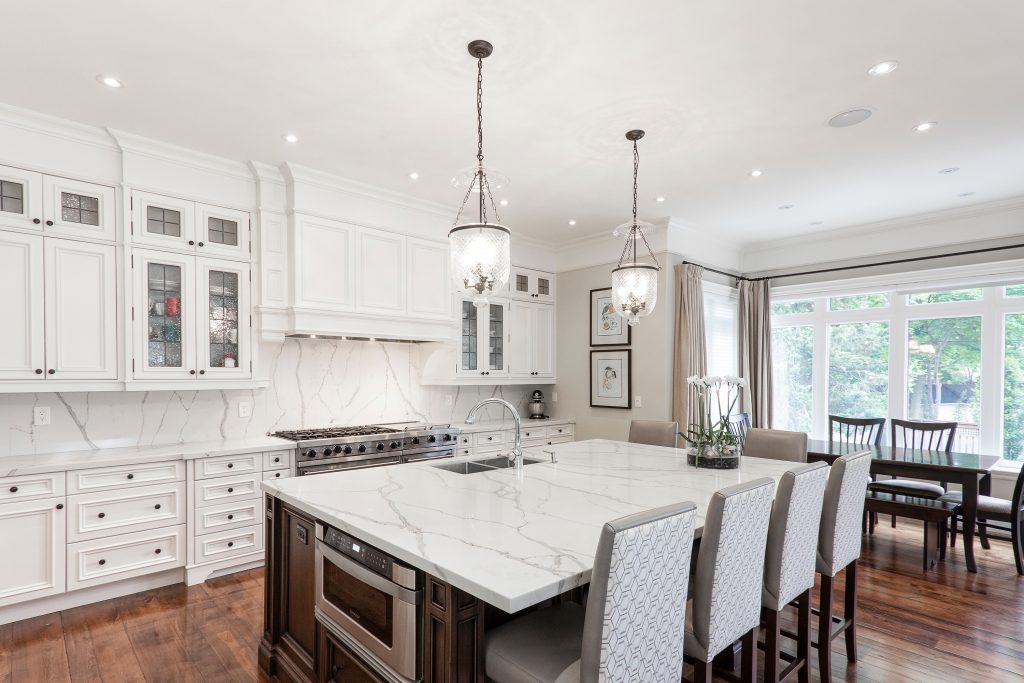
What about daily cooking situations — stovetop, instant pot, coffee maker?
This is where the real-life picture becomes clearer. Not every heat source in a kitchen creates the same risk for quartz.
Electric kettles and coffee makers sitting directly on quartz are generally not a concern — their base temperatures are low enough that the surface contact doesn’t approach the damage threshold. Years of daily use without incident is the typical experience.
A pan moved from the stovetop to the counter briefly — ten seconds while you plate food — creates minimal risk. The contact is too brief for significant heat transfer to occur. This is different from leaving the pan sitting on the surface.
A baking dish from a 400–450°F oven set directly on quartz for several minutes is the highest-risk scenario in a typical home kitchen. Oven temperatures translate directly into cookware surface temperatures that exceed quartz’s safe threshold. This is where damage most commonly occurs.
Slow cookers and electric griddles used directly on quartz create sustained low-to-medium heat contact that poses a cumulative risk over time. A silicone mat or trivet under any countertop appliance that generates heat is the right practice.
For quartz kitchen countertops in Cheraw, SC homeowners who cook regularly, the habit shift required is minimal — a set of quality trivets kept accessible near the stove and a silicone mat under countertop appliances. That’s genuinely all the management quartz heat sensitivity requires.
Is quartz still worth choosing if you cook frequently?
Yes — for most homeowners, absolutely. Quartz’s zero-maintenance profile, non-porous stain resistance, and consistent aesthetic performance outweigh the heat limitation for the majority of kitchens. The heat issue is real but manageable in a way that marble’s etching and natural stone’s sealing requirements are equally manageable for the right homeowner.
The homeowner for whom quartz may not be the best fit is someone who cooks heavily every day, frequently moves hot cookware from stove to counter, and is genuinely unlikely to change that habit. For that profile, granite at $39 per square foot at Granite Depot of Columbia in 2026 is the stronger practical choice — it handles heat without limitation and requires only periodic sealing.
Frequently Asked Questions
Can you put hot pots directly on quartz countertops?
No — quartz contains polymer resins that are permanently damaged by sustained high heat. A pan from a 400°F oven left on quartz for several minutes can cause irreversible discoloration or cracking. Brief contact from a moved pan is low risk. A trivet or heat-resistant mat between cookware and the surface eliminates the risk entirely.
What temperature damages quartz countertops?
Quartz resins begin to soften above approximately 150°F and can sustain visible damage above 300°F — temperatures that pans, baking dishes, and slow cookers easily reach. Contact time matters significantly — brief contact is low risk, sustained contact is where damage occurs.
How does quartz compare to granite for heat resistance?
Granite handles heat significantly better than quartz. As a natural stone without polymer resins, granite tolerates sustained high heat without damage — a cast iron skillet from a hot oven set on sealed granite is not a concern. At Granite Depot of Columbia, granite starts at $39 per square foot in 2026 compared to quartz at $50 per square foot.
How much do quartz kitchen countertops cost in Cheraw, SC in 2026?
At Granite Depot of Columbia, quartz kitchen countertops in Cheraw, SC start at $50 per square foot in 2026. In the Columbia, SC area, quartz typically runs $55 to $100 per square foot installed for mid-range selections. For a standard kitchen of 40 to 50 square feet, most projects fall between $2,200 and $5,000 fully installed.
How long does quartz countertop installation take at Granite Depot of Columbia?
Most projects are completed within two to three weeks from first contact to installed countertops. Fabrication runs seven to ten business days after the template appointment, and installation is completed in one to two days for most standard kitchens. Call us at (803) 956-4555 or visit us at 71 Berkshire Dr, Columbia, SC 29223 to get started.