

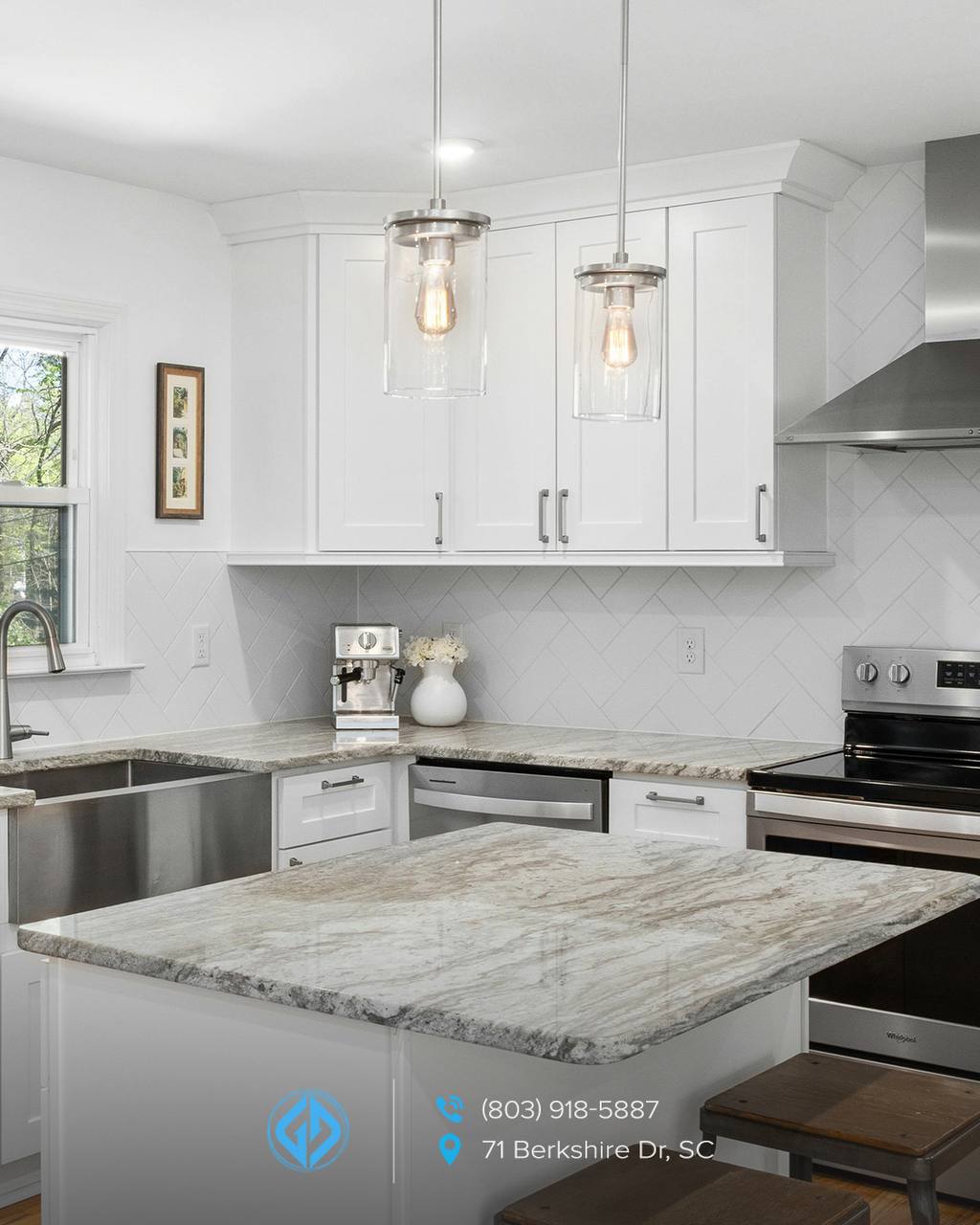
The idea of a DIY kitchen renovation is appealing for many reasons. It offers control, cost savings, and the satisfaction of building something with your own hands. With so many tutorials available online, it can feel like every part of the process is within reach — including installing granite countertops.
But granite is not like other materials.
Granite Depot of Columbia often works with homeowners who begin their renovation planning with a DIY mindset, only to realize that granite introduces a level of complexity that is not immediately obvious. Unlike laminate or wood, granite is heavy, rigid, and unforgiving when handled incorrectly.
For homeowners researching granite countertop stores in Union, SC, this distinction is critical. A granite slab is not just a surface — it is a precisely measured, fabricated piece of stone that must fit perfectly within the space. Even a small miscalculation can lead to costly adjustments or replacements.
While it is technically possible to participate in parts of the process, full installation is rarely a practical DIY task. The weight of the material alone requires multiple people and specialized equipment. Handling the slab without proper support can result in cracks or breakage.
Granite does not allow for trial and error in the same way other materials do. It demands precision from the beginning.
The question is not whether you can do it yourself, but which parts of the process make sense to handle on your own.
What Parts of a Granite Countertop Project Can Be Done DIY?
A granite countertop project is not a single step. It is a sequence of tasks, some of which are well suited for DIY work and others that require professional expertise.
Granite Depot of Columbia often encourages homeowners to take an active role in preparation and design. These early stages of the project offer the most flexibility and allow for creativity without the risk associated with handling the stone itself.
For those exploring granite countertop stores in Union, SC, one of the most valuable DIY contributions is planning. Measuring the space, selecting the layout, and coordinating with cabinetry can all be managed with careful attention to detail. Preparing the area for installation — ensuring that cabinets are level and structurally sound — is another step that homeowners can handle effectively.
Demolition of old countertops is also a common DIY task. Removing existing surfaces requires care, but it does not involve the same level of precision as installing granite. Clearing the space allows homeowners to prepare for the next phase of the project.
Design decisions are where DIY involvement can be most rewarding. Choosing the slab, considering edge profiles, and visualizing how the stone will fit into the overall design are all areas where homeowners can take control.
These contributions are significant. They shape the outcome of the project without introducing unnecessary risk.

Why Fabrication Is Not a DIY-Friendly Process
If there is one stage of a granite countertop project that should not be approached as DIY, it is fabrication. This is the process where the raw slab is cut, shaped, and prepared for installation.
Granite Depot of Columbia emphasizes that fabrication requires specialized equipment and expertise. The slab must be cut to precise dimensions, with openings for sinks, cooktops, and fixtures carefully measured and executed. Edge profiles are shaped using tools designed specifically for stone, ensuring a consistent and polished finish.
For homeowners researching granite countertop stores, it is important to understand that fabrication is not forgiving. Mistakes cannot be easily corrected. Once the stone is cut, it cannot be reshaped without significant cost.
Additionally, the slab must be reinforced in certain areas to prevent stress points. This is particularly important around cutouts, where the structure of the stone is more vulnerable.
Fabrication is not just about cutting stone. It is about understanding how the material behaves and ensuring that every detail is executed with precision.
Attempting this process without the proper tools and experience can lead to damage that cannot be undone.
What Makes Granite Installation So Challenging?
Installation is where the complexity of working with granite becomes most apparent. The slab must be transported, positioned, and secured with a level of accuracy that leaves no room for adjustment once it is in place.
Granite Depot of Columbia often explains that installation is as much about coordination as it is about skill. The slab must be carried carefully to avoid stress fractures, aligned perfectly with the cabinetry, and supported evenly to prevent long-term issues.
For homeowners exploring granite countertop stores in Union, SC, the weight of the material is one of the first challenges to consider. Granite slabs can weigh hundreds of pounds, requiring multiple installers and specialized handling techniques.
Even small misalignments can affect the final result. Seams must be placed strategically, surfaces must be level, and edges must align seamlessly with surrounding elements.
Adhesives and supports are also critical. The countertop must be secured in a way that allows for stability without creating pressure points that could lead to cracking.
Installation is not just about placing the slab. It is about ensuring that the entire system works together — cabinetry, supports, and stone — to create a stable and durable surface.
This level of precision is difficult to achieve without professional experience.
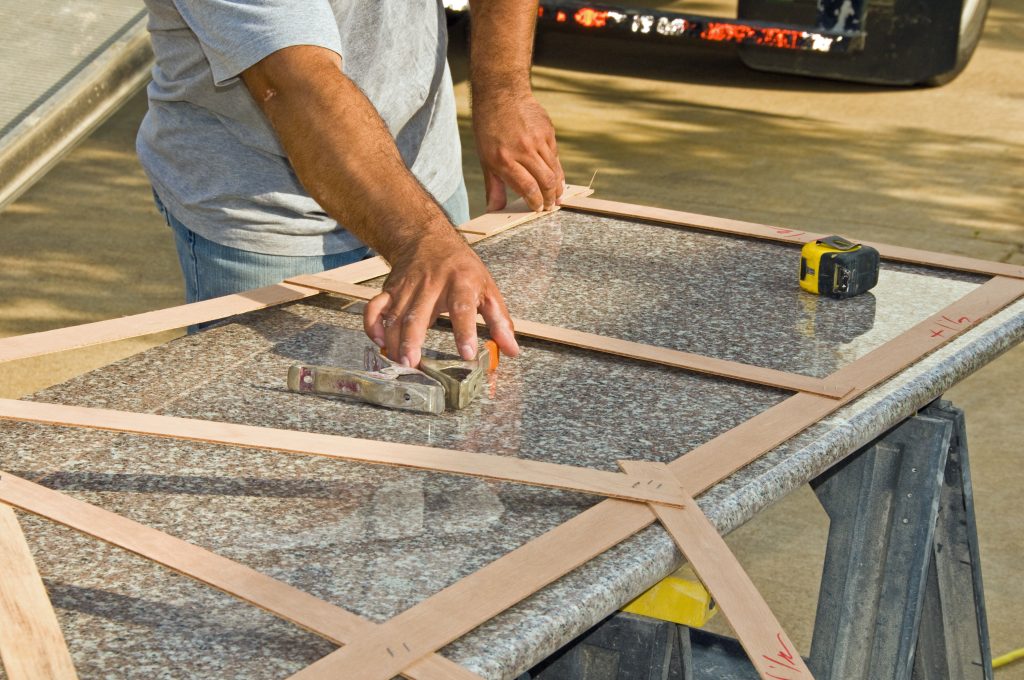
How Can DIY Renovators Work with Professionals Instead of Against Them?
The most successful granite countertop projects often involve a collaboration between homeowners and professionals. Rather than approaching the process as entirely DIY or entirely outsourced, a balanced approach allows each party to contribute where they are most effective.
Granite Depot of Columbia frequently works with homeowners who take an active role in the early stages while relying on professionals for fabrication and installation. This partnership ensures that the project benefits from both personal involvement and technical expertise.
For those researching granite countertop stores this approach offers the best of both worlds. Homeowners can focus on design, preparation, and coordination, while professionals handle the aspects of the project that require precision and specialized tools.
Clear communication is essential in this process. Sharing measurements, design preferences, and expectations helps ensure that the final result aligns with the homeowner’s vision.
This collaboration also reduces the risk of costly mistakes. By recognizing which tasks are better suited for professionals, homeowners can avoid issues that could compromise the entire project.
DIY does not have to mean doing everything alone. It can mean being involved in the right parts of the process.
Why Granite Countertops Are Worth Doing Right the First Time
Granite countertops are not a temporary feature. They are a long-term investment that becomes a central part of the kitchen. This makes the quality of installation and fabrication particularly important.
Granite Depot of Columbia often reminds homeowners that granite’s durability depends not only on the material itself but on how it is handled and installed. A well-executed installation allows the stone to perform as intended, maintaining its strength and appearance over time.
For homeowners exploring granite countertop stores in Union, SC, this perspective shifts the focus from cost savings to long-term value. Cutting corners during installation can lead to issues that are far more expensive to fix later.
Granite is designed to last for years, even decades. It can withstand daily use, adapt to changing design elements, and remain a defining feature of the kitchen.
But this longevity depends on getting the process right from the beginning.
DIY renovation can be rewarding, but it is most effective when applied thoughtfully. Understanding where to take control and where to rely on expertise ensures that the final result is both functional and visually strong.
In the end, granite is not just another material. It is a surface that carries weight — literally and figuratively. Treating it with the care it requires allows it to deliver the value it promises.