

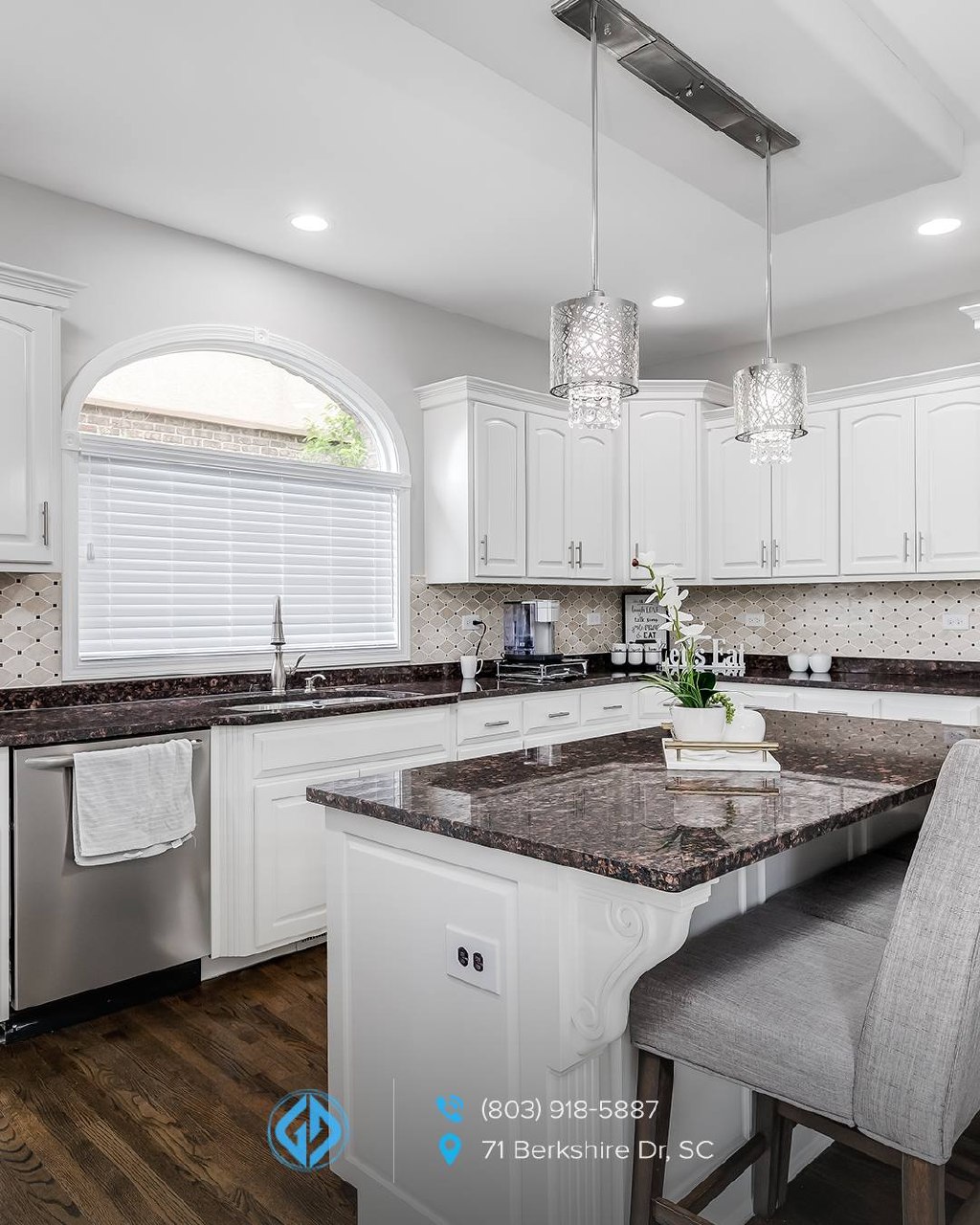
Granite levels are a pricing and grading system used by fabricators and stone suppliers to organize granite selections by cost tier — from Level 1 at the most accessible price point to Level 5 at the premium end. The system isn’t standardized across the industry, which means a Level 2 granite at one company might be priced similarly to a Level 3 at another. What the levels consistently represent, regardless of the specific company using them, is a combination of factors that affect both the stone’s cost to the supplier and its visual character in a finished kitchen.
Understanding what actually separates the levels — and whether those differences matter for your specific project — is one of the most useful things to know before walking into a granite showroom.
At Granite Depot of Columbia, as one of the leading granite companies in Manning, SC and throughout the Midlands region, we work through granite level questions with homeowners regularly. Here’s what the levels actually mean and how to use that information to make a better decision.

What factors determine a granite’s level?
The level assigned to a granite reflects several variables that interact to determine both what the supplier paid for the stone and what the market will bear for it. These variables are consistent across the industry even when the specific level numbering differs between companies.
Country of origin and import cost is a significant factor. Granite quarried domestically — certain American granites from states like Georgia, Vermont, and Texas — tends to sit at lower levels because transportation costs are lower. Granite imported from Brazil, India, Norway, or Italy carries higher import costs that push it to mid and higher levels regardless of the stone’s visual character.
Rarity of the variety drives level assignment more than almost any other factor at the upper tiers. A granite variety quarried from a single small quarry with limited annual output — Blue Bahia from Brazil, for example, or Fusion White — commands a premium that reflects genuine scarcity. A granite quarried from large, prolific quarry operations — common speckled granites from India — is more accessible at lower levels because supply is consistent and plentiful.
Visual complexity and uniqueness is the most subjective factor but genuinely affects market value. Granites with dramatic movement, unusual mineral combinations, or patterns that read as architectural rather than decorative command higher prices because homeowners and designers are willing to pay more for them. A level 4 or 5 granite is typically visually distinctive in a way that a level 1 or 2 isn’t — though this relationship isn’t absolute, and genuinely beautiful granites exist at every level.
Slab thickness and dimensions can affect level assignment within a variety. Larger slab dimensions mean less waste per project — which has value — and thicker stone costs more to produce. Some premium granites are only available in larger format slabs that command a higher price regardless of the stone’s other characteristics.
What do the levels actually look like in practice?
The best way to understand the levels concretely is to see what typically falls into each tier — keeping in mind that specific pricing varies by market and supplier.
Level 1 is builder-grade granite — the most common, most accessible, and most uniformly familiar granite available. Simple speckled patterns in consistent neutral tones: light gray with black and white flecks, beige with brown mineral inclusions, basic black. These are the granites that were installed in countless American kitchens from the mid-1990s through the 2010s and remain in production because demand is consistent. At Granite Depot of Columbia, granite starts at $39 per square foot in 2026 — this is the Level 1 entry point. It’s genuine natural stone, durable, and performs well over decades. The limitation is visual: these stones tend to look familiar rather than distinctive.
Level 2 and 3 is where the most interesting mid-range granites live — selections that have more visual character than builder-grade without approaching premium pricing. Santa Cecilia, Giallo Ornamental, Venetian Gold, Kashmir White, and Bianco Romano all fall in this range. These are the granites that offer genuine natural stone beauty at prices most homeowners find accessible. Mid-range granite in the Columbia, SC area typically runs $55 to $80 per square foot installed in 2026 for Level 2 to 3 selections.
Level 4 and 5 includes the distinctive, often dramatic, and sometimes rare granites that make a kitchen genuinely unique. Fusion White, Titanium, Blue Bahia, Cosmic Black, and similar highly figured or unusual varieties. These stones have visual qualities that no two slabs share exactly — which is part of what commands the premium. Level 4 to 5 granite typically runs $90 to $150 per square foot installed in the Columbia, SC area in 2026.
For granite companies in Manning, SC customers comparing quotes that reference different levels, this tier structure provides a useful reference point — a Level 1 quote and a Level 3 quote for the same kitchen aren’t comparable even when both say “granite.”
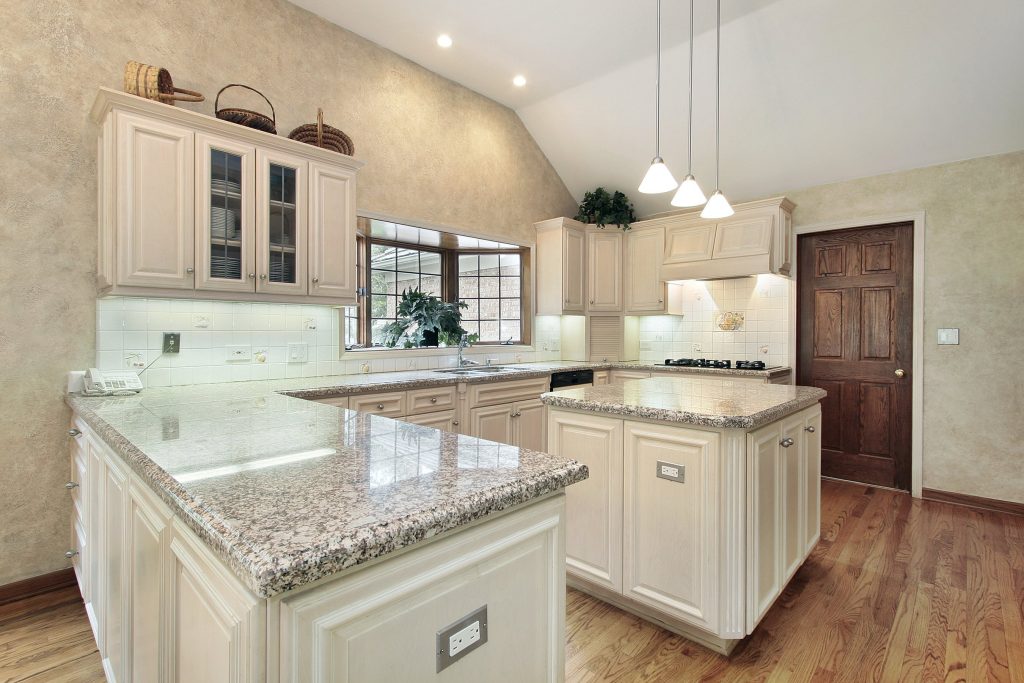
Does a higher level actually mean better granite?
Not exactly — and this is the most important nuance in the entire granite level conversation. Level is a pricing indicator, not a quality indicator in the engineering sense of the word.
A Level 5 granite is not more durable than a Level 1 granite. Both are natural stone with Mohs hardness ratings in the 6 to 7 range. Both require the same sealing schedule. Both handle heat similarly. Both will perform well in a kitchen for decades with proper maintenance. The Level 5 stone isn’t better engineered — it’s rarer, more visually distinctive, and more expensive to source.
What higher levels do consistently deliver is visual differentiation. A Level 4 or 5 granite installed in a kitchen is far less likely to look like the granite in a neighbor’s kitchen, a rental property, or a builder-spec home. For homeowners who value that uniqueness, the premium is justified. For homeowners who primarily want durable natural stone at the most accessible price and are less concerned with visual distinction, Level 1 to 3 granite delivers excellent long-term performance at a fraction of the cost.
The genuine quality consideration that maps to level is fabrication difficulty on certain premium varieties. Some Level 4 and 5 granites have unusual mineral compositions or structural characteristics that require more care during cutting and edge profiling — though this is the exception rather than the rule, and experienced fabricators account for it as a standard part of working with premium stone.
Is the level system consistent between companies?
No — and this is where the system causes the most confusion for homeowners comparing quotes. There is no industry-wide standardization of what constitutes a Level 1 versus a Level 2 versus a Level 3 granite. Each fabricator or stone supplier assigns levels based on their own cost structure, supplier relationships, and inventory mix.
A Level 2 granite at a small regional fabricator with limited importing relationships might be the same stone that a larger national supplier sells as a Level 1 because they purchase it in larger volume at lower cost. A Level 3 at a premium showroom might be positioned as Level 2 at a volume-oriented fabricator. The level number itself is not transferable between companies.
What this means practically: when comparing granite quotes between multiple companies, ask about the specific variety name rather than the level. “Kashmir White Level 2” at Company A and “Kashmir White Level 3” at Company B are likely the same stone at different price points reflecting different cost structures — not different stones. Confirming the specific variety allows an apples-to-apples price comparison. Comparing levels across companies without confirming variety creates confusion that often leads homeowners to inaccurate conclusions about which company offers better value.

How should you use this information when choosing granite?
The most useful application of granite level knowledge is as a budget-planning tool rather than a quality guide. Knowing that Level 1 to 2 granite starts at $39 per square foot at Granite Depot of Columbia and that Level 4 to 5 granite runs $90 to $150 per square foot in the Columbia, SC area in 2026 gives a realistic framework for what different visual tiers actually cost before walking into a showroom.
The decision that consistently produces the best outcomes is viewing full slabs at multiple levels before deciding rather than selecting by level number or price tier alone. Homeowners who see a Level 2 Santa Cecilia and a Level 4 Fusion White side by side consistently make more confident decisions than those who selected by price category without seeing the stones. The visual difference between levels is something that needs to be seen to be properly evaluated — and occasionally homeowners discover that a Level 2 selection resonates more strongly with them than a Level 4 they expected to prefer.
For anyone working with granite companies in Manning, SC, Granite Depot of Columbia serves Manning and Clarendon County from our Columbia, SC location. We carry granite across all levels from $39 per square foot in 2026 and walk every client through the full range of available selections before any decision is made. Most projects are completed within two to three weeks from template to installed countertops. Reach us at (803) 956-4555 or visit us at 71 Berkshire Dr, Columbia, SC 29223.