

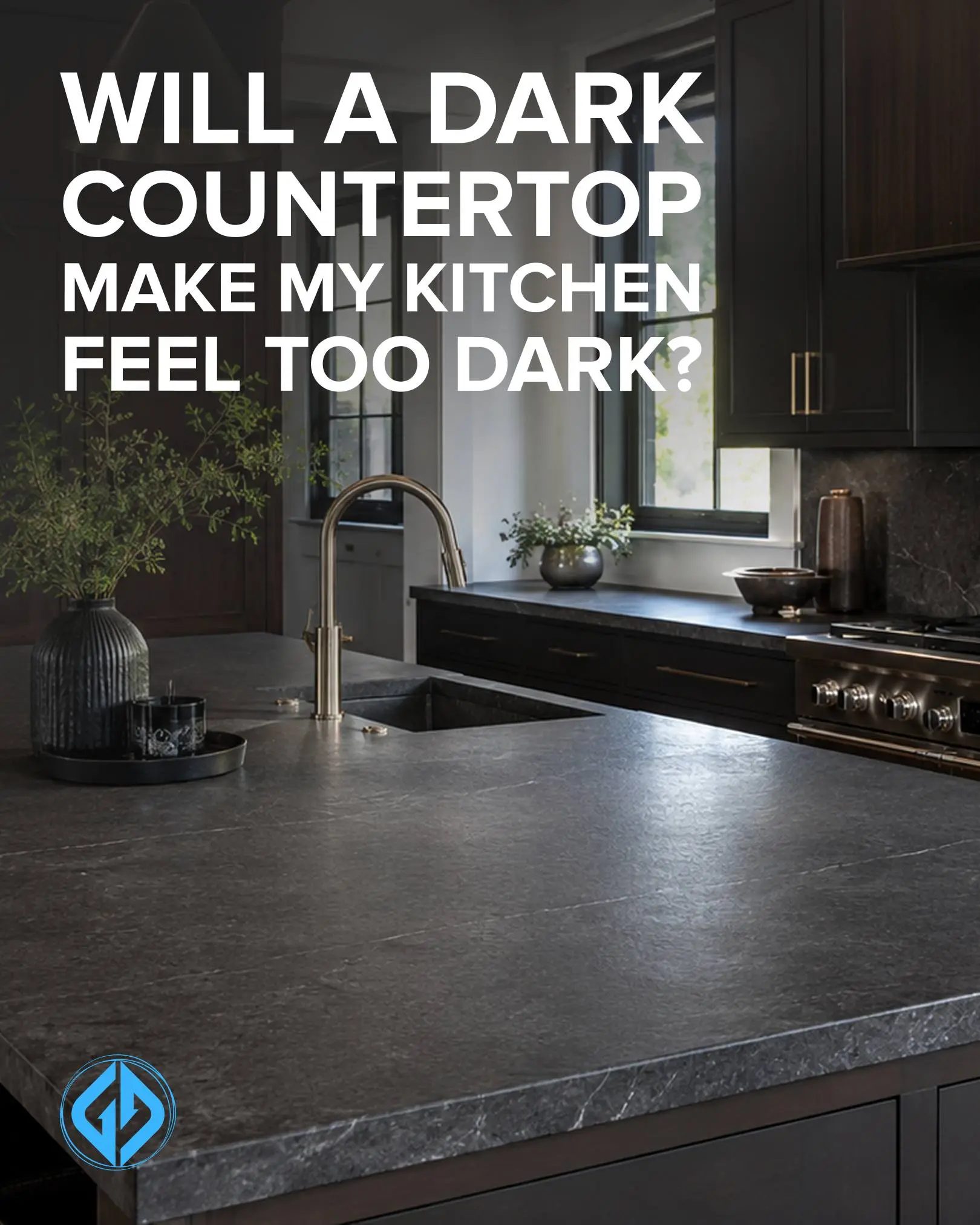
No, a dark countertop does not automatically make a kitchen feel too dark. The overall effect depends on the combination of countertop color, cabinets, backsplash, flooring, natural light, and artificial lighting. A dark granite or quartz countertop can actually create depth and contrast while making lighter elements in the kitchen stand out.
The key is balance. If the countertop is dark and every other surface is also dark, the room can feel heavy. But pairing a dark surface with lighter cabinets, reflective finishes, and good lighting can create a dramatic and inviting kitchen.
At Granite Depot of Columbia, we help homeowners looking for kitchen countertops in Chester, SC choose materials and colors that work with the entire kitchen rather than judging a countertop color on its own.
Can dark countertops work in a small kitchen?
Yes. A small kitchen can absolutely use a dark countertop, but the surrounding finishes become more important.
Dark countertops can actually help define the kitchen and create contrast in a compact space. The problem usually occurs when dark countertops are combined with dark cabinets, dark flooring, and limited lighting.
To keep a small kitchen feeling open, consider pairing dark countertops with:
- white or light cabinets;
- light backsplash tile;
- warm wood accents;
- reflective hardware;
- bright under-cabinet lighting;
- lighter flooring.
For homeowners comparing kitchen countertops in Chester, SC, this combination can create a balanced design without making the room feel closed in.
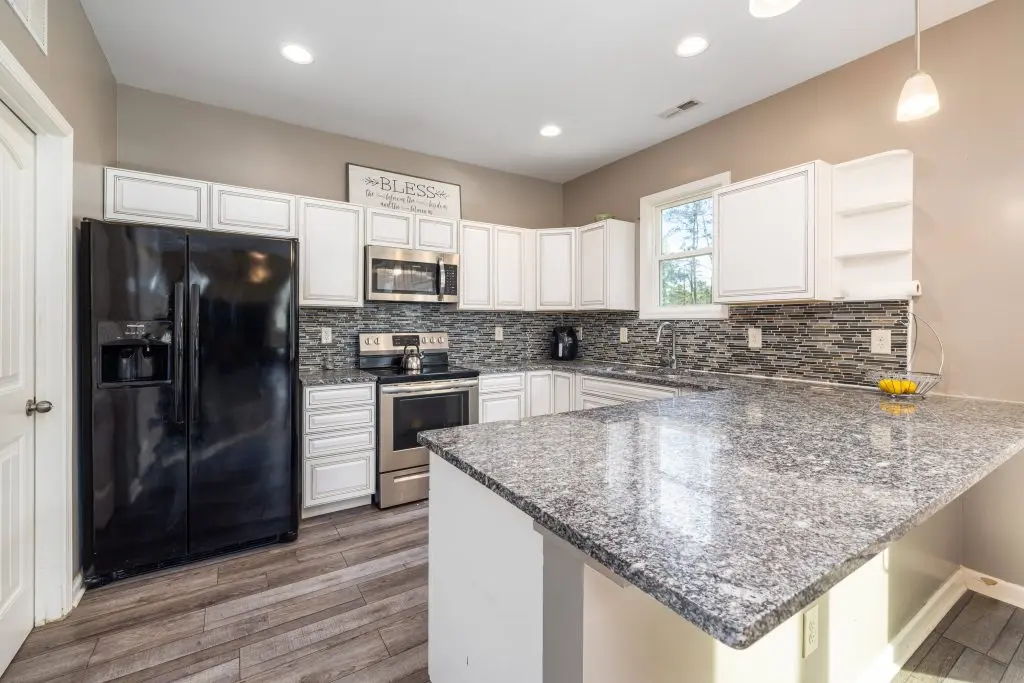
What cabinet colors work best with dark countertops?
Cabinet color has one of the biggest effects on how a dark countertop feels.
White cabinets
White cabinets create the strongest contrast with dark stone.
A black or charcoal granite countertop against white cabinetry can create a crisp, classic kitchen.
Light wood cabinets
Oak, maple, and other lighter wood tones can soften a dark countertop.
This combination works particularly well when you want the kitchen to feel warm rather than stark.
Gray cabinets
Gray cabinets can work with dark countertops, but the undertones matter.
A very dark gray kitchen may need additional lighting and lighter backsplash elements to prevent the room from feeling too heavy.
Dark cabinets
Dark cabinets and dark countertops can create a dramatic monochromatic look, but this combination requires more careful planning.
Adding lighter walls, flooring, backsplash, or hardware can help break up the darker surfaces.
Which countertop materials work best in dark colors?
Granite, quartz, marble, and quartzite can all create beautiful dark countertops.
Dark granite
Granite is one of the most popular choices for a dark countertop because natural movement and mineral variation prevent the surface from looking completely flat.
Popular dark granite options can include:
- Black Pearl;
- Absolute Black;
- Steel Gray.
Granite starts at approximately $39 per square foot at Granite Depot of Columbia.
Dark granite works particularly well when the cabinets and backsplash provide contrast.
Dark quartz
Quartz offers many dark options with consistent color and pattern.
A charcoal or black quartz countertop can create a modern appearance, especially with:
- white cabinets;
- matte black hardware;
- warm wood;
- simple backsplash tile.
Quartz starts at approximately $50 per square foot.
One advantage is that quartz is non-porous and does not require routine sealing.
Dark marble
Dark marble can create a dramatic luxury appearance, especially when the stone has noticeable veining.
However, marble requires more careful maintenance because it can etch from acidic substances.
Marble starts at approximately $65 per square foot at Granite Depot of Columbia.
Dark quartzite
Quartzite can provide dramatic natural movement and is often chosen for statement islands and high-visibility countertops.
Pricing for quartzite is available upon request, as the selected slab can have a significant effect on cost.
Does countertop finish affect how dark the kitchen feels?
Yes. The finish can change how light interacts with the countertop.
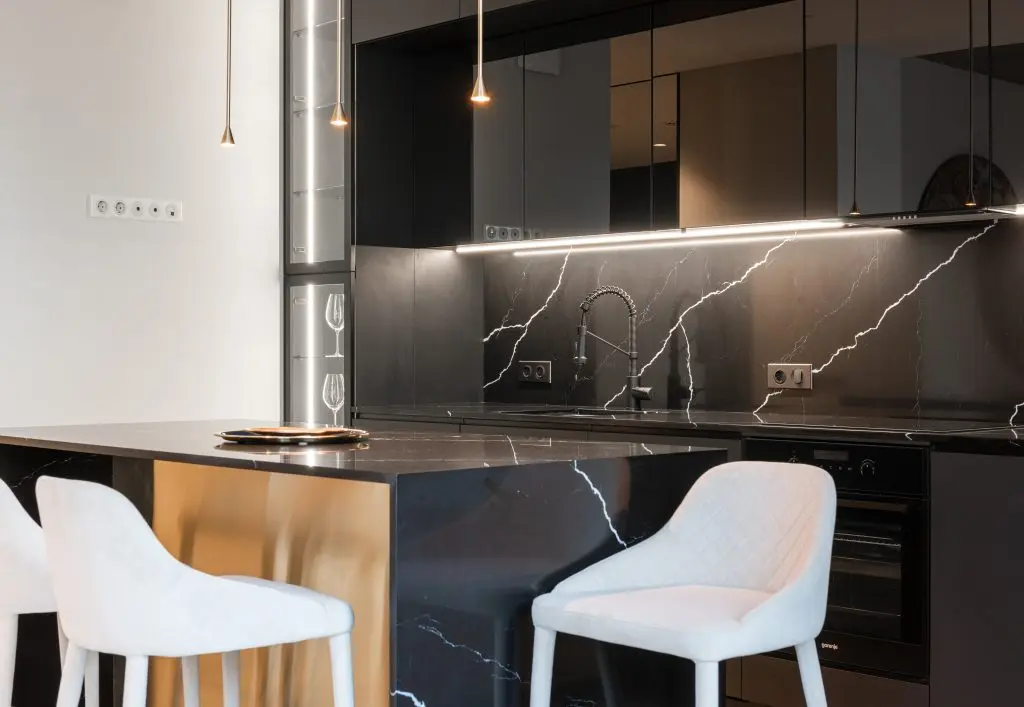
A polished dark countertop reflects more light than a matte or honed surface. This can help prevent a dark surface from looking completely flat.
Honed finishes have less reflection and create a softer appearance, while leathered finishes add texture.
For a dark kitchen, the finish should be considered together with the lighting.
For example, polished black granite paired with under-cabinet lighting can create small reflections that add visual depth.
A matte dark countertop may create a more understated appearance but may need stronger surrounding lighting.
How can you brighten a kitchen with dark countertops?
You do not necessarily need to replace the countertop. Several design choices can make the room feel brighter.
Add under-cabinet lighting
LED lighting beneath upper cabinets illuminates the countertop and backsplash directly.
This is especially useful when the countertop is dark.
Use a lighter backsplash
A white, cream, or light gray backsplash can reflect light and create separation between dark countertops and upper cabinets.
Choose lighter flooring
Light floors can visually balance dark countertops and cabinetry.
Add reflective hardware
Polished metal, glass, and other reflective details can introduce small points of light.
Maximize natural light
Keep windows unobstructed when possible and use window treatments that allow natural light into the kitchen.
Should a dark island have a different countertop from the perimeter?
It can.
A dark kitchen island with lighter perimeter countertops can create a strong focal point without making the entire kitchen feel dark.
For example:
- dark granite island + white quartz perimeter;
- black quartz island + light cabinets;
- dark quartzite island + neutral countertops.
The opposite approach can also work: light island countertops with darker perimeter surfaces.
The important part is creating a deliberate contrast rather than making every surface compete.
Are dark countertops harder to keep clean?
Not necessarily. Maintenance depends more on the material and finish than simply the color.
Dark polished surfaces can show:
- fingerprints;
- water spots;
- dust;
- dried droplets.
A patterned dark granite may hide some everyday marks better than a completely solid black surface.
Quartz is relatively easy to clean because it is non-porous. Granite requires appropriate sealing depending on the specific stone. Marble needs more care because of its sensitivity to acids.
The color changes what you see, not necessarily how durable the material is.
How much do dark kitchen countertops cost?
At Granite Depot of Columbia, starting material prices are:
| Material | Starting price |
|---|---|
| Granite | From $39/sq. ft. |
| Quartz | From $50/sq. ft. |
| Marble | From $65/sq. ft. |
| Quartzite | Price available upon request |
These are starting material prices, not complete installed project costs.
The final price depends on:
- selected slab;
- countertop square footage;
- color and availability;
- edge profile;
- sink cutouts;
- cooktop openings;
- backsplash;
- seams;
- fabrication;
- delivery;
- installation.
For example, 40 square feet of granite at the starting material price would be approximately $1,560 in material before fabrication and installation.
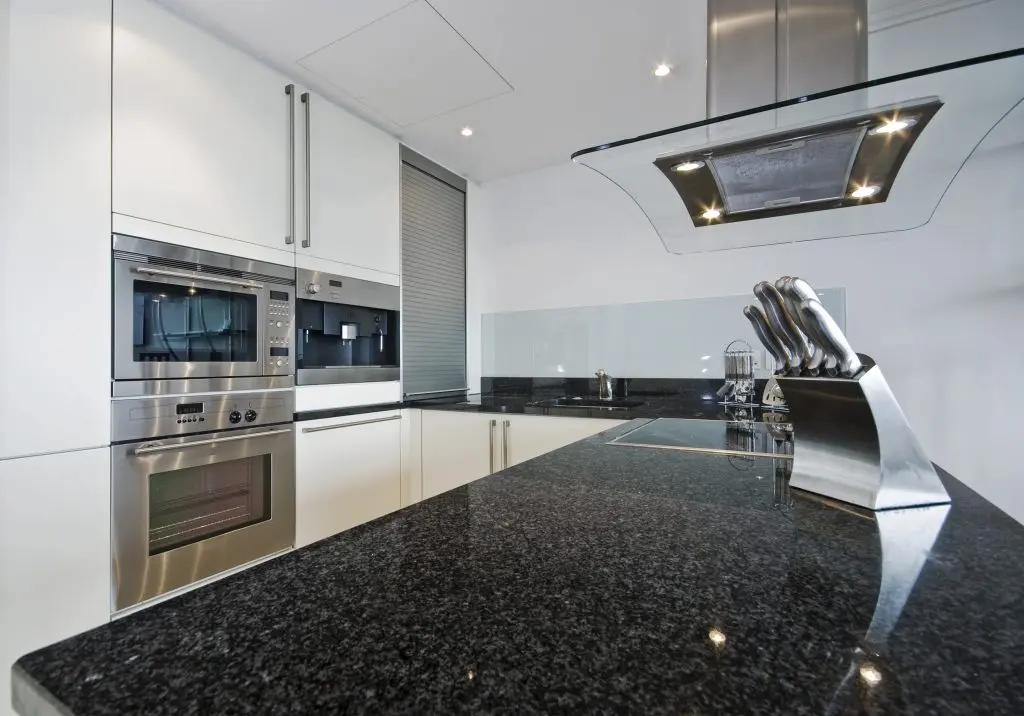
Are dark countertops a good choice for a 2026 kitchen?
Yes. Dark countertops continue to work well across traditional, transitional, modern, and contemporary kitchen designs.
The most successful designs usually treat the countertop as part of a larger color composition.
Instead of asking whether dark countertops are “too dark,” consider:
- How much natural light enters the room?
- What color are the cabinets?
- Is the backsplash light or dark?
- What finish does the countertop have?
- Where will task lighting be installed?
- Does the flooring balance the darker surface?
This approach makes it easier to choose between dark granite, quartz, marble, and quartzite based on the actual kitchen.
How long does countertop installation take?
Most Granite Depot of Columbia projects take approximately 2–3 weeks overall.
After final templating, fabrication generally requires 7–10 business days. During fabrication, we complete slab layout, cutouts, edge finishing, and seam preparation when necessary.
Installation typically takes approximately 1–2 days for a standard kitchen.
Granite Depot of Columbia provides material selection, professional templating, custom fabrication, cutouts, edge finishing, delivery, and installation.
Frequently Asked Questions
Will a dark countertop make my kitchen look smaller?
Not necessarily. Dark countertops can work in small kitchens when paired with lighter cabinets, backsplash, flooring, and sufficient lighting.
What cabinets look best with dark countertops?
White and light wood cabinets create strong contrast, while gray and dark cabinets can create a more dramatic look. The right combination depends on the room’s lighting and other finishes.
Are dark granite countertops difficult to maintain?
No. Dark granite follows the same basic maintenance routine as other granite. However, water spots and fingerprints can sometimes be more visible on very dark polished surfaces.
How much do dark countertops cost?
Granite starts at approximately $39 per square foot, quartz at $50, and marble at $65. Quartzite pricing is available upon request. Final costs depend on the selected slab and fabrication requirements.
Does Granite Depot of Columbia serve Chester, SC?
Yes. Granite Depot of Columbia serves homeowners looking for kitchen countertops in Chester, SC, providing granite, quartz, marble, and quartzite selection, professional templating, custom fabrication, cutouts, edge finishing, delivery, and installation.
Granite Depot of Columbia
71 Berkshire Dr, Columbia, SC 29223
Phone: (803) 956-4555