

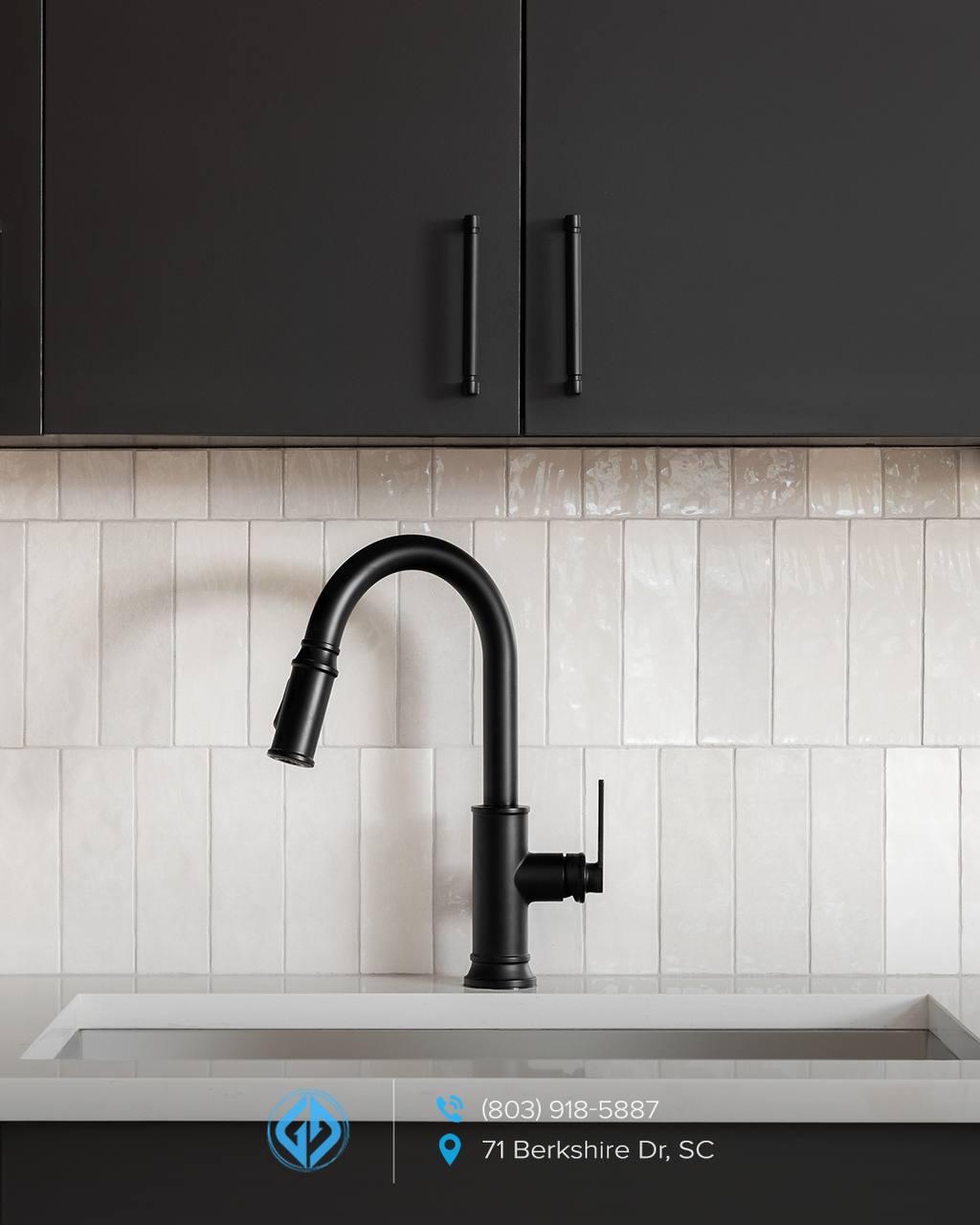
It’s one of the most common questions homeowners ask during a kitchen renovation: should everything match? The faucet, the sink, the hardware, the countertop—do they all need to follow the same visual language to create a cohesive look?
Granite Depot of Columbia often sees clients approach this decision with the assumption that matching equals harmony. But in reality, perfect matching can sometimes make a kitchen feel flat or overly predictable. The goal is not uniformity. It is balance.
For homeowners exploring kitchen countertops in Edgefield, SC, this distinction becomes essential. A countertop is typically the largest and most visually dominant surface in the kitchen. It sets the tone, but it does not need to dictate every other element.
Instead of matching, the more effective approach is coordination. Faucets, sinks, and fixtures should relate to the countertop in a way that feels intentional, not identical. This allows each element to contribute to the overall design without competing for attention.
A well-designed kitchen does not rely on repetition. It relies on relationships between materials, tones, and textures.
How Should Stone Countertops Influence Fixture Choices?
Stone countertops naturally become the foundation of the kitchen’s design. Their color, pattern, and movement create a visual framework that other elements can build upon.
Granite Depot of Columbia often advises homeowners to start with the countertop and then consider how fixtures can complement it. This does not mean copying its tones exactly, but rather understanding its character.
For those researching kitchen countertops in Edgefield, SC, this means looking closely at the details within the stone. A granite slab with warm undertones may pair well with brushed brass or bronze fixtures, while a cooler-toned quartzite might align better with stainless steel or matte black finishes.
The goal is to create continuity without redundancy. Fixtures should echo certain aspects of the countertop—its warmth, its coolness, or its level of contrast—without blending into it completely.
Sinks also play a role in this relationship. Undermount sinks, for example, allow the countertop to remain the focal point, while more visible sink designs can introduce an additional layer of texture or color.
The countertop sets the direction. Fixtures follow it, but they do not need to mirror it.

Why “Perfect Matching” Can Sometimes Make a Kitchen Look Less Expensive
There is a subtle but important difference between a kitchen that looks coordinated and one that looks overly matched. When every element is identical or closely aligned in color and finish, the space can lose depth.
Granite Depot of Columbia often explains that high-end kitchens tend to incorporate contrast. This contrast is not random. It is carefully controlled to create visual interest.
For homeowners exploring kitchen countertops, this means considering how different finishes can work together. A polished stone surface might be paired with matte fixtures, creating a balance between reflection and softness. A bold countertop pattern can be complemented by simpler hardware, allowing the stone to remain the focal point.
When everything matches too closely, the eye has nowhere to rest. The space can feel uniform, almost staged, rather than lived-in.
Contrast introduces dimension. It allows each element to stand out while still contributing to the overall design.
Luxury is often defined by this balance—where elements are connected, but not identical.
How Do Finishes and Textures Change the Way Elements Work Together?
Beyond color, finishes and textures play a significant role in how countertops and fixtures interact. Two elements may share a similar tone, but their finishes can create entirely different effects.
Granite Depot of Columbia often encourages homeowners to think about how surfaces feel as well as how they look. A polished countertop reflects light, creating brightness and clarity. A matte or honed finish softens the surface, introducing a more subtle appearance.
For those researching kitchen countertops in Edgefield, SC, this opens up additional possibilities. A polished quartz surface can be paired with brushed metal fixtures to create contrast, while a leathered granite finish might work well with smoother, more refined hardware.
Texture adds another layer of complexity. Natural stone often contains variations that can be enhanced or softened depending on the finish. Fixtures, while more uniform, can still contribute through their surface treatment.
The interaction between these elements creates depth. It ensures that the kitchen does not feel one-dimensional.
Design is not just about what you see. It is about how different surfaces respond to light, touch, and space.

Should Sinks Blend In or Stand Out?
Sinks are often overlooked in the design process, yet they play a crucial role in how the countertop is perceived. Their placement and visibility can either enhance or disrupt the overall composition.
Granite Depot of Columbia frequently discusses the impact of sink choice with homeowners. Undermount sinks, for example, create a seamless transition between the countertop and the basin. This approach emphasizes the stone, allowing its pattern and texture to remain uninterrupted.
For homeowners exploring kitchen countertops, this can be an effective way to highlight the material. The countertop becomes the primary visual element, while the sink supports its presence.
Alternatively, a sink can be used as a contrasting feature. A farmhouse sink, for instance, introduces a different material and texture, adding character to the space. This approach works well when the countertop design is more subtle, allowing the sink to become a focal point.
The choice depends on the overall design strategy. A sink does not need to match the countertop, but it should feel connected to it.
The relationship between these elements should feel intentional, not accidental.
How Can Homeowners Create a Kitchen That Feels Cohesive Without Overthinking Every Detail?
Designing a kitchen involves countless decisions, and it is easy to become overwhelmed by the need to coordinate every element. However, cohesion does not come from perfect alignment. It comes from consistency in approach.
Granite Depot of Columbia often advises homeowners to focus on a few key principles rather than trying to control every detail. Establish a color palette, choose materials that complement each other, and allow for subtle variation.
For those researching kitchen countertops in Edgefield, SC, this means trusting the process. A well-chosen countertop provides a strong foundation. From there, fixtures and sinks can be selected to enhance the overall design without needing to match exactly.
It is also important to consider how the space will be used. A kitchen is not just a visual environment. It is a functional one. The choices made should support both aesthetics and practicality.
Cohesion is achieved when everything feels connected, even if it is not identical. It is about creating a space where each element has a purpose and contributes to the whole.
In the end, the most successful kitchens are not the ones where everything matches. They are the ones where everything works together.
And that balance—between coordination and contrast—is what makes a design feel complete.