

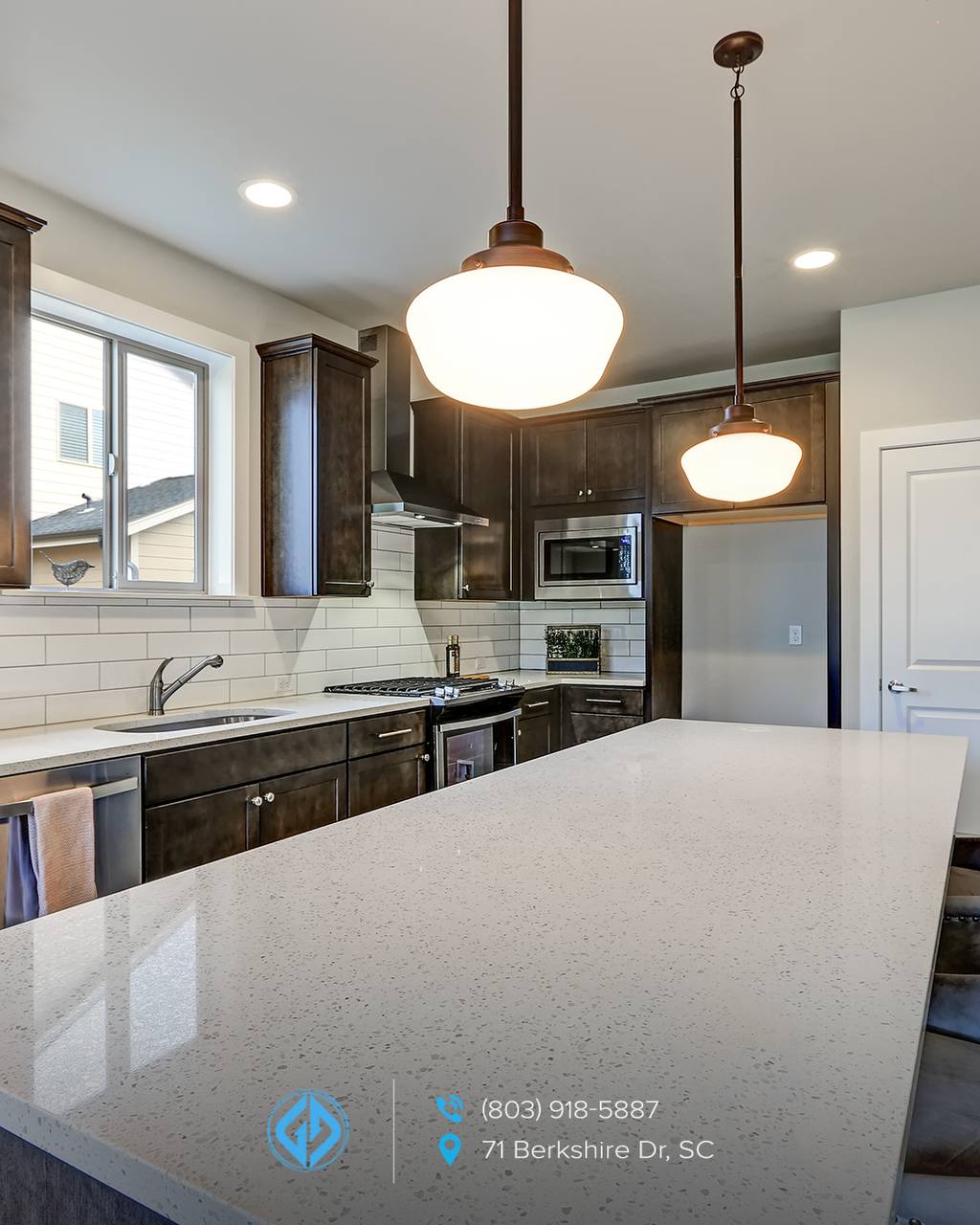
One of the most persistent beliefs in kitchen design is that lighter countertops are harder to maintain. At first glance, it seems logical. A white or light-colored surface appears more likely to reveal stains, spills, and everyday mess. But the reality is more nuanced.
Granite Depot of Columbia often works with homeowners who assume that darker countertops will be easier simply because they “hide everything.” What they discover over time is that darker surfaces do not eliminate visibility—they shift it.
For homeowners exploring countertops in Edgefield, SC, this distinction becomes important early in the decision-making process. Light countertops tend to show certain things more clearly—such as coffee spills, tomato sauce, or colored liquids. These contrasts are visible because of the difference between the surface and the substance.
However, darker countertops introduce a different challenge. They often highlight dust, water spots, fingerprints, and light-colored residues. A drop of water that disappears on a white surface can leave a visible mark on a dark one, especially under certain lighting conditions.
Maintenance is not about how much a surface shows, but what it shows. Light and dark stones simply reveal different aspects of everyday use.
Understanding this helps homeowners move beyond assumptions and focus on what matters for their specific lifestyle.
Are Lighter Stones More Prone to Staining Than Darker Ones?
Color is often mistaken for performance, particularly when it comes to staining. Many homeowners believe that lighter stones absorb stains more easily, while darker stones are naturally more resistant. In reality, the situation is more complex.
Granite Depot of Columbia frequently explains that stain resistance is not determined by color alone. It depends on the type of stone, its porosity, and how well it has been sealed.
For those researching countertops in Edgefield, SC, this means that a light granite or quartzite that is properly sealed can perform just as well as a darker option. The difference lies in how visible a stain might be, not necessarily in how easily it forms.
Lighter stones may make certain stains more noticeable because of contrast. A spill that might blend into a darker surface can stand out against a lighter one. However, this visibility can also be an advantage. It allows homeowners to address spills quickly, reducing the likelihood of long-term damage.
Darker stones, while less likely to show certain stains immediately, can sometimes conceal them until they become more difficult to remove. This can create the impression of lower maintenance, even though the underlying care requirements are similar.
Staining is not about color. It is about how the material is treated and maintained over time.

How Does Daily Cleaning Differ Between Light and Dark Countertops?
Cleaning routines often reveal the practical differences between light and dark surfaces. While both require regular care, the experience of maintaining them can feel quite different.
Granite Depot of Columbia often notes that lighter countertops tend to create a sense of cleanliness even between cleanings. Their reflective qualities and softer tones make minor imperfections less noticeable, particularly in natural light.
For homeowners exploring countertops, this can translate into a more forgiving daily experience. A few crumbs or light dust may not immediately stand out, allowing the kitchen to feel tidy even during busy moments.
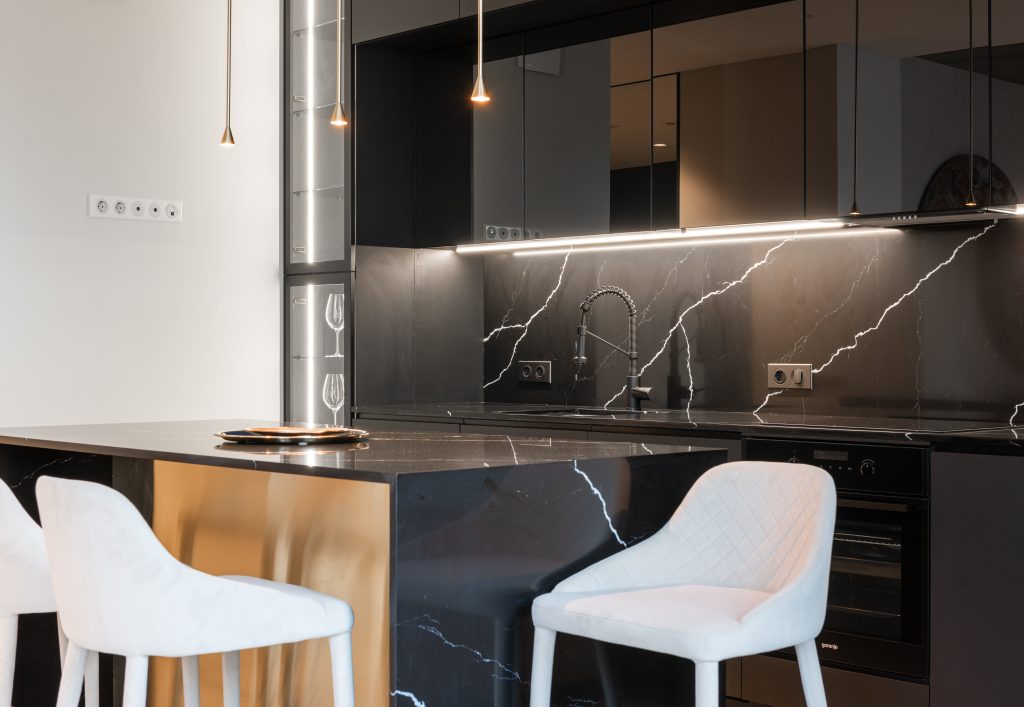
Darker countertops, on the other hand, can appear pristine when freshly cleaned but may show signs of use more quickly. Water spots, streaks, and fingerprints can become visible shortly after cleaning, especially under direct lighting.
This does not mean that darker surfaces are harder to maintain, but they may require more frequent attention to maintain a consistent appearance. The contrast between the surface and common residues makes these details more noticeable.
Cleaning is not just about effort. It is about perception. Light and dark countertops create different visual experiences, even when maintained in the same way.
Does Lighting Change How Maintenance Is Perceived?
Lighting plays a significant role in how countertops are perceived, particularly when it comes to cleanliness and maintenance. The same surface can appear completely different depending on the type and direction of light.
Granite Depot of Columbia often encourages homeowners to consider how their kitchen lighting will interact with their chosen material. Natural light, overhead fixtures, and under-cabinet lighting all influence how the surface is seen.
For those researching countertops in Edgefield, SC, this consideration can change how maintenance is experienced on a daily basis. Lighter countertops tend to reflect light more evenly, which can soften the appearance of minor imperfections.
Darker surfaces, especially those with polished finishes, can create reflections that highlight streaks, smudges, and water spots. These reflections are not necessarily a sign of poor maintenance, but they can make the surface appear less consistent.
The orientation of the kitchen also matters. Spaces with abundant natural light may amplify the reflective qualities of both light and dark surfaces, while kitchens with softer lighting may create a more uniform appearance.
Maintenance is not just about the material itself. It is about how that material interacts with its environment.
Why Do Some Homeowners Still Prefer Light Countertops Despite the Myths?
Despite the belief that lighter countertops are harder to maintain, they continue to be a popular choice in kitchen design. The reasons go beyond aesthetics.
Granite Depot of Columbia often works with homeowners who are drawn to lighter surfaces because of the atmosphere they create. Light countertops can make a space feel more open, more inviting, and more adaptable to different design styles.
For homeowners exploring countertops, this versatility is a key advantage. Light stone surfaces can work with a wide range of cabinetry, flooring, and finishes, allowing for greater flexibility over time.
There is also a psychological aspect to consider. Lighter surfaces often feel cleaner, even when they are not perfectly spotless. This perception can influence how comfortable homeowners feel using their kitchen.
Additionally, natural variation within light stone can help mask minor imperfections. Veining, subtle color shifts, and texture all contribute to a surface that feels dynamic rather than uniform.
The choice of color is not just about maintenance. It is about how the space feels and functions as a whole.
What Should Homeowners Really Focus on When Choosing Between Light and Dark Stone?
The decision between light and dark countertops is often framed as a question of maintenance, but this perspective can be limiting. In reality, both options require care, and both offer unique advantages.
Granite Depot of Columbia often advises homeowners to focus on how the countertop will fit into their daily routine rather than trying to minimize maintenance entirely. No surface is completely maintenance-free, but some may align better with specific lifestyles.
For those researching countertops in Edgefield, SC, this means considering factors beyond color. The type of stone, the finish, the level of activity in the kitchen, and personal preferences all play a role.
A busy family kitchen may benefit from a surface that feels forgiving in appearance, while a more controlled environment may allow for a greater focus on visual impact.
Ultimately, the goal is not to eliminate maintenance, but to choose a material that makes it manageable. Light and dark countertops each offer different experiences, and understanding those differences allows homeowners to make informed decisions.
In the end, maintenance is not defined by color alone. It is shaped by how the material is used, how it is cared for, and how it fits into the rhythm of the home.
And when those factors align, both light and dark stone countertops can perform beautifully over time.